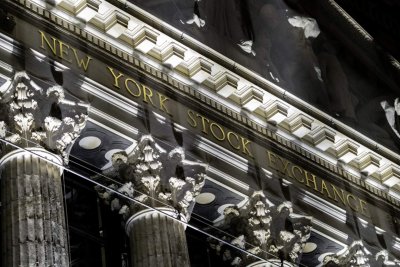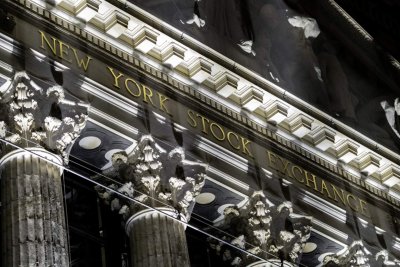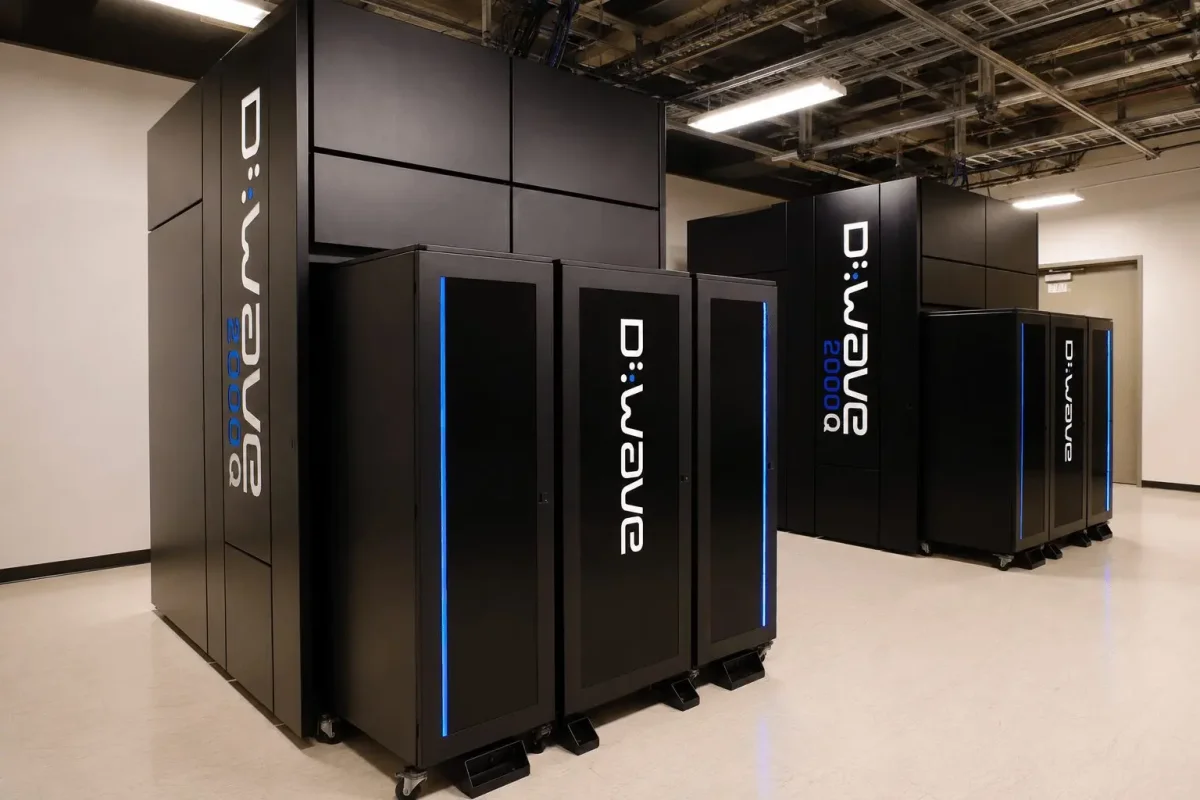
D-Wave Quantum Inc. (QBTS) saw its shares climb 1.2% to $30.50 on Monday, as the company unveiled an ambitious gate-model quantum computing roadmap during its first investor day at the New York Stock Exchange. The plan targets 100 logical qubits by 2032, marking a significant strategic shift for a firm traditionally known for its annealing-based systems. The stock's move added to a market capitalization near $11.2 billion.
Gate-Model Pivot
While D-Wave has long been associated with quantum annealing—a method optimized for tasks like scheduling, routing, and resource allocation—the new focus on gate-model quantum computing is a notable development. Gate-model systems use logic gates to manipulate qubits, a structure more aligned with the expectations of investors looking for broader applications in science and industry. The company's roadmap includes a 17-physical-qubit system by 2026, progressing to 49 physical qubits in 2027, and 181 physical qubits by 2028. It then targets a 10-logical-qubit system by 2030, culminating in 100 logical qubits by 2032.
Technology and Financial Backdrop
CEO Alan Baratz described the path to fault tolerance as "highly differentiated and credible," emphasizing the company's dual-rail qubit design, which is engineered to detect and correct errors during computations. D-Wave also aims to achieve systems capable of over 1 million operations by 2032. This roadmap follows the company's January acquisition of Quantum Circuits, which added superconducting dual-rail technology to its arsenal, potentially accelerating progress toward large-scale, error-corrected gate-model systems.
Financially, D-Wave's first-quarter results painted a mixed picture. Revenue fell 81% year-over-year to $2.9 million, though bookings surged to $33.4 million, and remaining performance obligations stood at $42.4 million, indicating contracted revenue yet to be recognized. The company ended March with $588.4 million in cash and marketable securities, up 93% from the prior year, providing a solid runway despite a net loss of $18.4 million for the quarter.
Government Support and Risks
Adding to the positive sentiment, D-Wave announced on May 21 that it had signed a letter of intent for up to $100 million in potential funding under the CHIPS Act. If finalized, the U.S. Commerce Department would receive common shares in return. Baratz called this "a transformative moment" for both D-Wave and U.S. quantum computing capabilities.
However, the company's annual filing spells out significant risks. D-Wave cautioned that its roadmap technology is not yet available to customers and may fall short of targets. It warned that future versions of both annealing and gate-model products could face delays or may not materialize at all. The company also noted its history of losses and could not guarantee profitability.
Broader market indices were modestly higher on Monday, with the Invesco QQQ Trust (QQQ) up 0.8% and the SPDR S&P 500 ETF (SPY) gaining 0.4%. Quantum computing stocks showed mixed performance: Rigetti Computing (RGTI) rose 2.5% to $26.17, while IonQ (IONQ) fell 1.0% to $71.38, underscoring the sector's volatility.
For now, D-Wave's roadmap serves as a test of execution. The 2032 target provides a long-term milestone, but the immediate focus will be on converting strong bookings, government backing, and technical progress into sustainable revenue growth as the company navigates public market scrutiny.