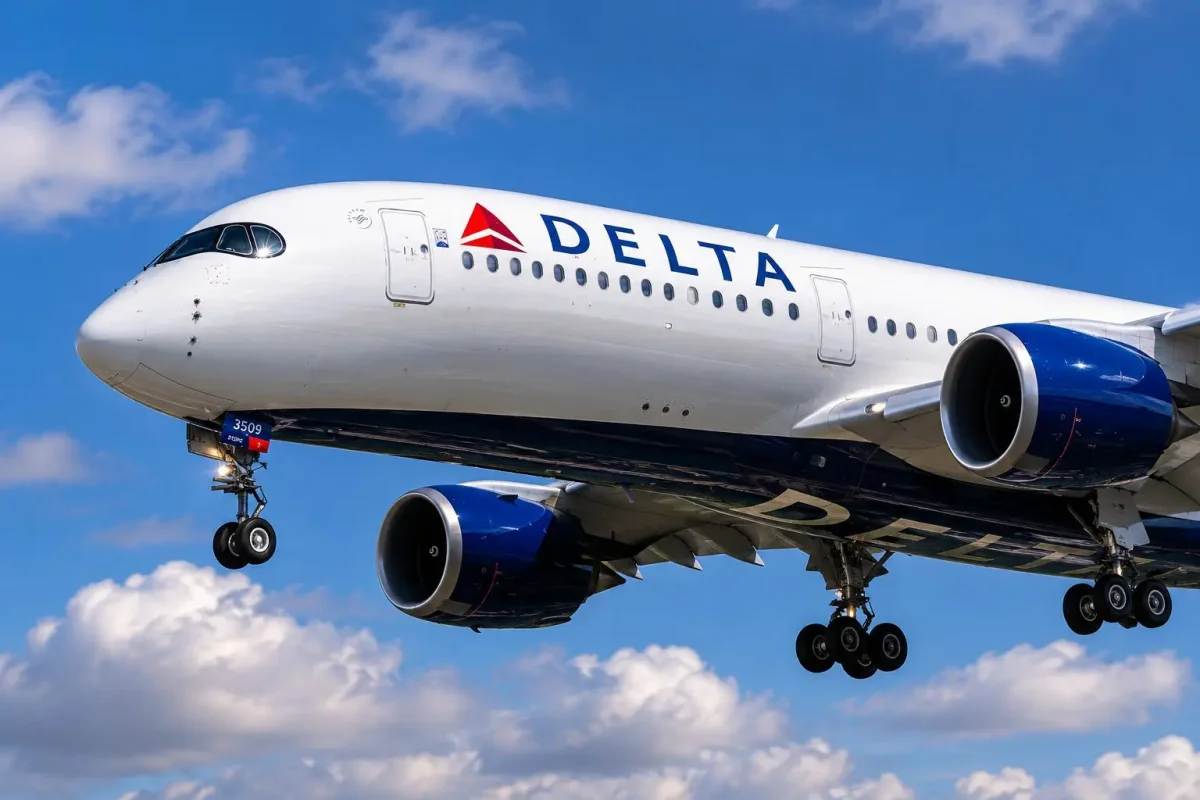
Delta Air Lines (NYSE: DAL) saw its stock price decline sharply on Wednesday, shedding roughly 5.1% to close at $77.01. The drop erased gains from the previous day's rally and brought renewed focus on the impact of rising oil prices on the airline's financial outlook.
The selloff was triggered by a fresh spike in crude oil prices. Brent crude rose 2.8% to $94.06 per barrel, while U.S. West Texas Intermediate climbed 3.3% to $91.12. Geopolitical tensions between the U.S. and Iran added to supply concerns, pushing energy costs higher and reigniting worries about jet fuel expenses for airlines.
Delta's decline was not isolated. The broader airline sector felt the pressure, with United Airlines (NASDAQ: UAL) dropping approximately 6.1% and American Airlines (NASDAQ: AAL) losing about 4.8%. Investors broadly sold off airline stocks as fuel cost fears returned to the forefront.
Delta had recently rallied close to its 52-week high, closing at $81.17 on June 9, just 3.17% below its peak of $83.83. However, that momentum was quickly reversed as oil prices surged. The company's April guidance had assumed a fuel price of around $4.30 per gallon, with an operating margin target of 6% to 8% for the June quarter. The recent jump in crude threatens to undermine those projections.
CEO Ed Bastian had previously emphasized the company's strategy to protect margins through capacity reductions and fare increases. In the April earnings statement, Bastian noted, "Demand remains strong, and we are taking actions to protect our margins and cash flow." The challenge now is whether those measures can keep pace with the accelerating fuel costs.
The International Air Transport Association (IATA) recently cut its 2026 global airline net profit forecast to $23 billion, down from an earlier estimate of $41 billion, citing jet fuel prices averaging $152 per barrel. IATA's Willie Walsh remarked that "airlines are bearing the brunt of the fuel price shock," adding that while fares are rising, carriers are still absorbing some of the losses.
Delta's first-quarter filing revealed that aircraft fuel and related taxes increased by $332 million year-over-year, driven by a 10% rise in jet fuel purchase prices. The company expects these elevated costs to persist until market disruptions and geopolitical events stabilize. Meanwhile, Gulf Coast jet-fuel spot prices averaged $3.91 per gallon from March to May, nearly double earlier levels, according to the Energy Information Administration.
Despite the headwinds, Delta's fundamentals remain relatively strong. Premium product revenue rose 14% in the first quarter, and domestic passenger revenue increased 8%. The airline's partnership with American Express generated $2.2 billion, up 10% from the prior year. However, if fuel prices remain elevated, Delta may need to cut more capacity and potentially exit weaker routes, which could pressure margin guidance.
Investors are now awaiting Delta's June-quarter update for signs that higher ticket prices and capacity adjustments are effectively offsetting fuel shocks. The key question is whether the airline's pricing power and operational discipline can sustain margins in a volatile cost environment.