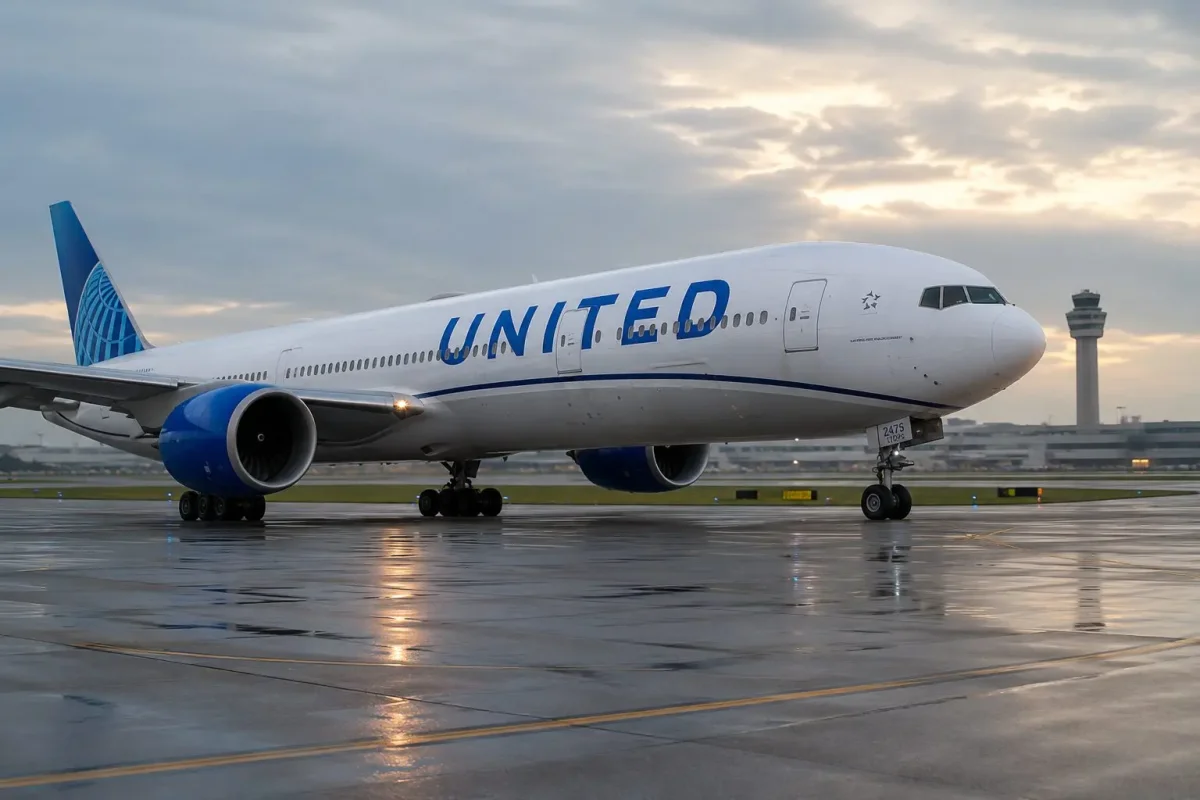
United Airlines (NASDAQ:UAL) closed Friday at $118.27, up 2.5% on the day, yet the stock remains essentially unchanged for the week. The single-day gain of $2.90 actually exceeded the total weekly advance of $2.86, highlighting a volatile period for the carrier.
The company raised the lower end of its 2026 adjusted earnings per share forecast by $2, setting a new range of $9 to $11. At the $10 midpoint, UAL trades at 11.8 times that figure. That multiple is slightly below Delta Air Lines (NYSE:DAL) at 12.2x and Southwest Airlines (NYSE:LUV) at 12.0x, even though United has a higher earnings floor. The lack of a premium suggests investors remain cautious about the airline's ability to pass on rising fuel costs to consumers.
Brent crude oil fell 3.9% on Friday to $96.78 a barrel, but still posted a nearly 10% weekly gain. The decline provided some relief to airline stocks, with Delta up 3.8% and American Airlines (NASDAQ:AAL) surging 6.8% on the day. However, supply risks persisted over the weekend as Houthi militants targeted Saudi oil facilities near the Red Sea, keeping the threat of higher fuel costs alive.
United expects to offset 80% to 90% of its increased fuel expenses in the third quarter and fully recover them by the fourth quarter. But these are management projections, not actual results, and the rapid rise in jet fuel prices—up 78 cents to $3.59 between Delta's guidance date (July 2) and American's (July 21)—can quickly render forecasts obsolete. United based its own guidance on July 14 oil prices.
Operationally, United reported strong second-quarter results. Revenue grew 16% year-over-year on capacity up 3.5%. Yield rose 12%, and contracted business revenue surged 27%. The airline recouped nearly 50% of its $2.3 billion fuel cost increase, compared to Delta's 60% and American's roughly 50% recovery. CEO Scott Kirby noted on July 16 that fuel costs had risen significantly in the prior week.
The balance sheet provides a buffer. United ended June with $19.6 billion in available liquidity and secured an additional $3.7 billion through new financing. This financial strength supports the company's ability to weather fuel price volatility.
Looking ahead, no new investor events are scheduled for the upcoming week. The Federal Reserve's meetings on Tuesday and Wednesday will be key external drivers, along with oil prices. The main risks remain fuel costs and the timing of fare increases. If crude surges again, expenses could rise before any fare hikes flow through to revenue, while softer demand could further delay that transmission.