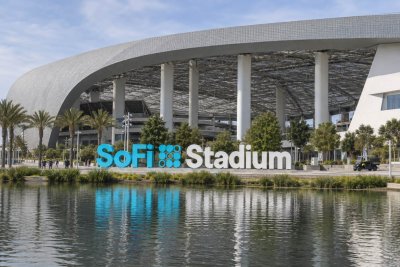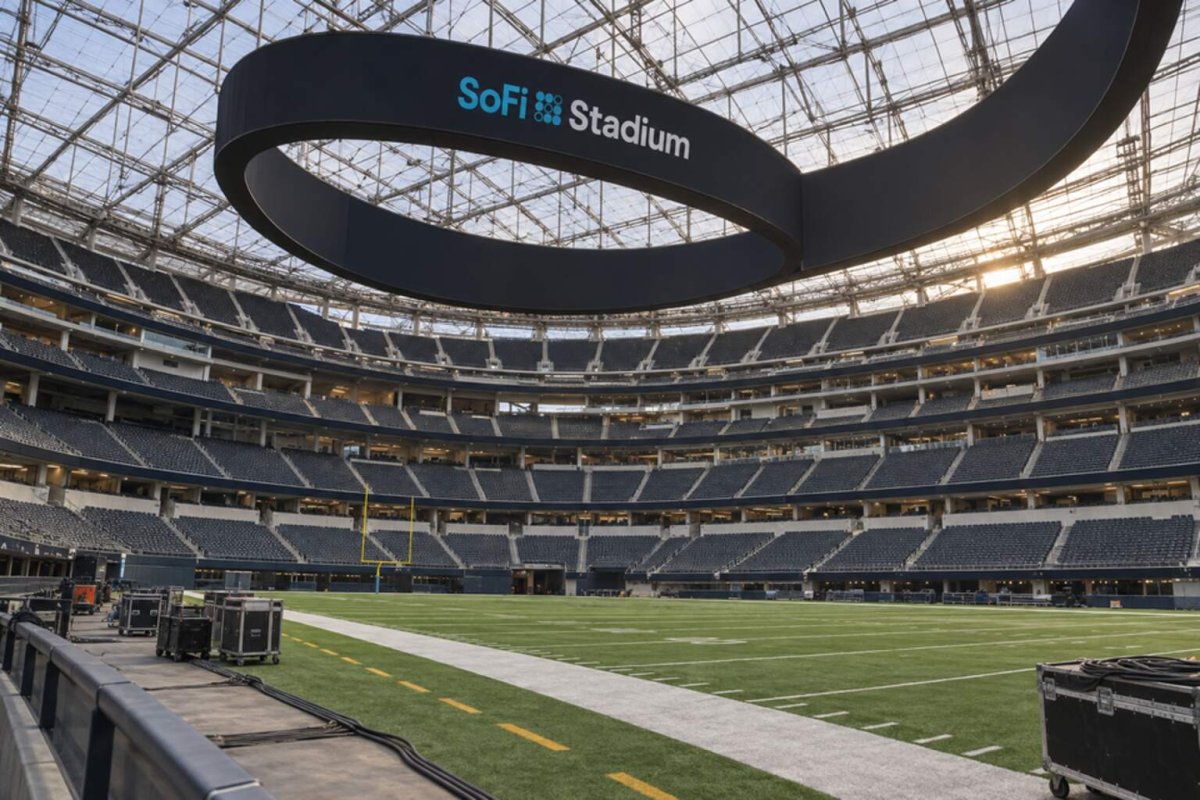
As the 2026 NFL season kicks off, SoFi Stadium is once again in the national spotlight. The Los Angeles Chargers open with two home games, and Super Bowl LXI is slated for February 14, 2027, at the Inglewood venue. For SoFi Technologies (SOFI), this period is a marketing opportunity, not a direct revenue driver, as the company does not own the stadium but holds a long-term naming and sponsorship deal.
Investors should note that SoFi's financial results are tied to customer acquisition and product adoption, not ticket sales or concessions. The company's stock closed at $17.33 on Wednesday, down 3.78%, reflecting a market cap of roughly $22.4 billion based on 1.292 billion shares outstanding.
Visibility Surge: More Than Just Football
The exposure begins this month with Chargers home games against Arizona on September 13 and Las Vegas on September 20, followed by the Rams' Monday-night opener against the New York Giants on September 21. The stadium also hosted four BTS concerts in early September, underscoring its reach beyond sports. The marquee event is Super Bowl LXI, which the NFL awarded to SoFi Stadium five years after Super Bowl LVI, with the Rams and Hollywood Park serving on the host committee.
This concentrated brand visibility is unprecedented, but it doesn't translate directly into revenue. SoFi must convert viewers into members and encourage multi-product usage for the naming deal to pay off economically.
The Naming Deal: Significant but Not the Core Thesis
SoFi's 20-year partnership, signed in 2019, includes naming rights and official relationships with the Chargers and Rams. After an amendment, the company disclosed $616.5 million in contractual payments from 2020 to 2040, averaging about $29 million annually. That's roughly 0.6% of management's 2026 adjusted net revenue forecast of $4.75 billion to $4.85 billion. While meaningful, it's not a primary stock driver.
There are signs that awareness is building. In Q2, SoFi reported record unaided brand awareness of 10.4%, up 190 basis points year-over-year, citing sports and cultural events like World Cup matches at the stadium. The Super Bowl could further boost this metric.
Product Data: The Real Proof
Awareness must convert to action. SoFi ended June with 15.8 million members (up 35% YoY) and 24.4 million products (up 42%). Existing members opened 51% of new products in the quarter, up from 35% a year ago, pushing products per member to 1.54. These metrics are more telling than broadcast impressions, as cross-buying enhances customer lifetime value without proportional acquisition costs.
Financial results support the narrative: Q2 GAAP net revenue rose 43% to $1.219 billion, net income was $156.6 million, and adjusted EBITDA grew 44% to $357.8 million. At Wednesday's price, SOFI trades at about 4.7 times its 2026 revenue midpoint and 2.4 times tangible book value of $9.5 billion.
Risks to the Optimistic View
The counterargument is that brand fame doesn't offset business mix risks. Lending contributed $724.8 million in Q2 revenue, with $26.1 billion in personal loans held at fair value. Credit performance, funding costs, and loan-sale demand are more critical to earnings than event calendars. The technology platform segment also lagged, with revenue down 23% YoY and contribution margin falling to 14% from 30%.
Valuation risk persists: a 2.4-times tangible book multiple requires sustained profitable growth. If loan losses rise or product growth slows, investors won't credit the stadium. Wednesday's 3.8% decline is a reminder that visibility and stock performance can diverge.
What to Watch Through February
Investors should track three things: unaided brand awareness, member and product growth, and revenue outpacing marketing costs. SoFi Stadium offers a rare marketing asset during a period of global attention, but it doesn't give shareholders a direct claim on stadium economics. The name may be on the building, but the stock's fate lies in the company's ability to turn that awareness into lasting customer relationships.