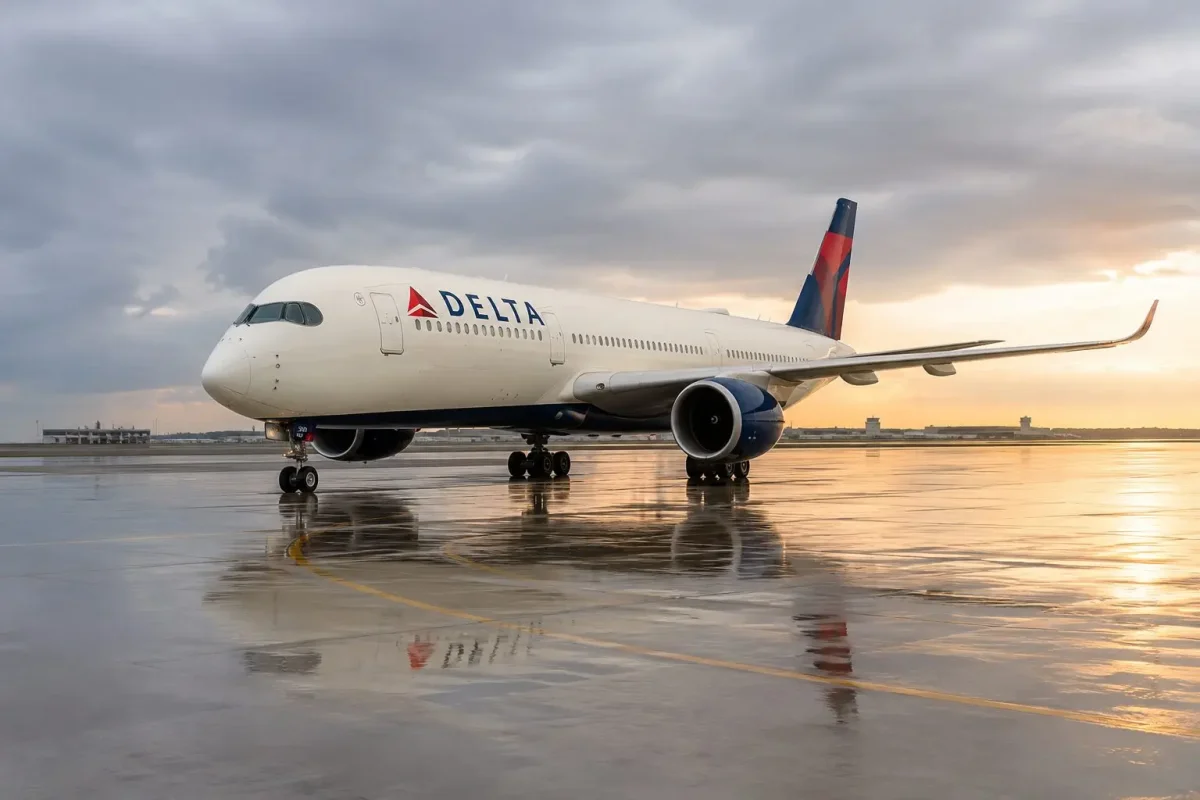
Delta Air Lines (NYSE:DAL) demonstrated resilience on Thursday as a Federal Aviation Administration (FAA) equipment failure triggered a temporary ground stop at Minneapolis-Saint Paul International Airport (MSP), its primary hub. The carrier's stock declined just 1.24%, outperforming its major competitors during a session marked by broader market weakness and rising oil prices.
The FAA imposed a ground stop from 1:50 p.m. to 3:15 p.m. CDT, with an advisory window extending until 4:15 p.m. Initial traffic management projections indicated an average controlled delay of 45 minutes, with maximum delays reaching 80 minutes. By 4:04 p.m., arrival delays had subsided to 15 minutes or less, according to FAA data.
Delta's dominance at MSP, where it accounted for 71.55% of passenger traffic in 2025, meant the airline bore the brunt of the disruption. However, its stock decline was 2.14 percentage points less than the median drop among American Airlines (NASDAQ:AAL), Southwest Airlines (NYSE:LUV), and United Airlines (NASDAQ:UAL), which collectively hold a 13.14% share at the airport. This relative outperformance suggests investors viewed the infrastructure failure as a temporary setback rather than a structural issue.
The operational impact extended beyond Delta. Allegiant Travel (NASDAQ:ALGT), which now includes Sun Country's operations following a merger, saw its shares tumble 6.62% to $97.17. The decline was compounded by the company's recent earnings report and volatile fuel prices. Allegiant posted an adjusted quarterly profit of $2.19 per share, up 78% year-over-year, but CEO Greg Anderson expressed caution about fuel cost volatility despite noting that "leisure demand remains strong."
Thursday's broader market context weighed on airline stocks. WTI crude oil advanced 2.75% to $77.29 per barrel, while the S&P 500 fell 0.18% and the Dow Jones Industrial Average retreated 0.85%. Despite these headwinds, most major carriers closed higher for the week, with Delta up 5.19% since July 31, United up 6.42%, American up 4.98%, and Southwest up 4.38%. Allegiant was the only carrier to end the week lower, down 0.93%.
The FAA attributed the ground stop to an equipment outage at a regional center, with some local sources suggesting a radar malfunction. The agency cited "equipment" as the sole reason. MSP, which handled 36.1 million passengers and 342,673 aircraft movements in 2025, relies heavily on Delta and Sun Country, concentrating operational risk in two corporate groups.
Metropolitan Airports Commission CEO Brian Ryks highlighted MSP's continued expansion of nonstop destinations, but noted that such growth amplifies the impact of operational disruptions. The airport's carrier mix, with Delta and Sun Country controlling over 82% of traffic, means any systemic issue at these airlines can have outsized effects.
Looking ahead, the financial impact of the outage remains unquantified. Analyst consensus ratings for the group remain positive, with average price targets implying upside ranging from 13.7% for Southwest to 42.5% for Allegiant. Key economic data due Friday, including the July employment report, could influence consumer demand and rate expectations. Additional releases on consumer and producer prices are scheduled for August 12 and 13.
Risks to the sector include potential crew and aircraft dislocation from the ground stop, further equipment malfunctions, and persistently high oil prices. Delta's relative strength and MSP's early schedule on Friday will provide initial cues on market sentiment. A straightforward rebound would validate Thursday's assessment, while any new disruptions could test that view.