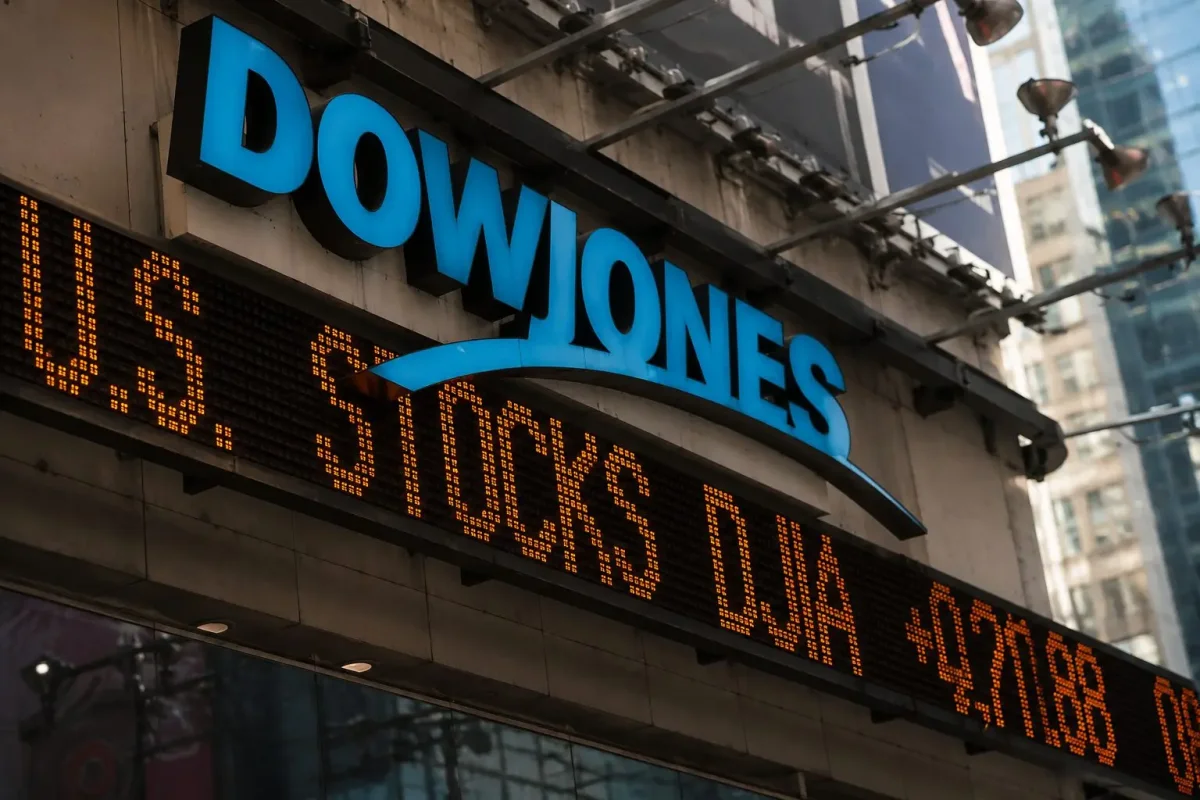
NEW YORK, June 29, 2026 — The Dow Jones Industrial Average closed above the 52,000 threshold for the first time on Monday, propelled by the inclusion of Alphabet Inc. (NASDAQ:GOOGL) and a broad tech-led rally. The blue-chip index settled at 52,202.62, after fluctuating within a range of 51,949.54 to 52,311.63, according to preliminary data from delayed quote feeds.
Alphabet's Debut Reshapes Index Dynamics
Monday marked the first trading session with Alphabet as a component of the 30-stock Dow, after S&P Dow Jones Indices replaced Verizon Communications Inc. (NYSE:VZ) with the tech giant at the open. The change significantly increased the index's exposure to higher-priced technology shares, as Verizon had represented only about half a percentage point due to the Dow's price-weighted methodology. Alphabet's higher share price gave it outsized influence over the index's daily movements.
According to MarketWatch data, Alphabet and Cisco Systems Inc. (NASDAQ:CSCO) together contributed roughly a quarter of the Dow's afternoon rally. Alphabet shares rose 4.8% on its debut, while Cisco gained 3.60%, making them top contributors alongside Caterpillar Inc. (NYSE:CAT), which added 3.65% as a high-priced industrial stock.
Market Breadth and Sector Performance
Despite the Dow's milestone, the Nasdaq Composite outperformed with a 2.00% gain to 25,803.31, reflecting stronger tech momentum. The S&P 500 rose 1.13% to 7,437.19, while the CBOE Volatility Index (VIX) dropped 4.67% to 17.55, signaling reduced investor fear. The Dow's more modest advance of 0.63% was partly due to drags from UnitedHealth Group Inc. (NYSE:UNH), which fell 2.12%, and Boeing Co. (NYSE:BA), down 1.47%. Microsoft Corp. (NASDAQ:MSFT) also declined 1.39%, limiting gains.
Other notable movers included Amazon.com Inc. (NASDAQ:AMZN), up 3.45%, and International Business Machines Corp. (NYSE:IBM), which added 2.12% on old-tech strength. The split between gainers and losers highlights the Dow's price-weighted nature, where high-priced stocks exert greater point impact.
Geopolitical and Economic Context
Peter Cardillo, chief market economist at Spartan Capital Securities in New York, told Reuters that weekend U.S.-Iran hostilities had no negative effect on markets. He added that the market is now preparing for the upcoming earnings season. RBC Capital Markets' Lori Calvasina reinforced the bullish sentiment by raising her 12-month S&P 500 target to 8,150 from 7,900, citing lower inflation expectations and stronger projected earnings growth, according to MarketWatch.
The Dow's composition change is more significant for daily point movements than for forced portfolio buying, as assets indexed to the Dow are only about $115 billion as of Dec. 31, 2024, compared with roughly $20 trillion for the S&P 500, where Alphabet already had a presence.
Outlook and Shortened Trading Week
The immediate test for the Dow is whether it can sustain the 52,000 level through a shortened trading week. U.S. equity and options markets will be closed on Friday, July 3, in observance of Independence Day, as listed by Nasdaq Trader. The tech-heavy shift in the Dow's composition is expected to amplify daily volatility, as high-priced tech stocks now have a greater say in the index's direction.