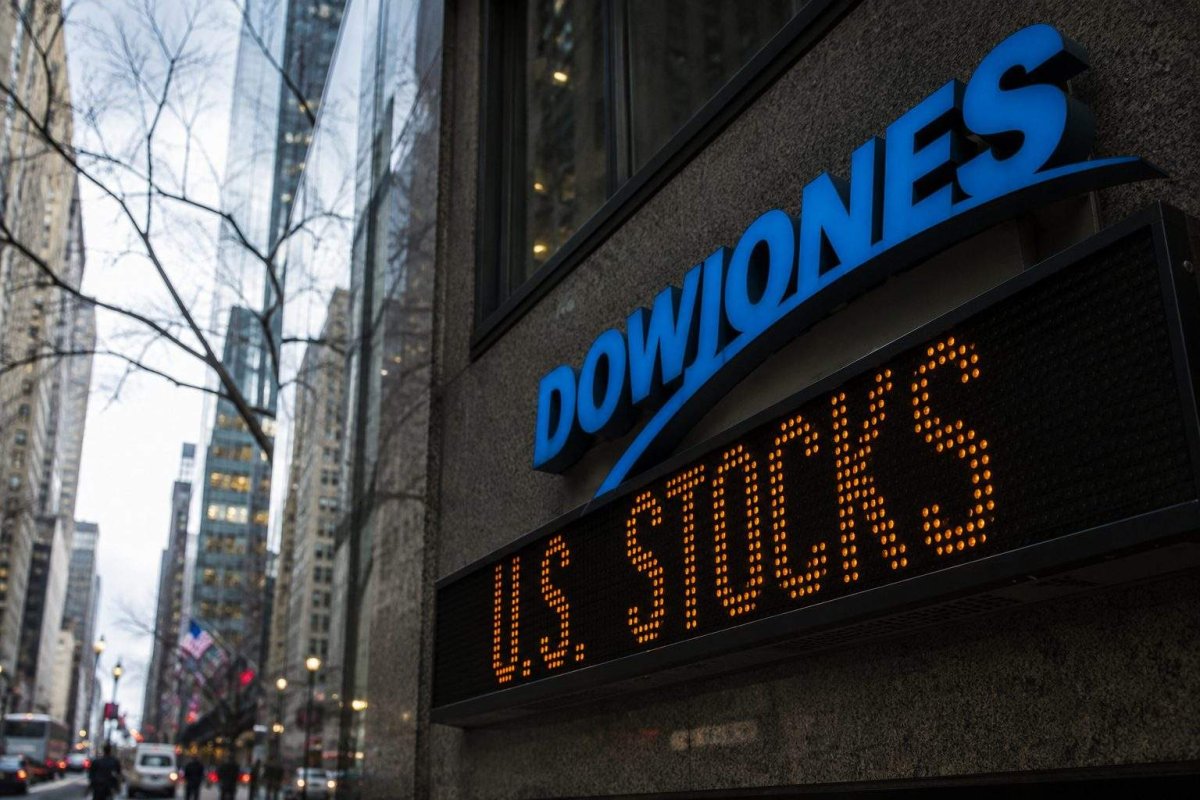
NEW YORK, July 20, 2026 – The Dow Jones Industrial Average closed lower on Monday, falling 305.32 points, or 0.59%, to a preliminary finish of 51,841.10. The blue-chip index dropped 570.80 points from its intraday high of 52,411.90, ending just above its session low of 51,781.90.
The decline was notable for its composition, as the Dow’s price-weighting mechanism meant that losses in expensive industrial and financial stocks outweighed gains in major technology names. While the Nasdaq Composite hovered near unchanged, recovering from a previous chip-sector decline, the Dow trailed the other major indexes.
Biggest Movers in the Dow
At 3:44 p.m., only 10 of the Dow’s 30 components were trading higher, with 20 in negative territory. But the dollar-value impact of the losers was far greater. A $1 change in any component equates to roughly 5.94 Dow points.
- Caterpillar (CAT) fell $15.26, subtracting about 91 points.
- Goldman Sachs (GS) dropped $7.14, taking 42 points off the index.
- Sherwin-Williams (SHW) declined $6.76, costing 40 points.
- Home Depot (HD) lost $6.11, reducing the Dow by 36 points.
- Apple (AAPL) slipped $5.55, shaving 33 points.
On the upside, Microsoft (MSFT) added $8.08, contributing 48 points, while Alphabet (GOOGL) gained $6.02, adding 36 points. The five biggest losers accounted for roughly 242 points of gross losses, representing 90% of the Dow’s net drop at that time, while Microsoft and Alphabet together recovered about 84 points.
Market Context and Broader Trends
The Dow’s decline comes after a 0.9% drop the previous week. The S&P 500 fell 1.6% last week, and the Nasdaq slipped 2.9%, marking the first week since early June when all three major indexes declined simultaneously. On Monday, the S&P 500 ended at 7,443.40, down 14.29 points (0.19%), and the Nasdaq Composite closed at 25,508.07, losing 12.17 points (0.05%).
Despite the Dow’s struggles, a rebound in semiconductor stocks helped stabilize the Nasdaq. The chip index had gained 1.5% earlier in the session after entering bear market territory on Friday. Peter Cardillo, chief market economist at Spartan Capital Securities, noted, “We’re seeing a bit of a turnaround in some of these semiconductor stocks.”
Oil, Bonds, and Earnings Outlook
Oil prices remained elevated, with Brent crude closing at $89.22 per barrel, up 1.3%. The yield on the 10-year Treasury note rose 6.28 basis points to 4.604%, reflecting ongoing inflation concerns.
Looking ahead, analysts project S&P 500 earnings growth of 26% for the second quarter, up from an earlier estimate of 23.7%. Major earnings reports this week include Alphabet (GOOGL) and Tesla (TSLA) after Wednesday’s close, as well as Intel (INTC) and IBM (IBM). These results will be a key test for the market, particularly for chip demand and broader sector performance.
Implications and Risks
The Dow’s price-weighted structure means that expensive stocks in industrial and financial sectors can drive the index even when technology recovers. For the Dow to gain broader traction, sectors outside of tech must also participate. If that wider strength fails to materialize, the index may continue to underperform, even if semiconductor stocks stabilize.
Risks remain balanced. A reduction in geopolitical tensions could lower oil prices and ease inflation fears, supporting equities. Conversely, escalating conflict or disappointing megacap earnings could intensify the current downturn.