U.S. equity markets were closed on Friday, July 3, in observance of Independence Day, with both the NYSE and Nasdaq observing the holiday. The shortened trading week ended with the Dow Jones Industrial Average (INDEXDJX:.DJI) reaching a new all-time high, gaining approximately 2% for the week. The S&P 500 (INDEXSP:.INX) added 1.8%, while the Nasdaq Composite (INDEXNASDAQ:.IXIC) climbed 2.1%.
However, Thursday's session revealed a sharp divergence beneath the surface. While the Dow surged, the Nasdaq Composite fell 0.80% as semiconductor stocks dropped sharply. The Philadelphia Semiconductor Index tumbled 5.4%, with Nvidia (NASDAQ:NVDA) sliding 1.4% and SanDisk (NASDAQ:SNDK) plunging 14.1%. Tesla (NASDAQ:TSLA) also sank 7.5% despite reporting Q2 deliveries that exceeded analyst expectations. In contrast, Apple (NASDAQ:AAPL) rose 4.8%, providing support to the broader indexes.
Market breadth highlighted the split. On the NYSE, advancers outpaced decliners by a ratio of 1.42 to 1, indicating broad-based support among blue chips. On the Nasdaq, however, decliners led advancers by 1.05 to 1, signaling that the weekly gain for the tech-heavy index was achieved with diminishing participation. U.S. exchange volume totaled 19.92 billion shares, roughly 15% below the 20-day average of 23.34 billion, suggesting that some of the moves occurred in thinner pre-holiday trading.
The week’s jobs data offered a tailwind for rate-sensitive sectors. The Bureau of Labor Statistics reported that nonfarm payrolls increased by 57,000 in June, while the unemployment rate held steady at 4.2%. Revisions to prior months subtracted a combined 74,000 jobs. Leisure and hospitality shed 61,000 positions, while professional and business services added 36,000. Adam Sarhan, CEO of 50 Park Investments, noted that the report “takes the pressure off the Fed to raise rates in the short term.” Following the data, market expectations for a September rate hike fell to 55% from 64.1%, according to CME FedWatch figures.
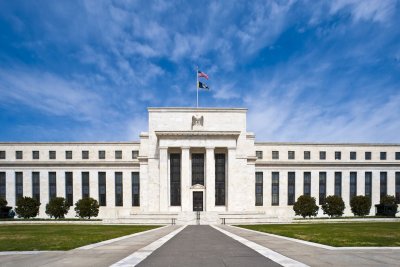
Looking ahead, the coming week brings a relatively light economic calendar, but key events could drive market direction. The Federal Reserve will release the minutes from its latest policy meeting on Wednesday. Investors will scrutinize the language for any shifts in the central bank’s outlook on inflation and interest rates. Earnings season also begins to ramp up, with reports due from Delta Air Lines (NYSE:DAL) and PepsiCo (NASDAQ:PEP). LSEG IBES estimates that S&P 500 companies will report second-quarter earnings growth of more than 24% year-over-year.
Analysts are watching for signs that the market’s recent broadening beyond mega-cap tech will sustain. Joe Mazzola of Charles Schwab (NYSE:SCHW) said he is monitoring whether the trend of wider participation holds. Matthew Miskin of Manulife John Hancock Investments (NYSE:MFC) noted that investors are looking for “how incrementally hawkish they are leaning.” James Ragan of D.A. Davidson flagged the Fed’s tightening cycle as “a risk to the market and the valuations,” while Keith Lerner of Truist Advisory Services (NYSE:TFC) emphasized that companies need to “validate the earnings trajectory.”
With the Dow at a record but momentum uneven, the upcoming data and earnings will be critical in determining whether the rally can broaden or if the tech-led gains are losing steam.