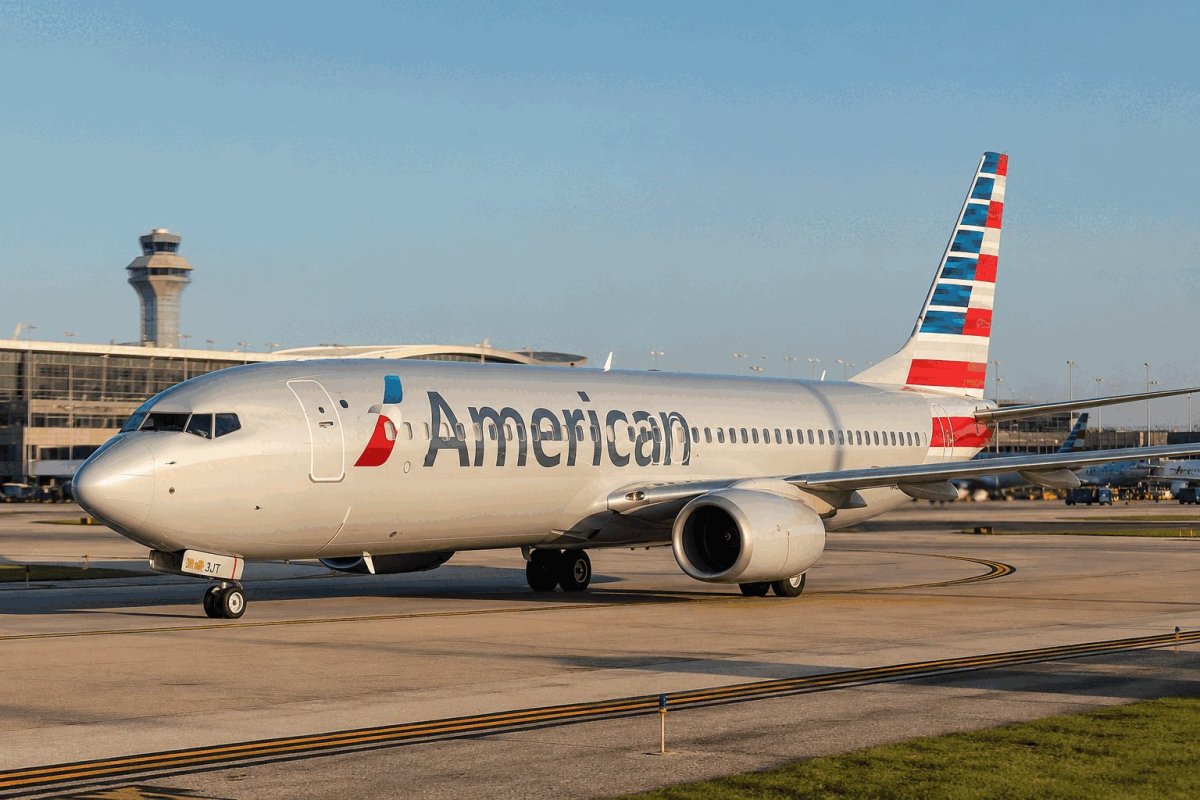
American Airlines Group Inc. (NASDAQ: AAL) saw its shares decline 2.6% on Tuesday, closing at $14.05, following a tire incident at Chicago O'Hare International Airport. However, the drop was largely in line with sector-wide moves, as United Airlines (NASDAQ: UAL) fell 2.9% and Delta Air Lines (NYSE: DAL) slipped 2.2%. The incident, which involved American Flight 386, a Boeing 737-800 from New York LaGuardia, reported two blown tires upon landing on Monday. The FAA confirmed that passengers deplaned via stairs and buses, and no injuries were reported. The aircraft was taken out of service for inspection.
While the tire event drew national attention, it is unlikely to have a lasting impact on American's operations. The airline operates more than 6,000 daily flights and serves over 200 million customers annually. The incident involved just one aircraft, a tiny fraction of its fleet. Moreover, American's trading volume was about 54% of its average, suggesting that investors did not heavily penalize the stock for the incident.
The more consequential news for investors is American's strategic shift toward premium seating. The carrier plans to increase premium seats to about 40% of narrowbody capacity, up from roughly 25%. This expansion is part of a broader effort to close the profit gap with rivals United and Delta. Premium travelers contributed nearly half of American's second-quarter ticket revenue while using about 30% of seats. A simple mix calculation implies that premium seats generate roughly 2.3 times more revenue per seat than non-premium seats, though this is a preliminary estimate and not company guidance.
The premium strategy also includes the installation of seatback screens on more than 800 narrowbody aircraft, a reversal from the company's previous approach of removing them. The retrofit program is set to begin in 2028 and is expected to be completed by the early 2030s. The company did not disclose the total cost of the program, but it is a significant investment aimed at improving the passenger experience and boosting yields.
The need for such a strategy is underscored by American's financial performance. In the second quarter of 2026, American reported record revenue of $16.7 billion, but operating income was just $471 million, resulting in a 2.8% operating margin. This compares unfavorably to United's 5.5% and Delta's 7.9% operating margins. American's net income was a mere $71 million, with a net margin of 0.4%, while United and Delta posted net margins of 4.6% and 8.1%, respectively.
CEO Robert Isom highlighted that American's 16% revenue growth exceeded initial expectations, and strong demand helped offset nearly half of a $2.2 billion year-over-year increase in fuel expenses. However, the company still expects roughly break-even results for 2026, while United and Delta are forecasting solid profits. This disparity highlights the urgency of American's premium seat expansion.
Wall Street appears cautiously optimistic about American's plans. The average analyst price target is $19.36, about 38% above Tuesday's close, with targets ranging from $13 to $25. The 15-analyst panel includes eight buys, six holds, and one sell. Analysts see upside potential but remain uncertain about execution risks, including fuel costs, retrofit expenses, and potential economic weakness.
There are also operational risks to consider. The FAA's investigation into the tire incident could reveal maintenance or runway issues. Additionally, O'Hare remains capacity-constrained after regulators limited peak schedules through October. These factors could add to operational challenges.
Ultimately, the market's focus should be on whether American's 60% increase in premium narrowbody capacity will lift its thin margins without incurring excessive costs. The company has been given years to deliver on this strategy, and the next proof point will be its ability to execute efficiently while maintaining strong premium demand.