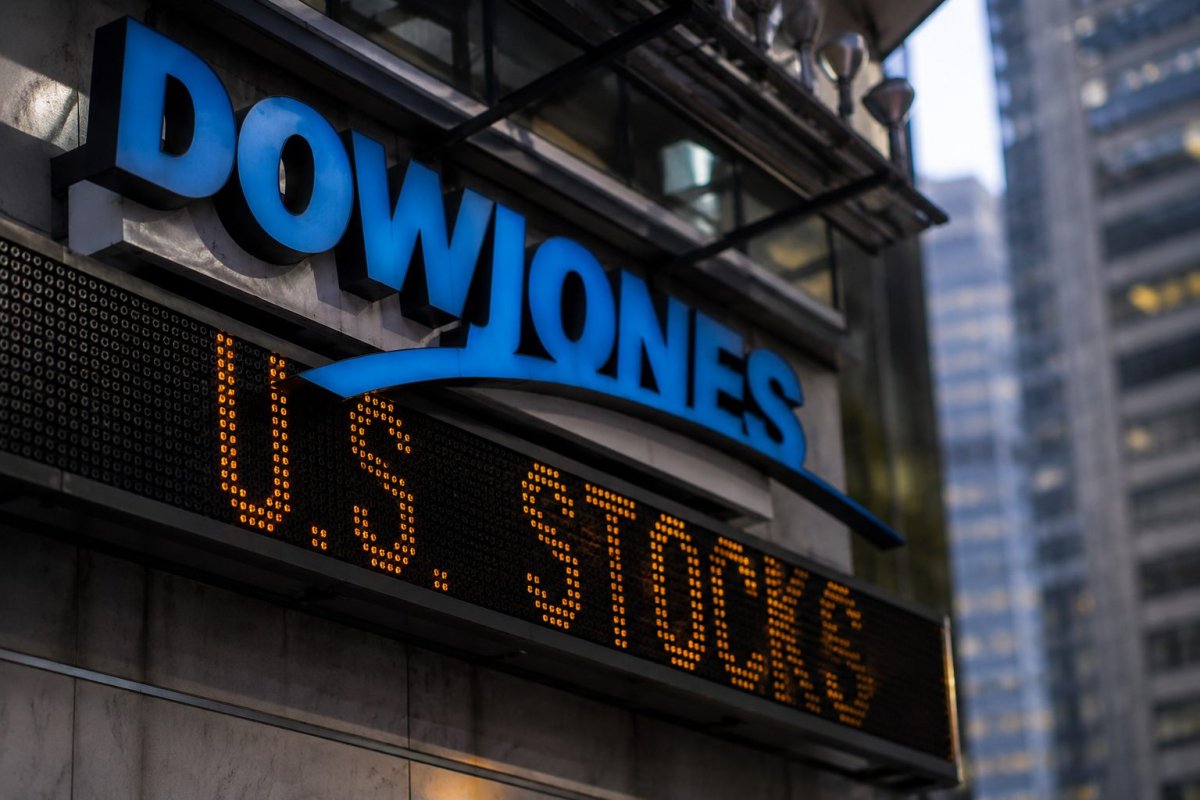
NEW YORK, June 26, 2026, 16:02 (EDT) — The Dow Jones Industrial Average closed at 51,842.08 on Friday, down 78.54 points, or 0.15%, after briefly touching an intraday high of 52,130.07. The S&P 500 slipped 0.08% to 7,351.35, while the Nasdaq Composite fell 0.07% to 25,340.28. The Dow’s inability to hold above the 52,000 mark for the third session in a row underscores ongoing investor caution, with tech stocks dragging the S&P 500 down 2% and the Nasdaq 4.4% for the week.
Despite the Friday loss, the Dow managed a weekly gain of 0.5% compared to the close before the Juneteenth holiday on June 18. The S&P 500 dropped about 2.0%, and the Nasdaq slid approximately 4.4%, closing lower each session this week. The market operated on a standard schedule Friday, between the Juneteenth break and the upcoming July 3 Independence Day holiday.
Key Levels and Market Dynamics
The Dow’s repeated failure to close above 52,000 stood out this week. The index touched 52,248.69 on Wednesday, climbed to 52,655.66 on Thursday, and reached 52,130.07 on Friday, but closed below the 52,000 threshold each day. This level is significant as it sits just above the Dow’s record close of 51,999.67 set on June 16, according to Reuters. On Friday, the Dow ended 157.59 points below that record.
Because the Dow is price-weighted, point moves are more influenced by its highest-priced components, making the miss at 52,000 a key signal to watch if a rotation out of tech into blue chips can sustain momentum.
Tech Pressure and Broader Market Resilience
While tech stocks sold off, the broader market showed some resilience. According to Reuters, advancers beat decliners by a 1.7-to-1 ratio on the New York Stock Exchange. Healthcare was the top-performing S&P 500 sector, up 2.5%, with Moderna Inc. (NASDAQ:MRNA) surging 13% after an investor event.
“The broader market is telling a different story,” said Mark Hackett, chief market strategist at Nationwide. He described the move more as consolidation than a major downturn. Apple Inc. (NASDAQ:AAPL) faced pressure after bumping iPad and MacBook prices due to higher memory and storage chip costs, though it recovered some ground Friday. The PHLX chip index fell over 4%, even with Micron Technology Inc. (NASDAQ:MU) reporting solid results.
David Stubbs, chief investment strategist at AlphaCore Wealth Advisory, said calling a “major correction brewing in tech” is still premature, but questions on profitability and capital spending remain. B. Riley Wealth’s Art Hogan noted that Apple’s price hikes suggest inflation remains an issue, even after oil prices dropped. Fawad Razaqzada at Forex.com warned that tech expectations may have pushed “too far ahead of commercial reality,” while John Belton at Gabelli Funds described the recent move as a pause rather than a selloff, adding, “I would not count them out.”
Rate Concerns and Economic Data Ahead
Attention now turns to the June payrolls report, set for release on Thursday. Doug Huber, deputy chief investment officer at Wealth Enhancement, cautioned that if jobs data comes in strong, “the market’s not going to treat that as good news.” Julia Hermann, global market strategist at New York Life Investment Management, said investors are questioning whether higher rates could impact more cyclical leaders.
U.S. markets will be closed on Friday, July 3, for the Independence Day holiday. Nike Inc. (NYSE:NKE) is scheduled to report next week, and second-quarter earnings season picks up later in July.