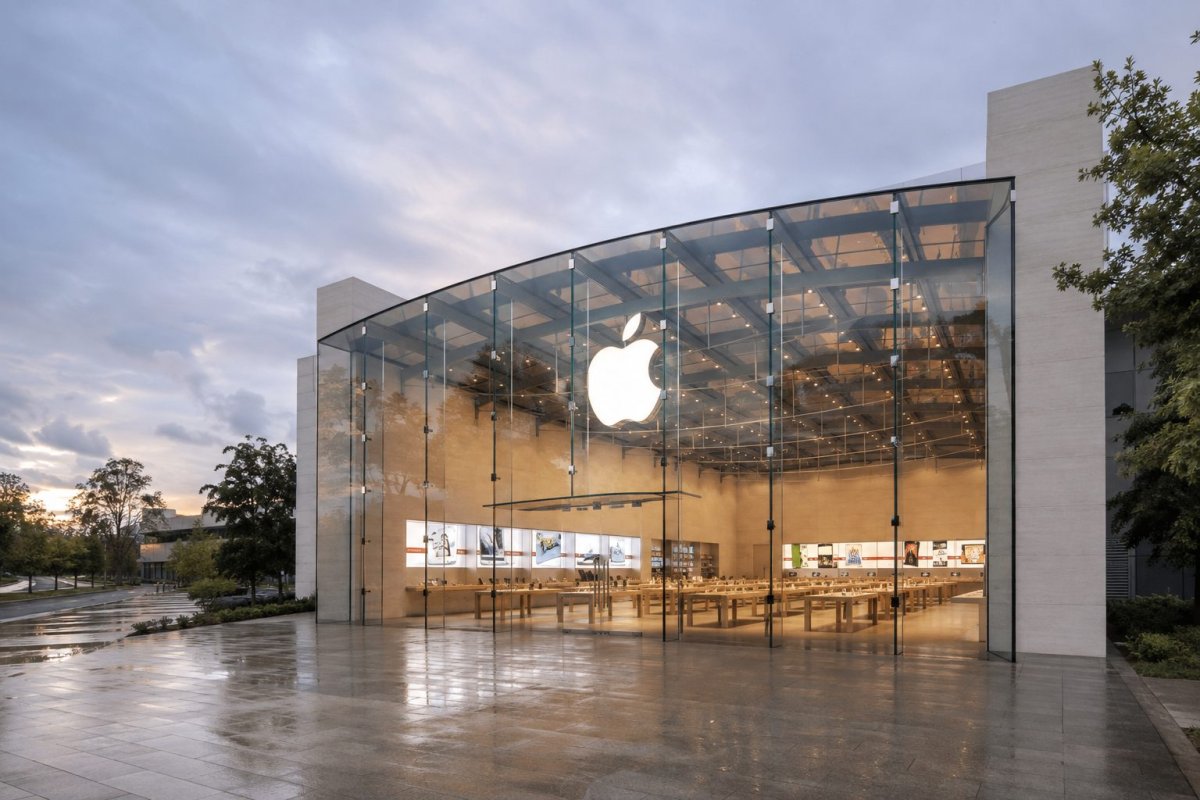
Apple Inc. (NASDAQ: AAPL) experienced a significant market value decline on Monday, shedding approximately $97 billion after Jefferies analysts downgraded the stock. The tech giant's shares fell 2.11% to $306.44, a decrease of $6.62 per share, erasing roughly $96.6 billion in equity value. The downgrade, issued by Jefferies analyst Edison Lee, moved Apple's rating from Hold to Underperform, with a new price target of $263.66, down from $285.56. This target implies a potential downside of 14.0% from the current share price.
Lee's bearish stance is driven by concerns over iPhone pricing and potential margin pressures. He highlighted rising memory costs and suggested that Apple may have abandoned its all-glass iPhone initiative due to inadequate production yields. Apple has not confirmed any details regarding this reported product decision, leaving investors to weigh the analyst's claims against the company's recent strong performance.
The market reaction was swift, with the bulk of the decline occurring before regular trading hours. Apple's stock opened at $306.83 and traded in a range of $304.61 to $307.49 as of 13:06 EDT. The company's market capitalization stood at $4.47 trillion, making it one of the largest publicly traded companies globally. The stock is currently trading 11.1% below its 52-week high of $344.57, with a trailing price-to-earnings ratio of 35.13.
The magnitude of the value decline is straightforward to calculate: multiplying the $6.62 per-share decrease by Apple's 14.59 billion shares outstanding yields approximately $96.6 billion. This figure remains unchanged, as share counts and real-time market prices are updated at separate intervals. To put this in perspective, the loss was roughly 358 times larger than Apple's quarterly dividend of $0.27 per share, which had an ex-dividend date on Monday.
Despite the negative sentiment, Apple's latest quarterly results were robust. In the fiscal third quarter, total revenue climbed 16.4% year-over-year to $109.42 billion, while net income rose 27.1% to $29.79 billion. iPhone revenue surged 21.7% to $54.25 billion, and Services revenue grew 12.1% to $30.74 billion. Diluted earnings per share came in at $2.02, up 28.7% from the prior year. Gross margin expanded to 50.1%, up 3.6 percentage points.
However, a closer look at the margin quality reveals that tariff refunds contributed approximately two percentage points to the reported gross margin. Without this temporary benefit, gross margin would have been around 48.1%, still nearly 1.6 points above the prior-year figure. This distinction is critical, as Jefferies' downgrade suggests that future margin expansion may be limited by rising component costs.
The analyst consensus on Apple remains largely positive, with 16 Buy ratings, 11 Hold ratings, and 4 Sell ratings among 31 analysts polled. Price targets range from $245 to $400, reflecting a wide divergence of opinion on the stock's valuation. The average consensus target of $332.33 implies an 8.5% expected increase, while Jefferies' target suggests a 14.0% decline, a gap of 22.4 percentage points in forecasted returns.
Other recent analyst actions include DBS maintaining a Hold rating with a $300 target, Bank of America Securities reiterating a Buy with a $380 target, UBS holding with a $296 target, and Evercore ISI maintaining a Buy with a $365 target. These varying perspectives underscore the ongoing debate about Apple's growth prospects and valuation premium.
Investors are now assessing whether Apple's 35-times earnings multiple already prices in future product innovation. The company's strong June quarter, which CEO Tim Cook called the "best-ever," provides a positive backdrop, but concerns about iPhone demand and margin sustainability persist. Jefferies' expectations have not been confirmed by Apple, and if iPhone demand remains strong or component costs ease, the negative outlook could be challenged. However, should memory costs continue to rise without the ability to pass on price increases, margins could face pressure, and the stock's premium valuation may be at risk.