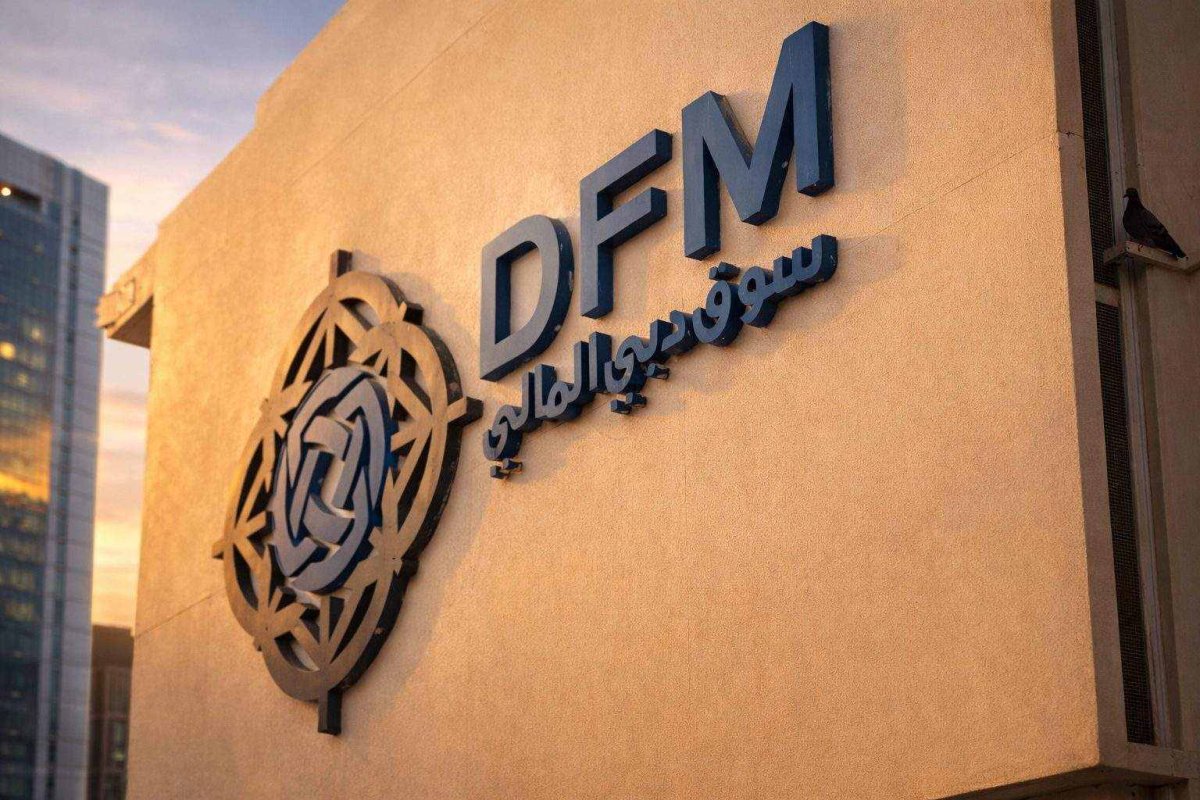
The Dubai Financial Market (DFM) experienced a turbulent week, with its benchmark index closing Friday, March 7, 2026, at 5,917.22 points. This represented a steep decline of approximately 9% from the previous week's close, marking one of the most significant weekly drops in recent memory. The selloff was exacerbated by a two-day suspension of trading earlier in the week, which compressed the week's activity into just three sessions.
Market Mechanics and Regulatory Response
In a bid to stabilize the volatile market, regulators in both Dubai and Abu Dhabi swiftly implemented a temporary 5% daily downside limit on price movements once trading resumed on Wednesday. This measure was designed to curb single-session plunges and prevent panic selling. The trading halt itself, which lasted for two days, was a direct response to escalating geopolitical tensions across the Middle East, which have severely dampened investor risk appetite.
The resumption of trading on Wednesday saw immediate and heavy selling pressure. The index closed that day at 6,197.19, with a trading volume of 161.5 million shares valued at 891.3 million dirhams. The selling continued unabated through the shortened week, with Friday's session alone witnessing a 3.2% decline in the main index.
Heavy Losses in Key Sectors
The downturn was broad-based but particularly acute in major blue-chip stocks. Property giant Emaar Properties saw its shares dragged down by 4.8%, while low-cost carrier Air Arabia slipped 4.9%. Banking heavyweight Emirates NBD also faced significant selling pressure. These three stocks were among the most actively traded by value, with Emirates NBD and Emaar leading turnover on Thursday, which saw a cash turnover of 1.33 billion dirhams.
Friday's trading session saw 322.9 million shares change hands, generating a total value of 1.16 billion dirhams. The data revealed a clear trend of foreign capital flight, with international investors acting as net sellers to the tune of 152.6 million dirhams on Friday alone. This exodus underscores how global investors are rapidly reassessing their exposure to regional risk assets.
Geopolitical Headwinds Trump Fundamentals
Analysts note that the market's reaction serves as a real-time gauge of investor risk tolerance amid the deteriorating regional landscape. "While the market may remain sensitive to regional developments, Dubai's underlying fundamentals are strong and could support a rebound," commented Milad Azar, an analyst at XTB MENA. However, the immediate price action suggests that geopolitical headlines are currently overshadowing economic fundamentals.
The conflict's widening scope has triggered outflows from emerging market equity funds, including those focused on the UAE, according to data from Reuters and LSEG Lipper for March. The overarching question for the coming week remains whether the conflict escalates further, prompting global investors to continue dumping risk assets without hesitation.
Other Market Developments
Amid the broader selloff, there was some company-specific activity. The Commercial Bank of Dubai traded ex-dividend on Friday, meaning investors purchasing shares from that session onward will not receive the recently declared dividend. Interestingly, despite the high volatility, the DFM's regulated short-sell report for the period covering March 4 to March 6 showed precisely zero short-selling activity, indicating that positioning was tight and the selloff was driven by outright selling rather than short bets.
For now, the market tape indicates that investors are treating Dubai as a primary locus of regional risk. The path forward for the DFM appears inextricably linked to geopolitical developments rather than corporate balance sheets. The next decisive move for the index, whether upward or downward, is likely to be dictated by news headlines emanating from the wider Middle East, continuing the pattern of high sensitivity to external shocks that characterized this turbulent week.