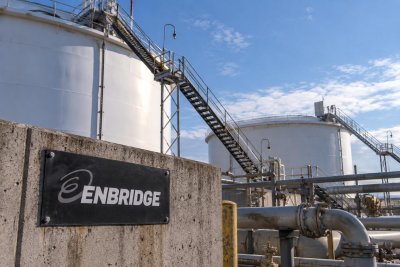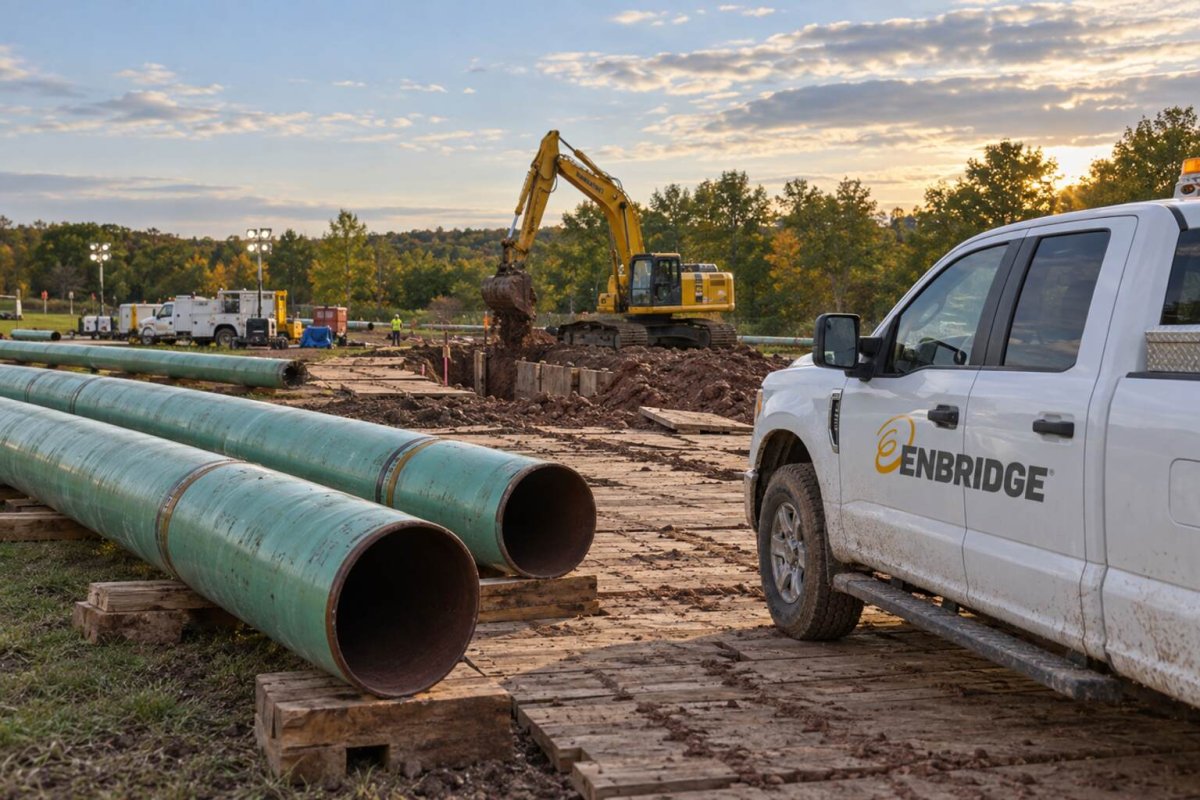
Enbridge Inc. (ENB) shares have remained remarkably resilient despite the company extending the shutdown of its Line 5 pipeline in Wisconsin to September 12. The stock traded at C$69.31 on the Toronto Stock Exchange Tuesday afternoon, down just C$0.01, and roughly 0.7% above its August 25 close—the day a subcontractor's unoccupied truck rolled into an excavation, struck the pipeline, and released natural gas liquids.
The modest market reaction suggests investors are treating the outage as an operational issue rather than a strategic setback. However, the extended timeline—now about a week later than the initial August 31-to-September 5 estimate—raises questions about the company's ability to meet its financial targets and complete a critical relocation project on schedule.
Line 5's Significance and Current Status
Line 5 is a 645-mile pipeline capable of transporting up to 540,000 barrels per day of light crude, synthetic crude, and natural gas liquids from Superior, Wisconsin, to Sarnia, Ontario. According to Canada's energy regulator, the line, together with connecting Line 78, feeds ten refineries. The current outage has forced Enbridge to redirect volumes and work with customers on contingencies, though the company has not quantified the financial impact.
In its latest update on September 7, Enbridge said crews are building a temporary bypass of roughly 1,500 feet. The company estimates that about 31,000 barrels of propane and butane vaporized and dispersed, with another 2,000 barrels contained in the excavation. By September 5, that amount had fallen to about 140 barrels. No injuries were reported, and air and water monitoring have shown no impact outside the exclusion zone.
Missed Deadlines and Investor Concerns
The stock's stability belies a pattern of missed restoration targets. Enbridge initially expected service to resume between August 31 and September 5, then targeted September 5, then September 6-8, and now September 12. Each delay can be explained by safety protocols and the behavior of the released liquids, but the cumulative effect is that the completion date—not the construction start—is the key metric for investors.
Analysts note that the market's restraint is grounded in financial fundamentals. Enbridge's annualized 2026 dividend is C$3.88 per share, yielding about 5.6% at the current price. The company's distributable cash flow (DCF) guidance of C$5.70 to C$6.10 per share implies a payout ratio of 63.6% to 68.1%, within management's target range of 60% to 70%. The company has not revised its 2026 adjusted EBITDA guidance of C$20.2 billion to C$20.8 billion or its DCF outlook.
The Billion Relocation Project
The same worksite is tied to a larger project: a 41-mile relocation of Line 5 in Wisconsin, budgeted at US$1 billion and scheduled to enter service in early 2027. Enbridge expects eligible capital to be added to its Mainline rate base once the project is operational. However, the Wisconsin Department of Natural Resources has raised concerns about recent construction events and asked Enbridge to halt reroute work until the release is resolved. Enbridge paused relocation construction for a safety stand-down, though the request was not a formal shutdown order.
Investors now need clarity on when full relocation work will resume and whether the early 2027 timeline remains credible. A short delay would likely be immaterial to Enbridge's broader backlog, but a prolonged regulatory hold or additional remediation costs could pressure the project's economics and delay rate-base additions.
What Would Change the Thesis?
Positive confirmation would come if Line 5 restarts on or before September 12 with no new environmental findings and no material change to the relocation schedule. A first warning would be another restart delay, a federal corrective order, or a quantified cost large enough to pressure 2026 DCF guidance. A bigger thesis break would occur if the relocation slips materially beyond early 2027 or if new permit conditions reduce the economics of placing the US$1 billion project into rate base.
At C$69.31, the market is signaling that the first outcome remains most likely. The stock's 5.6% yield is supported by current guidance, and the shares have not sold off since the incident. That is reasonable evidence of resilience, but it is not a reason to ignore a restart date that has already moved several times.