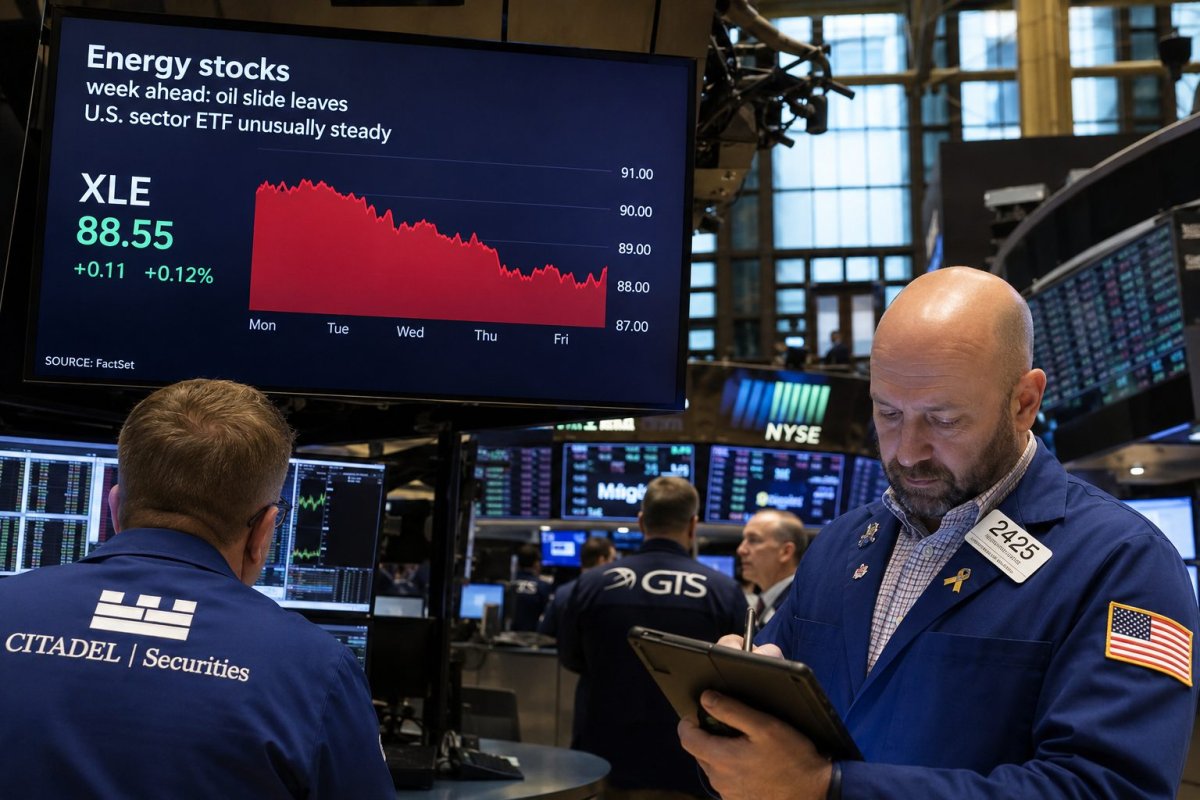
U.S. energy stocks enter a holiday-shortened week exhibiting a notable divergence from crude oil futures, as the Energy Select Sector SPDR Fund (NYSEARCA: XLE) held nearly flat despite a sharp decline in Brent crude prices. The XLE closed at $53.84 on Friday, slipping just 0.4% from the prior Monday's close, while Brent crude ended the session at $71.99 per barrel, plunging 10.86% since the Thursday before last, according to data from Investing.com. This gap underscores a fundamental shift in how investors are approaching the sector, moving away from treating it as a simple proxy for spot oil prices.
Diesel Margins Provide a Tailwind for Refiners
The U.S. diesel crack spread, a key measure of refining profitability, touched a three-week high last week, even as West Texas Intermediate crude tumbled roughly 22% this month. Ultra-low sulfur diesel futures fell just over 9%, reflecting relative strength in products. "It is pretty clear at the moment that oil market tightness is concentrated in products rather than crude," Rory Johnston, founder of Commodity Context, told Reuters. Cheaper crude oil can lower input costs for refiners, and tight diesel supply may keep margins firm. Valero Energy (NYSE: VLO) gained 1.7% on Friday, Marathon Petroleum (NYSE: MPC) rose 0.2%, and Phillips 66 (NYSE: PSX) showed little movement, according to market data.
Oilfield Services Face Twin Pressures
The outlook for oilfield services companies is more challenging, with two significant headwinds emerging. Baker Hughes (NASDAQ: BKR) reported that U.S. energy firms added 10 rigs in the week ended June 26, the largest weekly increase since June 2022. Oil rigs jumped by seven to reach 440, the highest count since June 2025. Meanwhile, Norway faces a labor dispute that could disrupt operations. Approximately 1,000 oil service workers were locked out on Saturday, and the standoff may impact drilling and some production across the Norwegian continental shelf. Offshore Norway estimated that oil output could drop by 12,000 barrels of oil equivalent per day next week. If the strike extends past mid-July, deeper production cuts could follow, affecting companies like SLB (NYSE: SLB), Halliburton (NYSE: HAL), and Baker Hughes.
Hormuz Flows Improve, Risk Premium Erodes
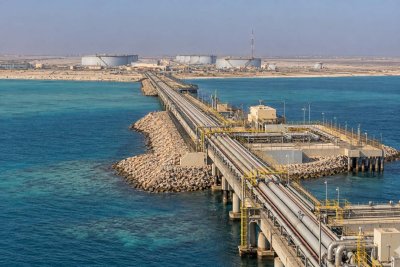
Brent crude's decline was driven by improved flows through the Strait of Hormuz. Saudi Aramco (TADAWUL: 2222) resumed loading crude at Ras Tanura on Friday, ending a pause that lasted nearly four months, with two very large crude carriers loading at the terminal, according to Reuters. "There is a growing sense that oil is going to keep moving through the Strait of Hormuz," said Phil Flynn, senior analyst at Price Futures Group. PVM's Tamas Varga told Reuters the market now expects "imminent oversupply." Despite the near-term bearishness, Barclays (LON: BARC) cut its Brent price outlook, lowering its 2026 forecast to $96 per barrel and 2027 to $85, citing increased exports through Hormuz. However, the bank also noted that inventories may drop in the coming weeks and expects its balance models to show a third-quarter deficit, suggesting the market may not remain loose for long.
Market Context and Outlook
U.S. markets face a tighter week for energy headlines, with a holiday-shortened schedule due to the Fourth of July. Key data points include the June payrolls report on Thursday and the weekly Energy Information Administration stocks report, along with the Baker Hughes rig count, before the long weekend. The XLE, which tracks the Energy Select Sector Index and includes 21 holdings with a forward P/E of 12.06 as of June 25, now reflects a more nuanced view of the sector. Investors are increasingly differentiating between refiners, which benefit from robust diesel margins, and oilfield services companies, which are grappling with both domestic rig growth and international labor disruptions. This divergence is likely to persist as crude prices remain under pressure from improved supply flows, while product markets stay tight.
Geopolitical Risks Remain Elevated
While the immediate risk premium on crude has diminished, geopolitical tensions in the Middle East persist. Saudi Aramco shares climbed 1.8% on Sunday, ending eight days of losses, but the main Saudi index slipped 0.2%. Markets in the Gulf remain on edge after Iran fired missiles and drones at U.S. bases in Kuwait and Bahrain, underscoring the potential for renewed supply disruptions. The energy sector's path forward will depend on how these geopolitical risks evolve, alongside the trajectory of product demand and the resolution of labor disputes in Norway.