European natural gas markets experienced a sharp rally on Wednesday, with prices climbing approximately 6% as escalating geopolitical risks in the Middle East compounded existing supply concerns. The primary catalyst was a series of new strikes targeting Iran's South Pars gas field, one of the world's largest, coupled with evacuation warnings issued across the Gulf region. These events intensified market anxiety that a significant outage at Qatar's liquefied natural gas (LNG) export facilities could extend for a prolonged period.
Price Action and Market Data
The benchmark Dutch TTF front-month futures contract settled at 54.66 euros per megawatt hour, marking a significant single-day gain. In the United Kingdom, the equivalent front-month gas contract advanced by 6.7%. This price surge arrives as Europe enters its critical spring and summer storage refill season with inventories at a notably low level. Current storage sits around 27%, which represents the lowest volume for this time of year since 2022, amplifying sensitivity to any supply disruption.
Policy Response and Supply Disruption
Reacting to the mounting pressure, European authorities moved swiftly to mitigate potential bottlenecks. The European Commission in Brussels instructed customs officials across the bloc to prioritize and clear all non-Russian gas cargoes within a 12 to 24-hour window. This directive aims to prevent wartime documentation and inspection procedures from choking off vital supply flows. The urgency stems from the ongoing outage at QatarEnergy's massive LNG export complex, which has a capacity of 77 million tonnes per year. This shutdown has effectively removed roughly 20% of global LNG supply from the market.
Indications suggest the disruption may be lengthy. According to industry sources, QatarEnergy has begun offering five additional LNG unloading and storage slots for April at Belgium's key Zeebrugge terminal, a move interpreted by traders as preparation for a sustained outage. Qatar's Energy Minister, Saad al-Kaabi, has publicly warned that restoring normal delivery schedules could take "weeks to months."
Geopolitical Context and Analyst Commentary
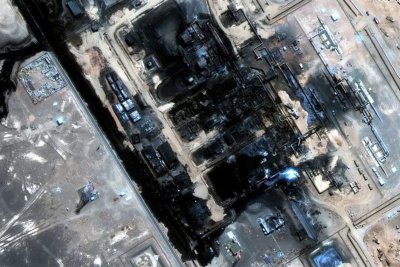
The immediate trigger for Wednesday's spike was reporting from Iranian state media confirming new strikes on the South Pars field and the nearby energy hub of Asaluyeh. In response, Tehran issued warnings that energy infrastructure in neighboring nations, including Saudi Arabia, the United Arab Emirates, and Qatar, could be future targets. "The evacuation notices landed in an already tight market," noted Tom Purdie, lead LNG analyst at Energy Aspects, highlighting how incremental news is driving volatility.
Analysts are assessing the broader risk to global energy corridors. Torbjorn Soltvedt, principal Middle East analyst at Verisk Maplecroft, pointed to the potential vulnerability of Saudi Arabia's critical east-west pipeline and its Red Sea export terminals. These facilities are considered key alternative routes for Gulf oil and gas should the Strait of Hormuz become blocked. This underlying fear of a wider conflict is prompting traders to aggressively buy near-term European gas contracts, pricing in a risk premium even before an official, large-scale supply disruption is declared.
Divergence with U.S. Market and Structural Factors
While European prices soared, trading in the United States was notably calmer. The benchmark Henry Hub futures contract hovered near $3.05 per million British thermal units (mmBtu), with prices edging about 1% lower on softer domestic demand projections and forecasts for milder weather. This transatlantic price gap underscores a fundamental structural difference: the U.S. shale boom has cemented a stronger domestic energy security position compared to Europe's import-dependent model.
Further analysis reveals limited global capacity to offset the missing Qatari volumes. Recent calculations show U.S. and Australian LNG producers—the world's other major exporters—operating with almost no spare capacity to quickly ramp up and fill the supply gap. This tightness exists despite the U.S. Energy Information Administration reporting record marketed natural gas output of 118.5 billion cubic feet per day in 2025.
Equity Market Reaction and Underlying Risks
The price moves reverberated through equity markets, though not uniformly. Shares of major U.S. LNG exporters with international exposure rallied. Cheniere Energy (LNG) added roughly 4%, while Venture Global LNG jumped 10.1%. In contrast, shares of EQT (EQT), a major U.S. domestic natural gas producer, dipped about 1%. This divergence highlights how investors are focusing on firms with significant export capabilities tied to international prices, rather than those primarily leveraged to the softer U.S. Henry Hub benchmark.
Despite the bullish momentum, risks to the rally persist. Warmer-than-expected spring weather across Europe or North America could rapidly curb heating demand. Furthermore, the EU's newly relaxed import rules are already enabling cargoes to be rerouted more swiftly to areas of shortage, which may eventually erode the current risk premium built into prices. Evidence of this demand sensitivity is emerging; gas-fired power generation in Europe has already fallen by approximately one-third since February as temperatures rise.
The market remains on high alert. After already surging roughly 50% in the first two weeks of the current Gulf conflict, European gas prices climbed again sharply on Wednesday. This persistent upward pressure is a clear signal that traders believe the full supply and geopolitical impact has not yet been fully priced into the market, leaving it vulnerable to further headline-driven volatility.