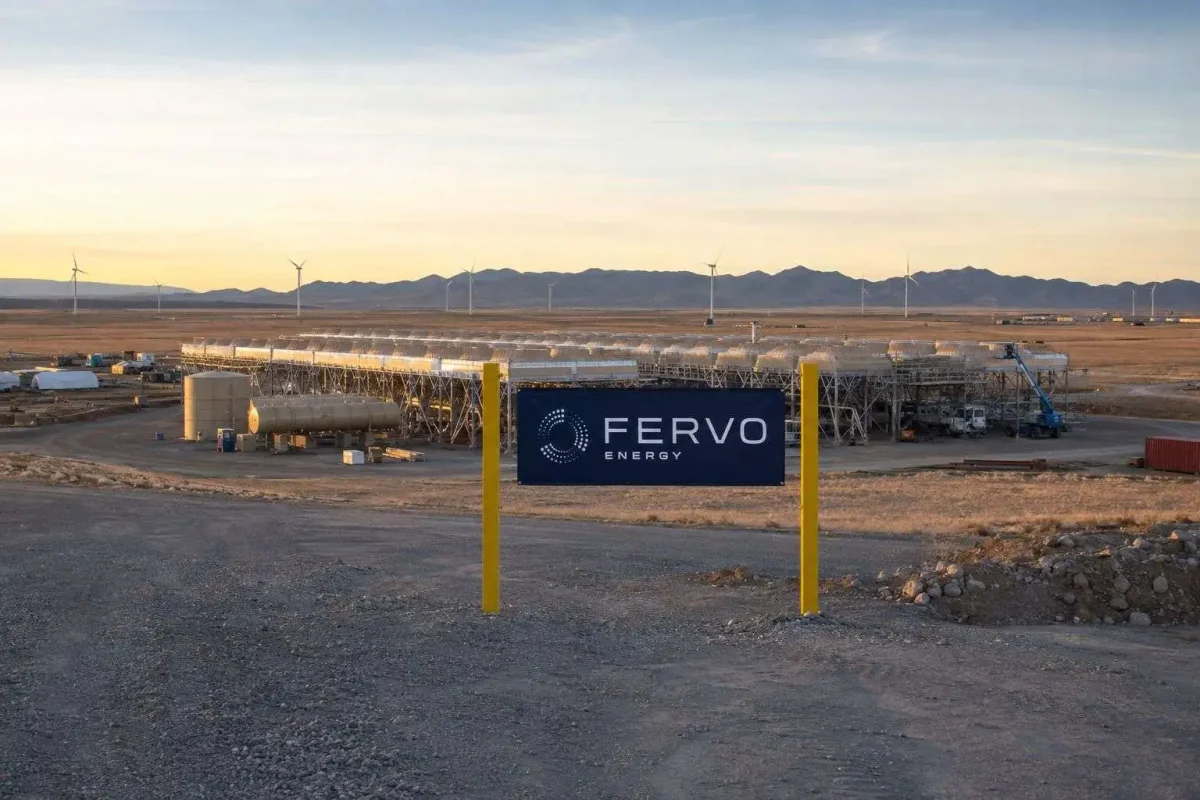
Fervo Energy (NASDAQ:FRVO) shares traded up 1.4% to $18.23 in premarket action Thursday, stabilizing after a volatile week that saw a surge and subsequent pullback tied to a landmark power purchase agreement with Google (NASDAQ:GOOGL). The stock remains 18.5% above Monday's close, even after a sharp 9.0% retreat on Wednesday.
The recent price action underscores the market's reassessment of Fervo's growth prospects following the announcement of a 396-megawatt (MW) power purchase agreement with Google's parent company, Alphabet. The deal, which involves power from Fervo's Cape Station project in Utah, is slated to deliver electricity by 2028, a timeline that suggests significant near-term investment before revenue ramps up.
Fervo's shares jumped 28.4% on Tuesday, only to give back a portion of those gains in the following session. Wednesday's trading volume surged to 19.5 million shares, roughly 4.9 times the three-month daily average, indicating that institutional investors are actively repositioning based on the long-term implications of the Google contract, rather than just short-term sentiment.
The company's second-half capital spending is forecast to be between $850 million and $900 million, a substantial outlay that will test the company's financial flexibility. As of June 30, Fervo held $2.11 billion in cash against $228 million in long-term debt, providing a cushion but also highlighting the capital-intensive nature of enhanced geothermal projects. The planned spending represents 40-43% of that cash balance, and the company is also expected to incur operating losses during this construction phase.
The Google agreement, which includes an option for an additional 600 MW by June 2030, is a significant validation of Fervo's enhanced geothermal technology. CEO Tim Latimer said the deal demonstrates that the technology is “ready to power the next generation of computing infrastructure.” However, the optional capacity is not a firm purchase commitment, and final data-center plans are subject to approvals and commercial conditions.
Investors are now focused on the execution of Fervo's near-term milestones. The company is targeting test power from the first 33 MW block at Cape Station in the fourth quarter, with full Phase I production expected to ramp up through early 2027. These operational milestones will be crucial in validating the project's technical and economic viability.
The financial implications are substantial. Fervo estimates that the installed cost for Cape Station Phase II is approximately $5,500 per kilowatt, which translates to a total cost of around $2.2 billion for a 400 MW expansion. While the Google contract provides long-term revenue visibility, the company has not disclosed the electricity price or the contract's total value, leaving investors to wait for more detailed financial guidance.
Several risks remain, including potential construction delays, reservoir performance issues, permitting hurdles, and the possibility that the optional 600 MW may never materialize. Higher-than-expected costs could also erode the cash cushion faster than anticipated. The market will be closely monitoring Fervo's progress in the coming quarters as it navigates the path from development to commercial operation.
Fervo's recent IPO raised approximately $2.2 billion in May, providing the necessary capital to fund its ambitious construction plans. The company's market value currently stands at $5.30 billion, reflecting investor confidence in its long-term strategy despite the near-term challenges.