Fervo Energy Company (NASDAQ:FRVO) experienced a significant stock surge on Tuesday, with shares climbing 24.4% to $19.14 in morning trading. The rally followed the announcement of a landmark geothermal power purchase agreement with Google, a subsidiary of Alphabet Inc. (NASDAQ:GOOGL). The market capitalization boost of approximately $1.11 billion underscores investor enthusiasm for the deal, which marks Fervo's largest commercial contract to date.
Trading volume reached 16.1 million shares by 10:42:32 EDT, reflecting heightened investor interest. The implied equity value increase translates to roughly $2.8 million per newly contracted megawatt, a metric that analysts note reflects market sentiment rather than project-specific valuation. Despite the surge, Fervo's stock remains 29.1% below its initial public offering price of $27 from May, suggesting lingering caution among some investors.
Details of the Google Agreement
Under the terms of the agreement, Google will purchase 396 megawatts (MW) of capacity from Fervo's Cape Station project in Utah, which is slated to commence commercial operations in 2028. Additionally, Google holds an option to expand its offtake by up to 600 MW, potentially bringing total purchases to nearly one gigawatt by June 2030. The financial terms, including the power price, were not disclosed in either Fervo's announcement or its Form 8-K filing with the SEC.
Fervo CEO Tim Latimer highlighted that the deal demonstrates the capability of enhanced geothermal systems to support large-scale computing infrastructure. Michael Terrell, a senior director at Google, expressed optimism that the initiative could reduce energy costs over time, aligning with the company's sustainability goals.
Financial Position and Capital Expenditure Plans
Fervo reported cash holdings of $2.11 billion as of June 30, 2026, providing a substantial cushion for its upcoming capital program. The company projects second-half capital expenditures of $850 million to $900 million, with the midpoint of $875 million representing 41.5% of its cash reserves. This spending is primarily directed toward the construction of Cape Station and other development activities.
In the second quarter, Fervo recorded capital expenditures of $226.5 million, more than double the year-ago figure. The company also reported a net loss of $55.9 million for the quarter, reflecting the heavy investment phase. Revenue for the first half of 2026 was minimal at $174,000, as commercial operations have not yet commenced.
Market Context and Analyst Perspective
The stock surge adds to a volatile trading history for Fervo, which went public in May. The company's market capitalization now stands at approximately $5.64 billion, based on 294.8 million shares outstanding as of August 10. The day's gain of $1.11 billion is equivalent to 1.3 times the projected second-half capex, highlighting the market's positive reception of the Google deal.
However, analysts caution that the agreement does not guarantee immediate revenue. Fervo's most recent filing indicates that large-scale commercial activities have not yet launched, and the PPA remains subject to construction milestones, permit approvals, and grid interconnection. The option for additional capacity is not binding, and higher costs or slower drilling progress could increase cash requirements and delay revenue generation.
Upcoming Milestones and Risks
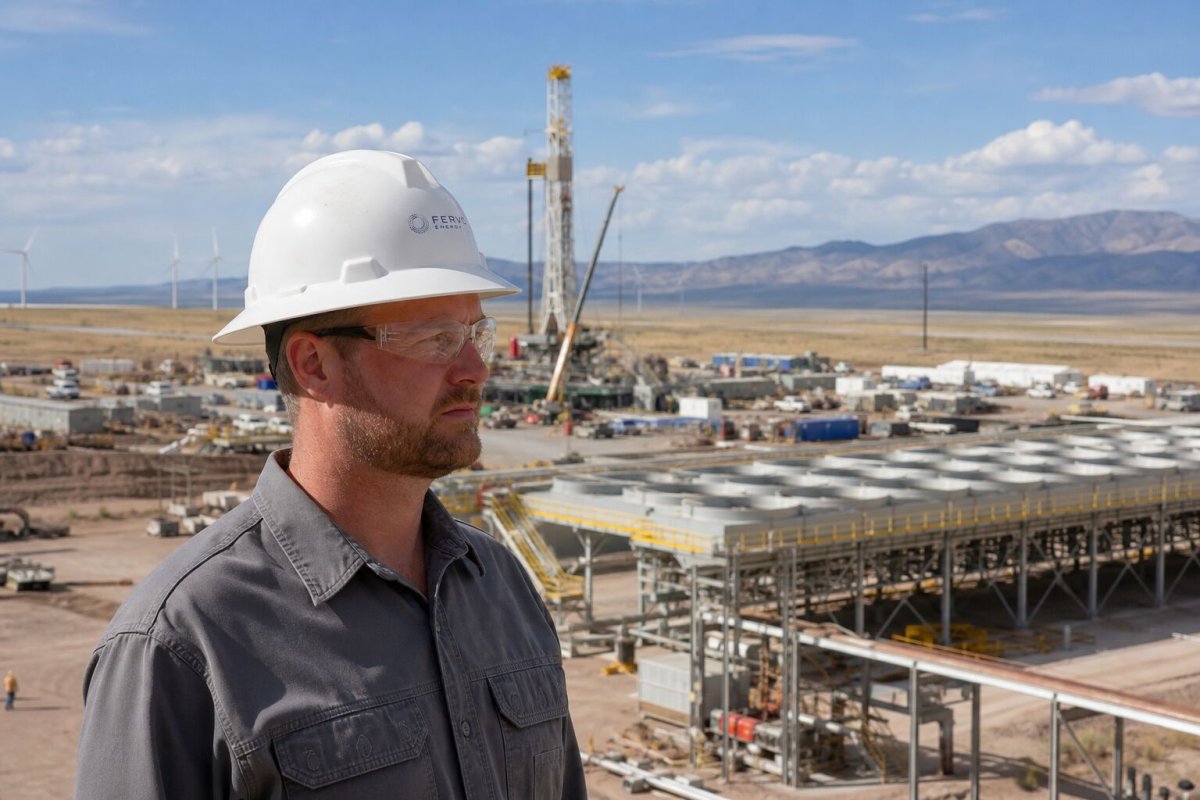
The immediate focus for Fervo is the initial power generation from GeoBlock 1 at Cape Station, expected in the fourth quarter of 2026. Two additional units are projected to come online in early 2027, with eight GeoBlocks for Phase II planned for 2028. These milestones will be critical in validating the project's viability.
While the Google agreement reduces demand risk, investors remain focused on execution. The upcoming test of initial power generation will be a key catalyst. Until then, Fervo's valuation hinges on its secured capacity and the successful implementation of its construction plans.
In summary, Fervo's partnership with Google represents a significant step forward for the enhanced geothermal sector, but the path to profitability is still under construction. The company's substantial cash reserves provide a buffer, but the real test lies in delivering on its ambitious timeline.