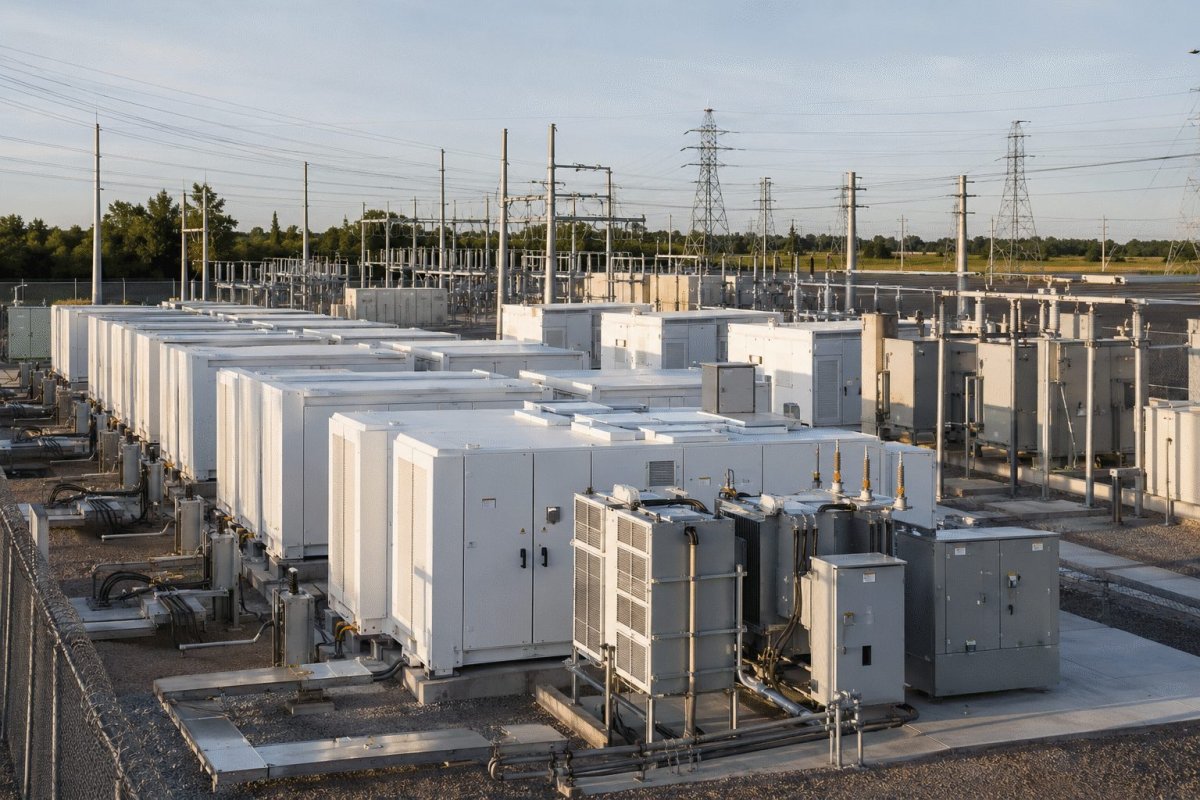
Shares of Fluence Energy (NASDAQ: FLNC) climbed 4.7% to $11.37 by early afternoon trading on Tuesday, extending a premarket surge of 8.7%. The rally followed UBS's decision to upgrade the stock from Sell to Neutral, lifting its price target from $9 to $12. The bank's move reflects a nuanced interpretation of the company's recent guidance cut: rather than signaling a loss of demand, UBS views it as a timing shift in project deliveries.
UBS analyst Jon Windham highlighted that Fluence's reduced fiscal 2026 revenue forecast is primarily due to postponed deliveries of approximately $400 million, now expected to be realized in fiscal 2027. This deferral stems from construction and manufacturing delays, not a weakening in customer demand. Windham projects the company's annual revenue will grow by 22% through 2030, underpinning a more constructive outlook.
The upgrade comes after a tumultuous period for Fluence, which saw its stock drop 23% in early August following a challenging fourth quarter that included $1.4 billion in setbacks tied to factory issues. The new UBS price target of $12 is just 5.5% above the stock's midday price, suggesting limited upside in the near term, but the removal of the most bearish rating among major banks provides a psychological boost to investors.
Supporting the bullish thesis is Fluence's robust order book. In the fiscal third quarter, order intake exceeded $1.44 billion, nearly triple the year-ago figure. The company's backlog reached a record $6.4 billion, offering strong visibility into future revenue. Additionally, data center demand has emerged as a key growth driver, with Fluence securing approximately $850 million in contracts from this sector by July, including around $550 million from hyperscaler deals.
However, the company's financial performance remains under pressure. Quarterly revenue increased 7.9% to $649.8 million, but GAAP gross margin contracted sharply to 5.1% from 14.8% in the same period last year. Fluence posted a net loss of $44.3 million, with adjusted EBITDA at negative $29.3 million. Management has lowered its fiscal 2026 revenue guidance to a range of $2.9 billion to $3.1 billion, with a midpoint of $3.0 billion—an 11.8% reduction from the previous midpoint of $3.4 billion.
The adjusted EBITDA midpoint also dropped by $60 million to negative $10 million. Notably, the company's annual recurring revenue guidance remained unchanged at $180 million, indicating that subscription-based revenue streams are holding steady. Chief Financial Officer Ahmed Pasha reassured analysts that the deferred revenue remains in the backlog and is expected to be recognized in fiscal 2027.
Fluence ended June with $863 million in liquidity, including roughly $365 million in cash, providing a cushion to navigate ongoing operational challenges. At the current share price of $11.37, the company's market capitalization stands at approximately $2.1 billion, or about 0.70 times the midpoint of its projected fiscal 2026 revenue—a relatively modest valuation that may appeal to value-oriented investors.
Despite the positive momentum, risks remain. The backlog may not convert as planned or achieve projected margins. Manufacturing delays, higher supply costs, and project scheduling issues could keep cash flow subdued even with robust order levels. The market is now looking for proof of execution rather than just a favorable demand narrative.
Tuesday's advance effectively eliminates the most negative official rating among notable recent recommendations. The key operating issue—translating a strong backlog into profitable growth—remains unresolved. Investors will be closely watching Fluence's next earnings report for signs that the deferred revenue is indeed on track for fiscal 2027 delivery.