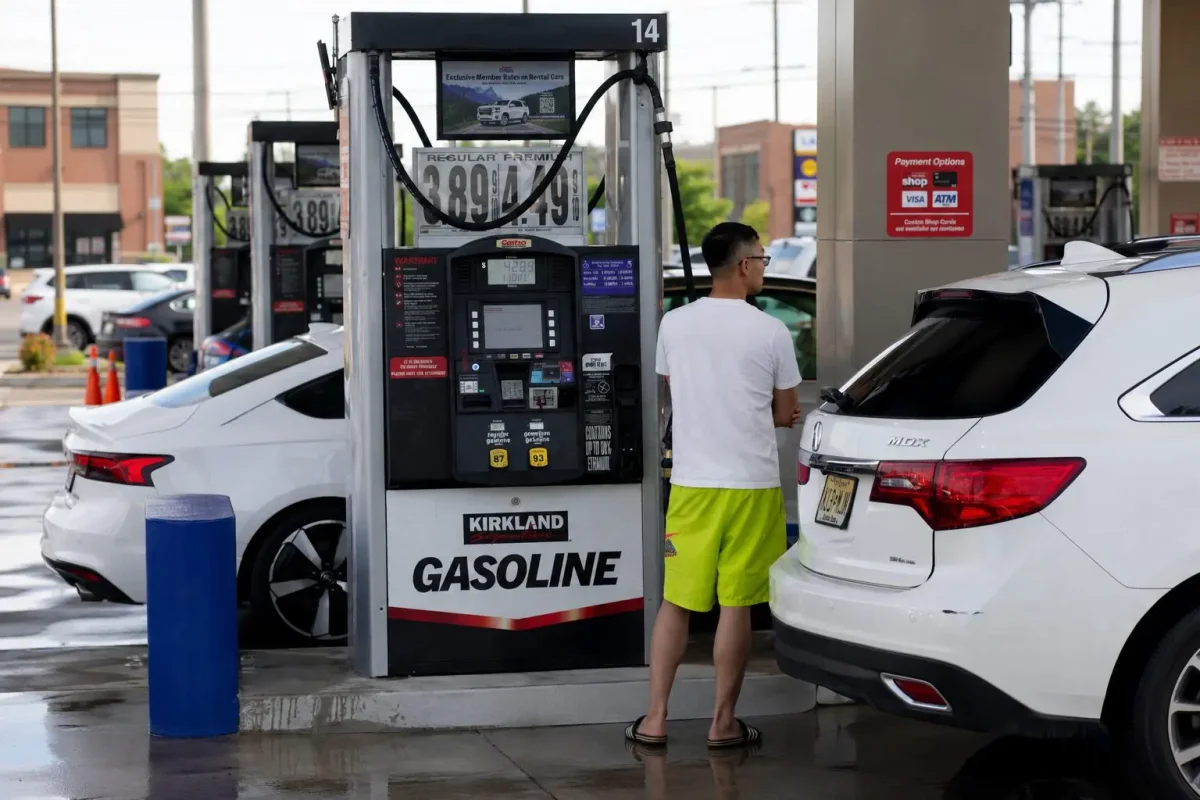
NEW YORK, June 18, 2026 – U.S. gasoline prices fell below the $4 per gallon threshold on Thursday, offering some respite to motorists following months of elevated costs driven by geopolitical tensions in the Middle East. According to AAA data, the national average for regular unleaded gasoline stood at $3.999, the lowest level since March.
Oil Markets React to Iran Deal
The decline in pump prices follows a significant drop in crude oil benchmarks after the United States and Iran reached an interim agreement aimed at reopening the Strait of Hormuz. The deal, which includes a memorandum of understanding signed by President Donald Trump and Iranian President Masoud Pezeshkian, is designed to ease the supply shock that had pushed both oil and gasoline prices higher. Under the terms, Iran will allow commercial ships to pass through the strait without fees for 60 days, while the U.S. will lift its blockade on Iranian ports within 30 days.
Brent crude futures fell 2.33% to $77.69 per barrel, while West Texas Intermediate (WTI) crude dropped 2.46% to $74.90, according to Reuters. Phil Flynn, senior market analyst at Price Futures Group, commented that the potential reopening of the Strait of Hormuz "removed the big risk premium" from the market. The strait is a critical chokepoint, carrying approximately 20% of the world's oil supply.
Consumer Relief May Be Gradual
Despite the immediate market reaction, analysts caution that the benefits for consumers may take time to materialize. Banks including Goldman Sachs and Bank of America have highlighted several factors that could delay a full recovery in oil flows. These include ongoing shipping risks, stalled production, and the need for mine-clearing operations in the strait. Goldman Sachs projects that Gulf exports could return to normal by the end of July, with crude output following by October. Bank of America warns that mine clearance could drag on for months, and even after official clearance, shipowners may remain hesitant to resume normal operations.
Fatih Birol, executive director of the International Energy Agency (IEA), voiced support for the deal but emphasized the need for the strait to be reopened "without conditions" to ensure market confidence. He also credited Saudi Arabia and the United Arab Emirates for establishing alternative shipping routes outside the strait, which could bolster supply reliability in the future.
Political Uncertainty Lingers
The political landscape remains uncertain. Vice President JD Vance described Thursday as the start of a 60-day negotiating window, with final governance terms for the strait to be negotiated later. Reuters noted that most analysts doubt a comprehensive settlement can be reached within that timeframe, leaving the door open for potential disruptions.
The drop in gasoline prices, while welcome, still leaves the national average about 25% higher than the same period last year, when AAA reported an average of $3.188. Regional disparities persist: California drivers face an average of $5.64 per gallon, while those in South Carolina enjoy prices as low as $3.58, according to the Associated Press. Factors such as refinery supply, state taxes, and transportation costs contribute to these differences.
Market Outlook
Patrick De Haan, head of petroleum analysis at GasBuddy, told CBS News that if Iran is allowed back into the global oil market, inventories could recover more quickly. He suggested that gasoline prices might continue to decline "as long as there isn't a drastic reversal" in U.S.-Iran negotiations. However, the IEA head's call for unconditional reopening underscores the fragility of the current situation.
Investment Disclaimer: This publication does not constitute investment advice, financial advice, trading advice, or a recommendation regarding any security or investment strategy. The opinions and information contained herein are based on publicly available sources that we believe to be reliable. Investors should conduct their own due diligence and seek independent professional advice before making any investment decisions. All investments involve risk, including the risk of loss.