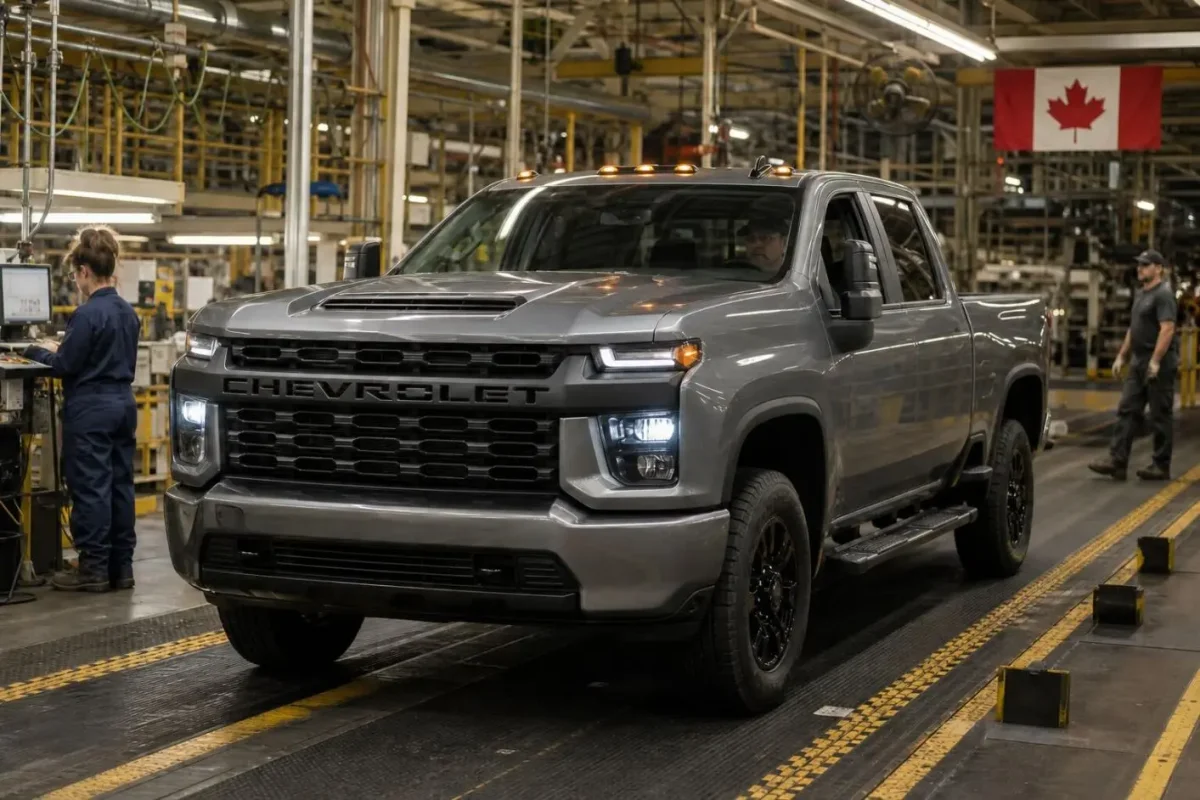
General Motors (NYSE: GM) saw its shares decline 0.8% on Tuesday, closing at $85.63, as investors weighed the impact of a new C$1.4 billion investment in Canada against the backdrop of escalating tariff threats. The company's stock slipped 0.80% during regular trading hours, ending a five-session losing streak with volume of 5.17 million shares.
The investment, announced alongside a new three-year labor agreement with Unifor, covers truck and powertrain facilities in Ontario. While the total commitment is substantial, its annualized value—approximately US$334 million based on the exchange rate at the time of the deal—represents only about 3% of GM's midpoint capital expenditure guidance for 2026. This suggests the financial impact on the company's broader spending plans is manageable, at least in the absence of additional trade policy shocks.
Focus on Key Facilities
The bulk of the investment is concentrated in two plants. Oshawa will receive an additional C$144 million for the next-generation GMC Sierra Heavy-Duty, on top of a previously announced C$343 million for truck production and facility upgrades. This brings total intended investment in Oshawa to nearly C$500 million. Meanwhile, St. Catharines is slated to receive C$215 million for next-generation transmission production, with construction expected to begin in late 2029. This follows an earlier C$691 million commitment for sixth-generation V8 engine manufacturing.
Combined, these commitments total C$1.393 billion across the two sites, underscoring GM's strategic focus on high-margin pickup trucks and SUVs. The company's North American operations posted an 8.6% adjusted margin in the latest quarter, driven by strong demand for these vehicles. The GMC Sierra, in particular, achieved its best-ever second-quarter sales, even as overall U.S. deliveries fell 4% to 714,896 vehicles.
Labor Costs Rise
The new contracts also bring higher labor costs. Production workers will see their hourly wage rise to C$50.20, while skilled trades workers will earn C$62.71 per hour. The agreements maintain cost-of-living adjustments and include two cash bonuses. Workers at GM Canada's main operations approved the contract with 80.5% support, while the CAMI Assembly agreement received 96.5% approval. Combined, the contracts cover more than 4,600 employees across four Ontario sites.
GM Canada President Jack Uppal hailed the deals as providing "meaningful improvements to wages, benefits and job security." The automaker also extended layoff benefits at the idle CAMI Assembly plant as it evaluates future work options, a move that may help mitigate concerns about the plant's long-term viability.
Tariff Risk Remains the Wildcard
Despite the positive aspects of the investment, trade policy continues to cast a shadow. Canadian-made vehicles are currently subject to a 25% U.S. tariff, with Washington warning that this could rise to 50% starting January 1, 2027. According to Barclays, roughly 17% of Chevrolet Silverado production is based in Canada, making the cross-border truck segment particularly vulnerable to tariff escalation.
Higher tariffs could erode the cost advantages that make Canadian truck manufacturing profitable, while rising wages may further compress margins. A downturn in pickup demand could also reduce the returns on the expanded capacity. These factors likely contributed to the market's cautious reaction to the investment news.
Financial Position Supports the Plan
GM's second-quarter results provide some cushion. Revenue rose 1.9% to $48.03 billion, while adjusted EBIT jumped 29.8% to $3.94 billion. Adjusted automotive free cash flow surged 78% to $5.03 billion. The company maintains its 2026 capital spending outlook of $10 billion to $12 billion and expects adjusted automotive free cash flow of $9.5 billion to $11.5 billion, suggesting the Ontario investment is affordable under current conditions.
However, investors will be watching closely for any further developments on the tariff front, as the potential for increased duties could quickly alter the calculus. For now, the market's modest decline reflects a balanced view of the investment's long-term benefits against the near-term trade policy risks.