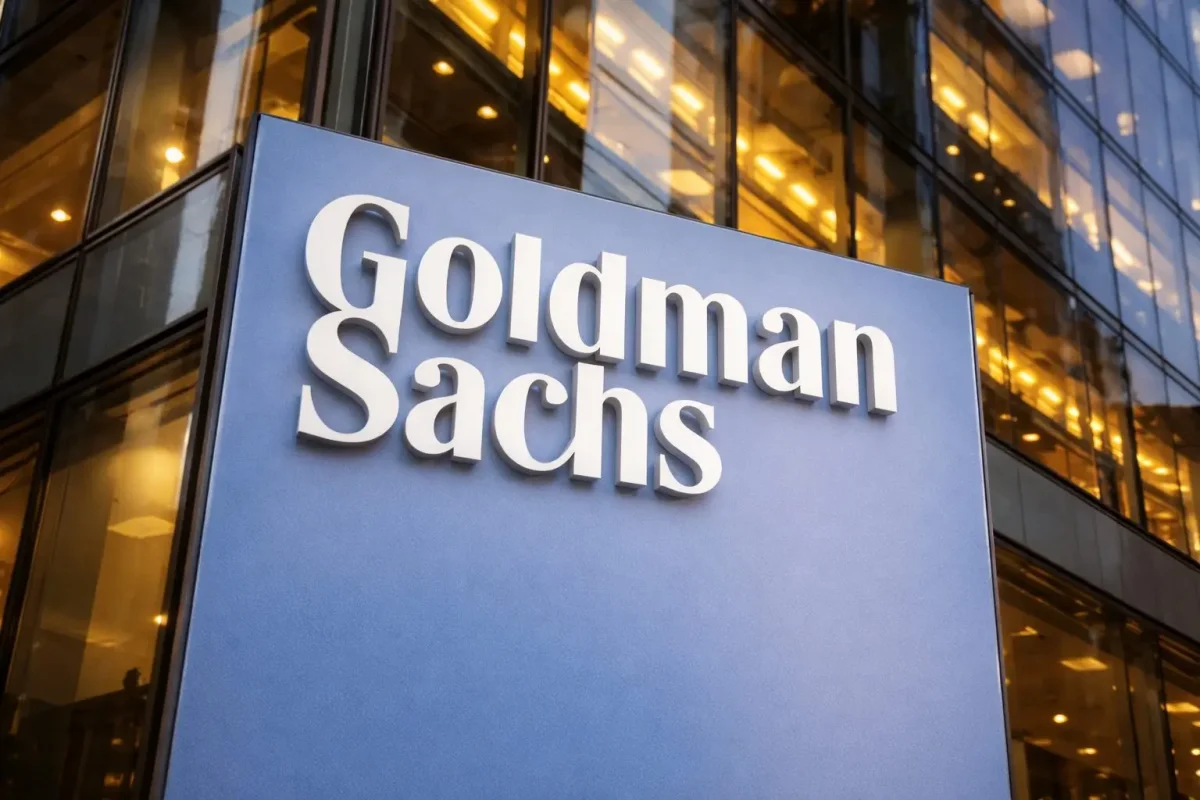
Shares of Goldman Sachs Group Inc. climbed approximately 1% during Monday's trading session in New York, a notable rebound following a sharp downturn last week. The financial giant's stock reached $863.84 by late morning, demonstrating resilience as the wider market struggled under the weight of heightened geopolitical anxieties and a surge in crude oil prices.
Market Context and Risk Sentiment
The advance in Goldman's share price is significant given its typical role as a high-beta proxy for broader risk appetite. The bank's performance often foreshadows shifts in economic sentiment, reacting to changes in deal flow, trading activity, and credit conditions well before the wider market adjusts. The current bid for the stock suggests some investors may be reassessing their most pessimistic outlooks following the recent pullback.
This movement unfolds against a backdrop of macro-driven headlines dominating trader focus. The financial sector frequently bears the brunt of such pressures, as rising energy costs can rekindle inflation concerns and complicate the interest rate outlook. Furthermore, geopolitical instability can freeze capital markets activity and corporate dealmaking, directly impacting investment banking revenues.
Goldman's Credit Division and Peer Comparison
In an effort to soothe investor concerns, Goldman's asset management division disclosed details regarding its private credit operations late last week. The firm reported that redemptions from its GS Credit funds for the fourth quarter amounted to 3.5%. This figure sits below the 5%-plus range that the bank indicated is typical among its competitors in the private credit space, a market segment that operates outside traditional banking channels through fund structures.
Meanwhile, major U.S. stock indices trended lower on Monday. Investors shifted capital into perceived safe-haven assets following reports of joint U.S. and Israeli military strikes against Iran, which sent crude oil prices soaring over 8%. "The market is taking it relatively well," commented Adam Turnquist, chief technical strategist at LPL Financial, regarding the initial market reaction to the geopolitical developments.
Dividend and Sector Performance
Goldman Sachs traded ex-dividend on Monday, setting the stage for its next quarterly cash distribution. Shareholders of record will receive a payment of $4.50 per share, scheduled for March 30.
The banking sector exhibited mixed performance. While Goldman managed gains, shares of Bank of America and Citigroup moved lower in early trading. Despite its relative strength on Monday, Goldman has experienced considerable volatility in recent sessions compared to other major financial institutions.
Risks and Forward-Looking Concerns
Analysts warn that the oil price shock may persist. According to commentary flagged by Reuters, Wells Fargo strategist Ohsung Kwon noted that if crude oil sustains a level above $100 per barrel, the S&P 500 index could potentially fall to the 6,000 mark. Such a scenario could trigger a repricing of credit risk and exert fresh downward pressure on speculative assets.
Goldman's investors are also weighing another, longer-term factor: the potential for artificial intelligence-driven disruption in enterprise software to eventually filter into leveraged loan and private credit portfolios. In a recent investor communication, Goldman stated it "does not underestimate the risk of AI disruption," emphasizing its ongoing efforts to scrutinize new deals for such emerging risks.
Upcoming Economic Catalysts
Market participants are now turning their attention to key upcoming economic events. The U.S. Bureau of Labor Statistics will release the February Employment Situation report on Friday, March 6, at 8:30 a.m. Eastern Time. Following that, the Federal Open Market Committee is scheduled to convene for its two-day policy meeting on March 17-18, where officials will deliberate on the path of interest rates amidst the evolving inflation and growth landscape.