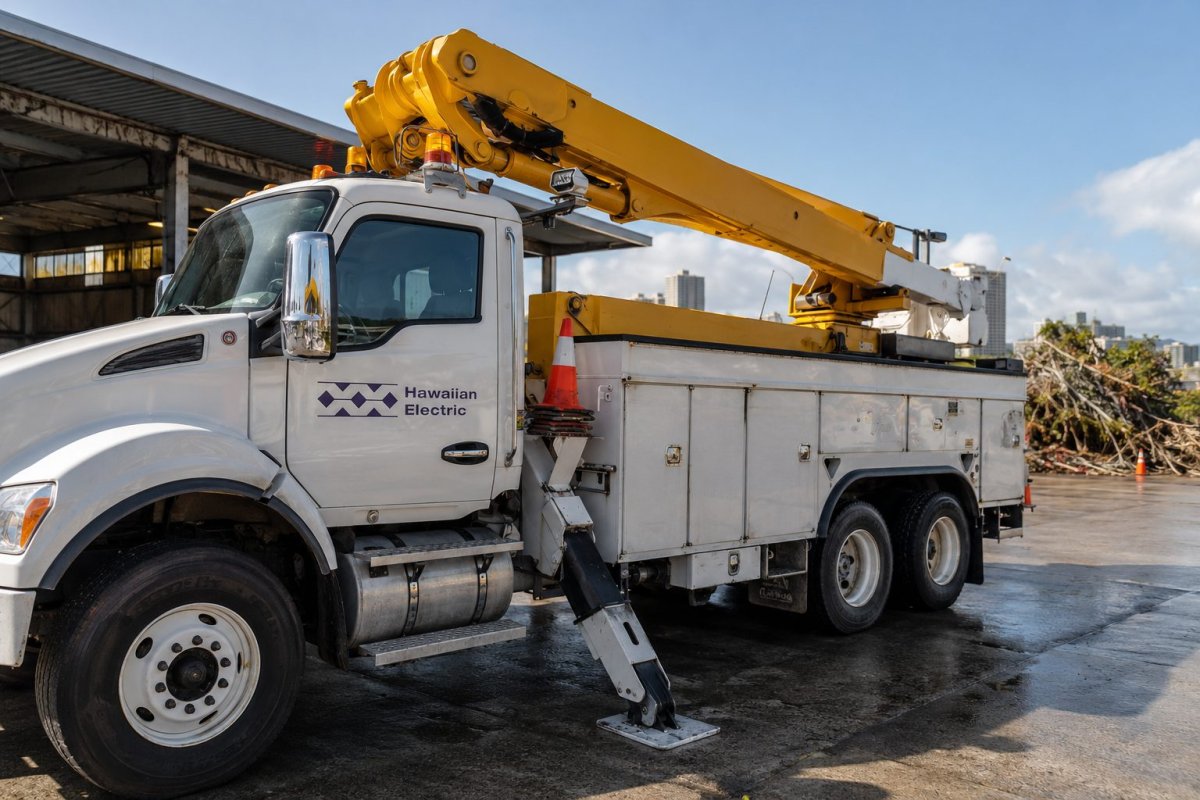
HONOLULU, August 18, 2026 – Hawaiian Electric Industries (NYSE:HE) has made significant strides in restoring power after Tropical Storm Lala, but a substantial portion of its customer base remains in the dark. As of Monday evening, outages had fallen by 50.3% from Sunday's peak, yet approximately 88,670 accounts—representing 18.7% of the utility's 474,241 customers—were still without electricity.
The rapid restoration pace is a key indicator for investors, as it may help contain repair costs and minimize lost operating efficiency. However, the company has not disclosed an estimated cost for the restoration effort, and damage to remote transmission lines could keep crews deployed for days or even weeks. The New York Stock Exchange cash session was closed at the time of publication, with trading set to resume at 3:30 a.m. HST (9:30 a.m. EDT).
Outage Snapshot
- Sunday, 7 p.m. HST: 178,400 customers offline (37.6%)
- Monday, 7 a.m. HST: 117,300 customers offline (24.7%)
- Monday, 6 p.m. HST: 88,670 customers offline (18.7%)
- Peak-to-latest change: -89,730 customers (-18.9 percentage points)
Sources: Hawaiian Electric and Reuters. Percentages calculated from the utility's year-end 2025 customer count.
Hawaiian Electric reported that crews discovered “significant damage” in remote areas, with helicopters conducting line inspections on Monday while teams worked to repair major transmission links. Approximately 100 utility workers from the mainland are expected to arrive on Tuesday to bolster restoration efforts. Earlier in the day, the company had reported 117,300 customers offline, meaning nearly 55,000 had regained service overnight. Tropical Storm Lala inflicted damage across Hawaii Island, Maui, and Oahu.
While the latest figures show meaningful progress, the remaining outage footprint is larger than what many mainland utilities face after severe weather. Hawaiian Electric operates on isolated island grids, which limits the availability of outside support and complicates logistics.
Financial Context
The storm arrives at a challenging time for the utility. In the second quarter, core net income fell 36.4% to $22.5 million, driven by higher operating and interest costs, despite a 25.9% increase in revenue to $939.7 million. Core earnings per share dropped to $0.13 from $0.20 a year earlier. Utility core net income also declined 23.3% to $32.6 million.
Management ended June with approximately $1.3 billion in consolidated liquidity, which could help absorb restoration expenses. The company has also identified $190 million in climate-adaptation investments through 2035. However, the balance sheet remains burdened by wildfire obligations. HEI paid the first $479 million installment of the Maui settlement in April, with three equal annual installments still unfunded, according to company filings.
Analyst Sentiment
Wall Street was cautious even before the storm. Jefferies reiterated an Underperform rating with a price target of $11.75 in July, citing revenue uncertainty. Barclays maintained an Equal Weight rating with a $13.00 target. The consensus among three analysts is 0 Buy, 2 Hold, and 1 Sell, with an average target of $12.75.
What to Watch
Investors should monitor three key updates: the number of customers restored, the return of transmission lines to service, and any cost estimates. The first two measure execution, while the third will determine the earnings impact. Risks include repair costs exceeding expectations, access problems slowing restoration, and the possibility of further storms disrupting progress. Regulatory recovery of extraordinary costs is not assured.