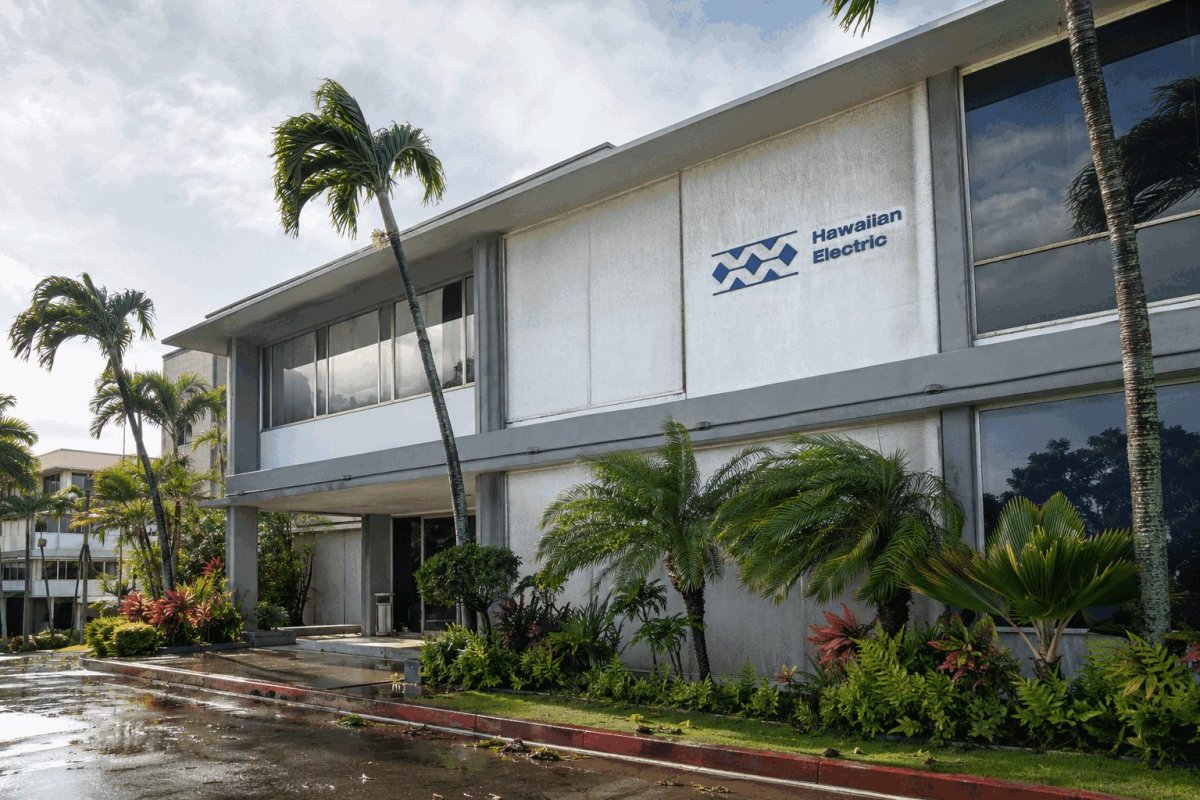
As U.S. premarket trading kicks off for the week, Hawaiian Electric Industries (NYSE: HE) is in the spotlight after Tropical Storm Lala left a significant portion of its customer base without electricity. Approximately 130,000 customers on the island of Oʻahu were still without power on Sunday morning, representing roughly 41.8% of the company's 310,789 accounts on the island. The storm has raised concerns about the financial impact on the utility, which was already grappling with rising costs and a decline in core quarterly earnings.
Storm's Widespread Impact
The outages are not confined to Oʻahu. By Sunday afternoon, the total number of customers without power across the state had climbed to 183,123. At the peak of the storm on Sunday, over 220,000 Oʻahu customers were in the dark, exceeding 70.8% of the island's customer base. Other islands also saw significant disruptions: Hawaiʻi Island reported 31,792 outages (34.8% of its 91,234 accounts), and Maui County had 7,203 outages (10.0% of its 72,218 accounts). These figures are snapshots and not cumulative, but they underscore the widespread nature of the damage.
Lala caused damage to at least 100 homes, and repair efforts have been hampered in some areas by flooding and downed trees. The storm was expected to move away from the islands by Monday morning, but the restoration process is likely to be lengthy, particularly in regions with damaged roads or transmission infrastructure.
Financial Strain on Hawaiian Electric
The timing of the storm is particularly challenging for Hawaiian Electric. The company had already reported a 37% drop in core quarterly profit before Lala struck. In the second quarter, core net income fell to $22 million, or $0.13 per share, from $35 million, or $0.20 per share, a year earlier. The decline was driven by higher interest expenses and operating costs, including previous storm recovery efforts, insurance premiums, vegetation management, and cybersecurity investments.
The company's GAAP net income, however, surged 373% to $123 million, thanks to a non-cash after-tax gain of $101 million related to discounting outstanding wildfire settlement payments. This gain masks the underlying operational challenges, as core income, which excludes wildfire-related and strategic-review items, tells a more sobering story.
Hawaiian Electric anticipates that its adjusted utility operating expenses, excluding pension-related items, will grow at a pace significantly exceeding inflation this year. This outlook was already in place before Lala, and the storm now adds another layer of unexpected costs. CEO Scott Seu has emphasized the company's focus on investments for its wildfire mitigation plan while maintaining operational efficiency and financial strength. The storm will test that balance.
Market Reaction and Investor Concerns
Investors are watching closely, as the stock closed Friday at $11.73, down 0.85%. In after-hours trading, it edged up to $11.76, a gain of 0.26%. The stock's annual range is wide, with a peak of $17.38 and a low of $10.79, leaving it near the lower end. The consensus price target among analysts is $11.88, just 1.3% above Friday's close, offering little valuation cushion if restoration costs escalate significantly.
Recent analyst ratings show a cautious stance. Barclays' Michael Lonegan rates the stock as Hold with a $12.00 target, while Jefferies' Julien Dumoulin Smith has a Sell rating with an $11.75 target. These ratings, issued within the last three months, reflect uncertainty about the company's ability to recover storm costs and manage its financial profile.
The key metrics for investors will be the pace of restoration and, more importantly, management's assessment of repair expenses and the potential for regulatory recovery. Neither figure was available ahead of the market open, leaving investors to gauge the situation from operational updates.
Unique Challenges of Island Grids
Hawaiian Electric operates independent island grids, which cannot draw backup power from a mainland system. This means local crews must inspect and repair transmission and distribution infrastructure without external support, potentially prolonging outages. The scale of the challenge is significant, as the company serves nearly all of Hawaiʻi's population across multiple islands.
Public interest in the outages has been high, with searches for “heco power outage map” spiking on Monday, indicating demand for real-time updates. While search interest does not directly translate to financial losses, it highlights the level of customer disruption and the potential for reputational damage.
Outlook and Risks
Looking ahead, the restoration process could be complicated by damaged roads and transmission lines, especially in remote areas. Increased storm expenses may pressure cash flow, and any delay in recovering costs through customer rates could intensify the impact. The company's projections remain provisional until it completes a full damage assessment.
For investors, the initial signal on Monday will be the progress made on restoration, not search activity. After that, management's guidance on repair costs and the regulatory environment will be crucial. With limited upside to the analyst target, the risk-reward profile appears skewed to the downside until clarity emerges.
Hawaiian Electric's situation is a stark reminder of the financial vulnerabilities faced by utilities operating in storm-prone regions, particularly those with isolated grids. As the company navigates the aftermath of Lala, its ability to manage costs and maintain financial flexibility will be closely watched.