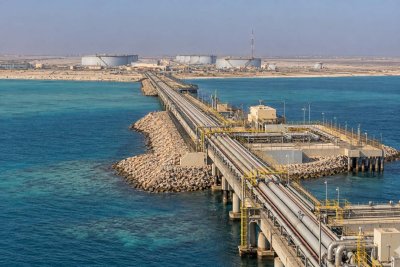
Brent crude futures shifted into prompt oversupply on Wednesday as oil flows through the Strait of Hormuz neared levels seen before the Iran conflict began in late February. The August Brent contract fell $1.06 to $72.68 a barrel, its lowest since February 27, while U.S. airline stocks surged as much as 7% on easing jet fuel prices. However, tanker rates soared and hundreds of vessels remain stranded, keeping route risks elevated.
Supply Dynamics and Market Impact
Brent's second-month contract traded at a 12-cent premium over the prompt barrel on Wednesday, marking the first contango since the conflict started. Neil Crosby of Sparta Commodities described the situation as a "mini glut for now," while Bob Yawger of Mizuho noted that traders are selling a "flood of oil" from the Middle East. Energy Secretary Chris Wright reported that approximately 72 ships carrying 20 million barrels of crude transited the Strait of Hormuz in the past 24 hours, saying "we have normal flows today." However, he cautioned that full navigation will not be restored until demining operations are completed, which could take weeks.
Shipping and Tanker Rates
According to Kpler data cited by CNBC, more than 20 oil tankers holding around 35 million barrels of crude have moved through the strait since the U.S.-Iran agreement to reopen it. Reuters shipping data indicated that three stuck tankers with 5 million barrels were expected to exit Wednesday. South Korea's maritime ministry reported that 18 of 26 vessels stranded since the conflict began remain in the Gulf. The volume of oil moving through Hormuz is critical: the International Energy Agency noted that nearly 20 million barrels per day of crude and products passed through the strait in 2025, while alternative export routes across Saudi Arabia and the UAE can only handle 3.5 million to 5.5 million barrels per day.
Ship traffic remains well below normal. Kpler data showed recent Gulf sailings at just over 25 per day, up from 10-11 earlier but far short of the 125 ships moving daily before the war. Reuters reported that 500 to 600 ships are still stuck in the Gulf, including up to 100 tankers. The International Maritime Organization's evacuation plan does not cover ships arriving for new oil cargoes. Maersk (CPH:MAERSK-B) said the Maersk Baltimore and one time-chartered vessel left the Persian Gulf after security checks late June 24 and early June 25, with three Maersk vessels still in the Gulf. Of 47,000 containers originally headed for the area, 44,000 have been delivered and 3,000 remain pending.
Tanker rates have not adjusted for a full reopening. Daily rates outside Hormuz jumped to $190,500 from $106,500 the prior week, while VLCC earnings for shipping Gulf crude through Hormuz approached $470,000 per day, according to brokers and sources. Clarksons (LON:CKN) described tanker supply as "exceptionally tight."
Airline Stocks Rally
U.S. airline stocks outperformed the broader market on Wednesday, with gains ranging from 3% to 7%. American Airlines Group (NASDAQ:AAL) closed up about 7%, United Airlines Holdings (NASDAQ:UAL) gained nearly 6%, and Delta Air Lines (NYSE:DAL) added 3.7%. The rally was fueled by a decline in jet fuel prices, which dropped to $119.17 a barrel for the week ending June 19, down from highs above $170 earlier, according to IATA data cited by Reuters. Morningstar analyst Nicolas Owens noted, "Airline profits can shift fast because carriers have already sold many tickets assuming the previous fuel cost."
LNG and Geopolitical Risks
LNG restarts are progressing in phases. Between June 11 and June 22, seven empty QatarEnergy-controlled tankers entered the Gulf for the first time since U.S. and Israeli strikes on Iran on February 28, according to Vortexa and Kpler data cited by Reuters. Commonwealth Bank of Australia analyst Vivek Dhar said the shipments support the view that QatarEnergy is on track with its LNG ramp-up. However, Reuters reported no sign yet of a broad return of empty Qatari and ADNOC ships to the Gulf.
Route risks persist. The Associated Press reported that the Liberian tanker Stoic Warrior attempted a new IMO-backed route near Oman, but Iran's Revolutionary Guard called it unacceptable and dangerous. Additionally, AP said Israel carried out an airstrike in southern Lebanon on Wednesday, killing two people—the first Israeli strike there since the latest ceasefire began Saturday.
Price Outlook
Brent crude for August dropped $1.06 to $72.68 a barrel by 0639 GMT Thursday, while WTI fell 76 cents to $69.58. Both are at their lowest since February 27. Macquarie expects Brent to average $67 in the third quarter and WTI at $62, compared with $94 and $87 in the second quarter, respectively.