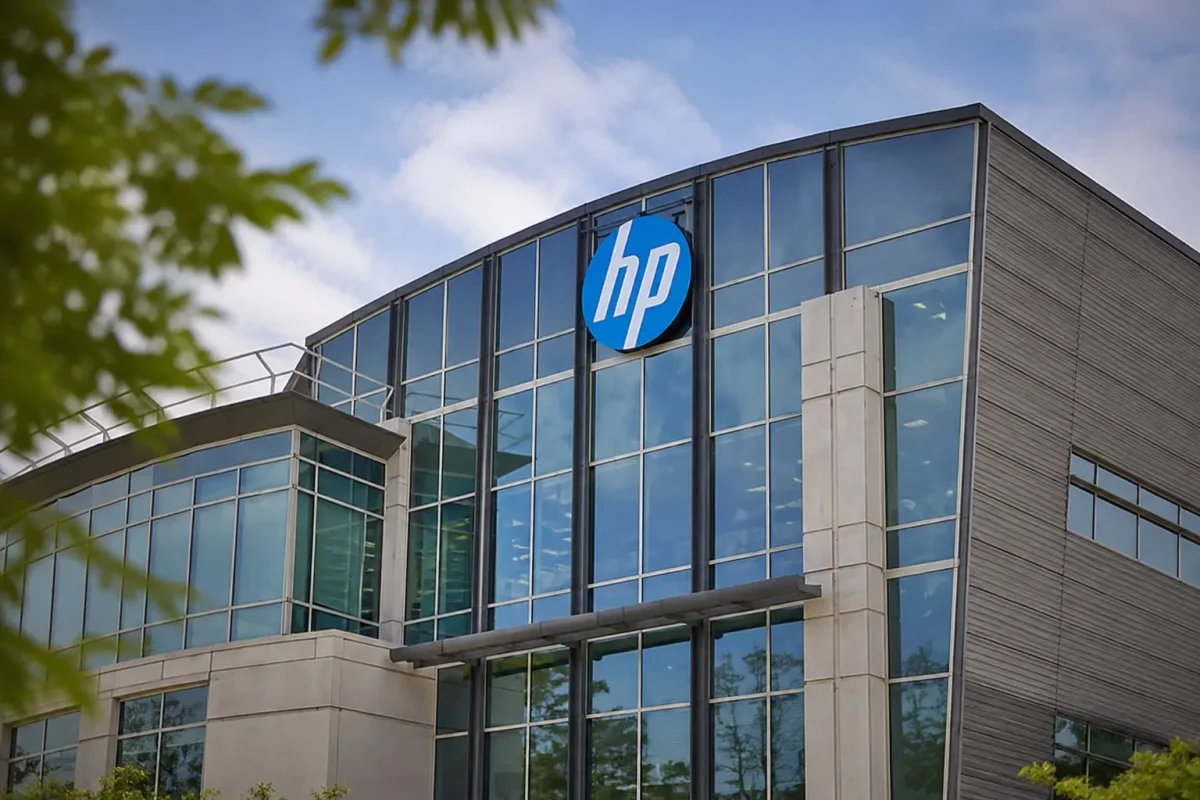
HP Inc. (HPQ) shares closed at $27.04 on Friday, up $2.04 from the prior close, as investors reassessed the company's latest earnings report and its positioning in the AI hardware space. The stock traded on heavy volume of approximately 59 million shares, reflecting heightened interest following the quarterly results. The NYSE was closed Sunday, with trading set to resume Monday, just ahead of HP's investor day on June 2.
The rally came after HP reported fiscal second-quarter revenue of $14.4 billion, a 9% increase year-over-year. Non-GAAP diluted earnings per share rose to $0.86 from $0.71 in the same quarter last year. Interim CEO Bruce Broussard noted that HP is "navigating rising commodity costs," while CFO Karen Parkhill described the quarter as "strong," highlighting gains in revenue, earnings, and free cash flow.
HP's Personal Systems segment, which includes PCs, generated $10.2 billion in revenue, up 13% from a year ago. However, total PC unit shipments declined by 7%, indicating that revenue growth was driven by higher average selling prices and a richer product mix rather than volume. Printing revenue remained relatively flat at around $4.2 billion.
A key highlight was the surge in AI-enabled PCs, which accounted for 44% of HP's total PC shipments during the quarter, up from just over 35% in the previous quarter. This rapid adoption of AI PCs—machines capable of running certain AI tasks locally—has become a central narrative for HP as it seeks to differentiate itself in a mature PC market. However, the company also warned that rising memory-chip costs are squeezing margins, with the impact expected to peak in the fourth quarter before improving in fiscal 2027.
Looking ahead, HP forecast a "high teens" percentage decline in the overall PC unit market for the second half of the fiscal year, signaling a cautious near-term outlook. The company guided for third-quarter non-GAAP diluted EPS in the range of $0.61 to $0.71, and full-year EPS of $2.90 to $3.10. Free cash flow for fiscal 2026 is expected to be between $2.8 billion and $3.0 billion.
Wall Street's broader enthusiasm for AI-related hardware stocks provided additional tailwinds. Dell Technologies surged 32.8% after raising its full-year profit and revenue guidance, reinforcing investor appetite for AI-linked enterprise hardware. "There's definitely euphoric sentiment in the market around AI," said Ohsung Kwon, chief equity strategist at Wells Fargo, in comments to Reuters.
Despite the rally, sell-side analysts remain cautious. UBS analyst David Vogt raised his price target on HP to $26 from $20, maintaining a Neutral rating. Vogt acknowledged that HP is managing a "challenging" commodity environment but expects margins to contract in the second half of the year. Notably, the $26 target remains below Friday's closing price, suggesting that much of the recent optimism is already reflected in the stock.
HP is scheduled to present at the Evercore TMT Global Conference on Tuesday at 10:00 a.m. Pacific time. Investors will be closely watching for commentary on pricing power, the trajectory of AI-PC adoption, and how customers are responding to higher PC prices—whether they will accelerate upgrades or delay purchases.
The earnings report and guidance paint a mixed picture. HP beat expectations for the quarter, but the looming cost pressures and cautious outlook raise questions about whether the stock can sustain its AI-driven gains when markets reopen. The focus will shift back to margins, unit volumes, and component costs as investors weigh the durability of the recent rally.