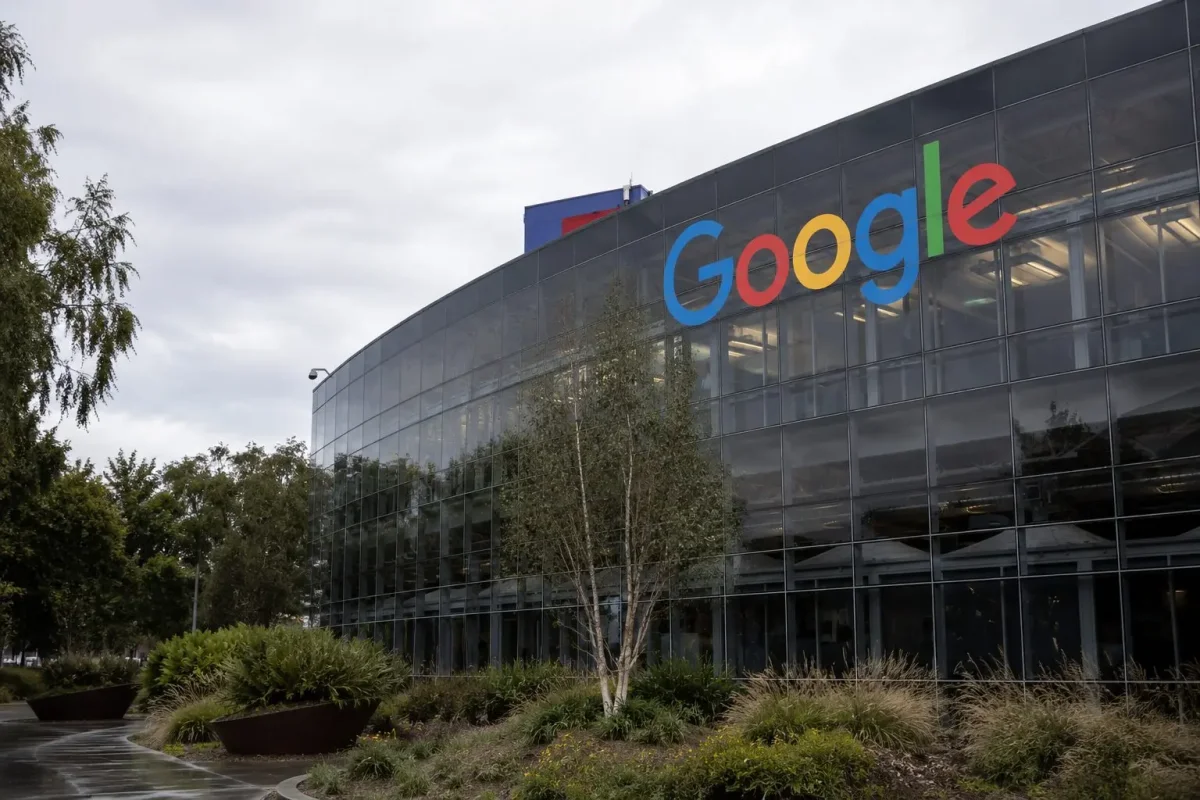
Europe is escalating its regulatory pressure on Alphabet Inc. (NASDAQ:GOOGL) beyond traditional antitrust fines, now targeting the core of its search business. Germany's media regulator, the Commission for Licensing and Supervision (ZAK), ruled Tuesday that Google's AI-generated search overviews constitute the company's own content, potentially subjecting them to stricter media laws. This decision threatens a revenue stream that generated $60.4 billion in the first quarter of 2026 alone, representing 55% of Alphabet's total Q1 revenue.
The ruling, which also applies to AI search engines like Perplexity AI, argues that these summaries are not merely aggregated from external sources but are created by the companies themselves. ZAK Chairman Thorsten Schmiege stated, "AI search engines and chatbots are content providers." The regulator contends that these AI summaries push down organic search results, harming the discoverability of publishers. Google has announced it will appeal, asserting that the summaries "enhance the search experience in Germany." No fine has been disclosed in this case.
Separately, Google faced the European Union's top court on Wednesday, arguing to uphold a lower-court ruling that annulled a €1.49 billion ($1.7 billion) antitrust fine related to its AdSense business. Google's lawyer, Josh Holmes, called the European Commission's arguments "flawed," while Commission lawyer Anthony Dawes countered that the lower court's logic "turns case law on its head." A non-binding opinion from the court's adviser is expected on November 12, with a final ruling to follow.
The financial stakes highlight why these regulatory moves are more significant than past fines. Alphabet's market value surged by approximately $142 billion in early afternoon trading on Wednesday, a gain roughly 22 times larger than the combined value of the AdSense penalty and a separate $4.7 billion Android fine upheld on July 2. However, this rally was partly driven by a broader tech sector uptick, with Microsoft Corp. (NASDAQ:MSFT) rising 2.8% and Meta Platforms Inc. (NASDAQ:META) adding 2.2%, suggesting investors are not yet pricing in the full regulatory risk.
The potential impact on Google's search business is immense. In Q1 2026, Google Search and other revenue totaled $60.4 billion, growing 19% year-over-year. By contrast, the AdSense fine represents a one-time charge that is less than 3% of that quarterly figure. Recurring revenue from search dwarfs any potential penalty, making product restrictions far more consequential than financial penalties. "The rules for the product don't have numbers," as one observer noted, emphasizing the uncertainty around how AI overviews might be regulated.
Despite the regulatory headwinds, Google's user engagement remains strong. Global web visits to Google rose 4% year-over-year in June to 2.8 billion, according to Similarweb data cited by BofA Securities. Mobile daily active users jumped 12%, per Sensor Tower. Meanwhile, traffic to Google's AI chatbot Gemini surged more than fourfold, with daily mobile users up 295%, without cannibalizing core search traffic. BofA analyst Justin Post wrote, "we see potential for upside to Street search estimates."
Alphabet is scheduled to report second-quarter earnings on July 22. Investors are keenly awaiting updates on search trends and the financial impact of AI Overviews, particularly in Europe. CEO Sundar Pichai previously described query volumes as "an all time high." The outcome of the German ruling and the EU court case could reshape how AI-generated content is treated under European law, with implications far beyond Google.
For now, the regulatory fines remain in the billions, but the cost of adapting to new product rules remains unknown. As one analyst put it, "Penalties have numbers. The rules for the product don't." This uncertainty underscores the evolving nature of the regulatory threat to Alphabet's most lucrative business.