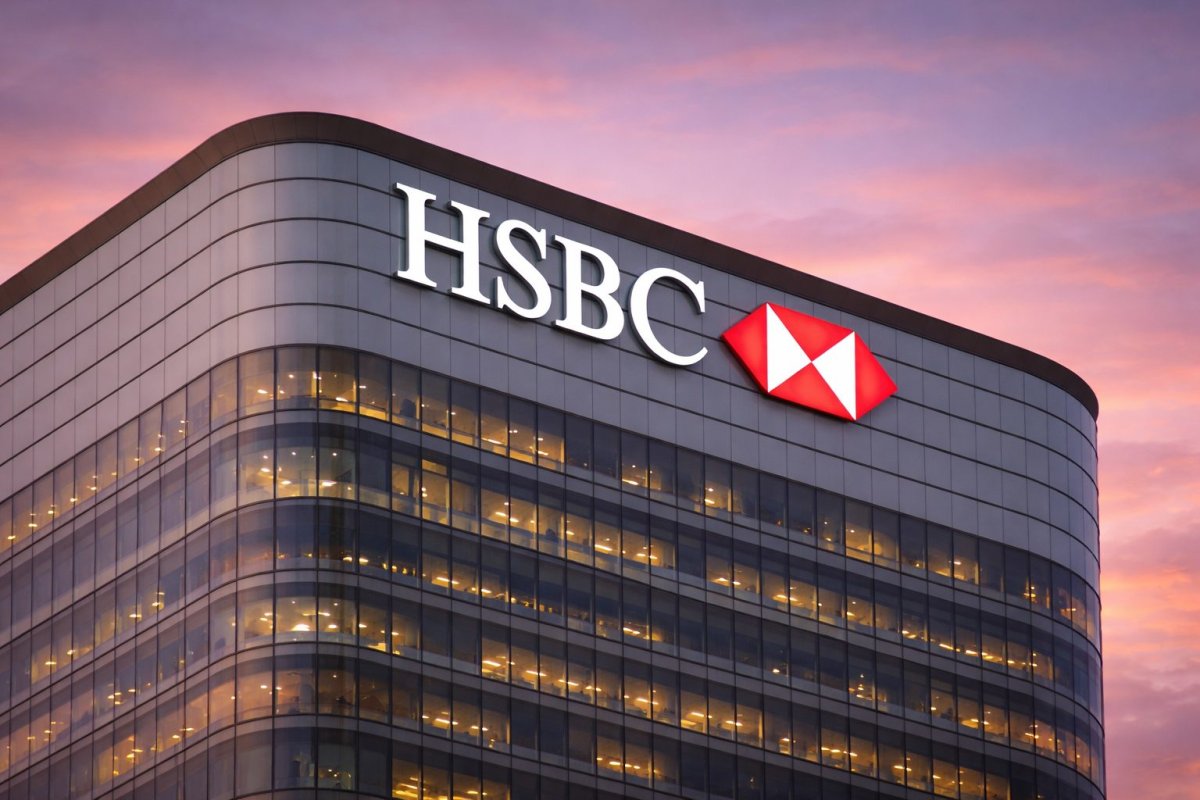
Shares of HSBC Holdings continued their descent during Wednesday's early trading in London, marking a second day of losses for the global banking giant. The stock declined 1.0% to 1,249.6 pence by 08:20 GMT, building on a significant retreat from last week's peak. This movement followed Tuesday's closing price of 1,262.8 pence.
Geopolitical Jitters Drive Sector-Wide Selloff
The financial sector faced substantial pressure this week, with HSBC experiencing the most pronounced decline among major European banks on Tuesday, plummeting 5.2%. Market sentiment has been rattled by the specter of a protracted conflict in the Middle East and the subsequent surge in crude oil prices. Analysts note that the prospect of a near-term ceasefire appears increasingly unlikely, contributing to a climate of uncertainty. "Any ceasefire for now looks like a remote possibility," observed Quilter investment strategist Lindsay James, encapsulating the prevailing market pessimism.
This risk-off sentiment triggered a global equity selloff on Monday, ensnaring UK banking stocks. HSBC, alongside domestic peers Barclays and Lloyds Banking Group, recorded losses ranging between 2.5% and 4.2%. The sharp rise in energy prices has compelled traders to reassess the timeline for monetary policy easing, significantly scaling back expectations for imminent interest rate cuts from the Bank of England.
Broader Economic Backdrop Outweighs Daily News Flow
For institutions like HSBC, the overarching economic environment carries greater weight than daily headlines. While a higher interest rate regime can bolster net interest margins for banks, a persistent energy shock presents a dual threat: it undermines broader economic growth prospects and simultaneously elevates the risk profile of loan portfolios. The market narrative has swiftly pivoted from optimism about how high bank valuations could climb to apprehension about how rapidly financial conditions might deteriorate.
As a constituent heavyweight in both the London and pan-European indices, HSBC's share price movements often amplify trends within the broader banking sector. The company's sheer scale and global reach make it a bellwether for investor sentiment toward financial institutions.
Corporate Developments and Capital Management
Corporate news from HSBC has been subdued this week. However, the bank recently confirmed a fourth interim dividend of $0.45 per share. Management has also communicated a clear stance on capital returns, stating that new share buyback programs will remain on hold until the firm's Common Equity Tier 1 (CET1) capital ratio—a critical measure of financial strength—returns to or exceeds its target range.
The fundamental risk for bank equities remains clear-cut. Should elevated oil prices persist and stoke inflationary pressures, central banks may be forced to maintain a restrictive monetary policy stance for longer. This scenario could strain borrowers, potentially leading to an increase in projected credit losses for banks, even as the headline interest rates might superficially appear favorable for lending margins.
External Catalysts and Key Dates Ahead
The next significant catalyst for HSBC's share price may originate outside traditional financial statements. Traders are closely monitoring developments in the Middle East for shifts in market sentiment, with the future trajectory of oil prices—whether they stabilize or fuel further volatility—remaining a paramount concern.
Investors are also looking ahead to the bank's dividend schedule. HSBC shares are scheduled to trade ex-dividend on March 12 for shareholders on the London, Hong Kong, and Bermuda registries. The ex-dividend date for the New York-listed American Depositary Receipts (ADRs) follows on March 13. The dividend payment itself is set for April 30.
The confluence of geopolitical tension, commodity market volatility, and shifting central bank expectations creates a complex landscape for UK banks. HSBC's performance in the coming sessions will likely serve as a key indicator of whether the current risk-off mood deepens or if confidence returns to the financial sector.