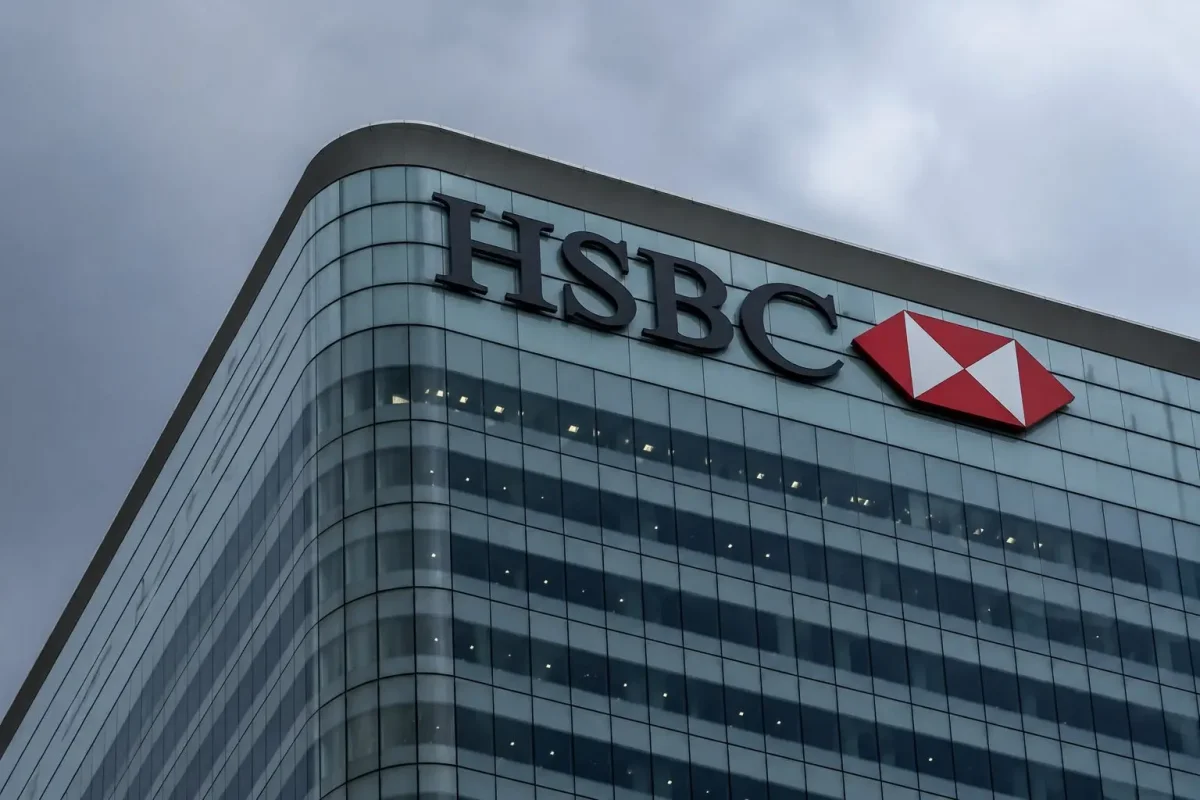
HSBC Holdings plc (LON:HSBA) edged lower in London trading on Friday, but the modest decline did little to dampen investor focus on a significant balance sheet maneuver. The bank announced the redemption of $3 billion in senior unsecured notes, a move that overshadows its first-half ordinary dividend payout and does not involve share buybacks.
London-listed shares of HSBC traded at 1,438.40p bid and 1,438.80p offer, down 6.40p or 0.44% by midday. The stock remained close to its 2026 year high of 1,457p, a level not seen since July 1999, according to Trading Economics. The FTSE 100 index also slipped 0.3% to 10,617.28, reflecting a generally subdued session amid thin trading volumes due to the U.S. Independence Day holiday, which closed American equity markets.
HSBC's debt call, set for August 14, involves redeeming all $2.3 billion of its 5.887% fixed-rate/floating-rate senior unsecured notes due 2027, along with $700 million in floating-rate senior unsecured notes also due 2027. Holders will receive $1,000 for each $1,000 in principal. This is not a buyback; the bank is retiring debt, not reducing its share count. With 17.18 billion ordinary shares outstanding, the $0.10 first interim dividend amounts to approximately $1.72 billion in cash, making the $3 billion note call roughly 1.75 times that payout.
The fixed-rate tranche carries a coupon of 5.887%, costing HSBC about $135 million annually. This coupon represents roughly 8% of the projected cash cost for the first interim dividend and about 0.3% of the bank's $45 billion net interest income target for 2026. The floating-rate portion's cost will depend on reset levels, and HSBC did not specify replacement funding in its notice.
The debt redemption comes at a time when HSBC is navigating tight capital constraints. In October, the bank warned it would suspend buybacks for about three quarters to conserve capital for its acquisition of Hang Seng Bank. At the end of the first quarter, HSBC reported a common equity tier 1 (CET1) ratio of 14.0%, at the bottom of its 14.0%-14.5% medium-term target range. CEO Georges Elhedery reaffirmed confidence in achieving targets set in February 2026, citing first-quarter pretax profit of $10.1 billion before notable items and revenue of $19.1 billion.
Market reaction was muted, with UK bank stocks mostly lower. Barclays fell 0.63%, Lloyds Banking Group dropped 0.89%, while Standard Chartered rose 0.27%. HSBC's dividend yield of 3.83% remains above Barclays' 1.67% but lags some other UK income banks. The bank's market value stood at £246.69 billion, approximately $329.45 billion at midday sterling rates.
HSBC's next major milestone is its interim results on August 4, with the second-interim dividend typically set in early August. The debt call, while not directly affecting shareholder returns, signals management's focus on optimizing the balance sheet amid regulatory and strategic pressures. Analysts at AJ Bell noted the thin reporting calendar, but the move underscores HSBC's cautious capital management as it balances shareholder payouts with acquisition-related needs.