Defense giant RTX Corporation (NYSE: RTX) announced on Monday that its Raytheon unit has secured a seven-year, $22.9 billion contract with the U.S. Navy for Tomahawk cruise missiles. The deal, which was confirmed during early U.S. cash trading, mandates a dramatic scale-up in production—from just 60 missiles annually to more than 1,000—a nearly 17-fold increase. Despite the headline figure, the market's reaction was muted, with shares rising less than 1% in early trading.
The contract's value represents a significant addition to RTX's backlog. As of June, the $22.9 billion award equaled 26.6% of Raytheon's $86 billion backlog and 19.2% of RTX's $119 billion defense backlog. However, the revenue recognition will be spread over seven years, translating to an average of $3.27 billion per year—roughly 3.4% of RTX's midpoint 2026 sales guidance of $95.5 billion. This slower revenue stream explains the tempered investor enthusiasm.
Production Scale-Up: A Daunting Task
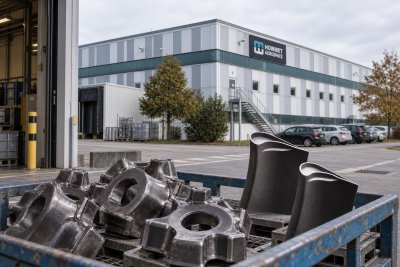
The core challenge lies in the production ramp. Raytheon must increase its annual Tomahawk output from 60 units to over 1,000, a target that requires massive investments in manufacturing capacity. The company's facilities in Alabama, Massachusetts, and Arizona will be central to this effort. Acting Navy Secretary Hung Cao praised the move, stating, "We called on industry to rapidly scale up munitions output, and RTX is delivering." The contract builds on a framework established in February, which included joint funding to protect short-term cash flow while investing in capacity.
This production surge is critical given low U.S. stockpiles and robust allied demand. However, analysts caution that execution risks are high. Scaling up output by 17 times could strain supply chains, drive up costs, and put pressure on margins. Raytheon's adjusted operating margin in Q2 was 12.6%, up from 11.6% a year earlier, but whether that can be maintained at higher production volumes remains uncertain.
Financial Context and Market Reaction
RTX's backlog reached $289 billion in June, up 22% year-over-year. The company's Q2 results were strong, with revenue climbing 18% to $8.27 billion and adjusted operating earnings up 29% to $1.04 billion. CEO Chris Calio noted that "demand remains robust," and the company updated its 2026 adjusted sales outlook to $95-$96 billion, with EPS guidance of $7.10-$7.25 and free cash flow of $8.50-$8.75 billion.
Despite these positives, the stock's muted response suggests investors are focused on conversion. Raytheon's backlog is already more than ten quarters of sales, and the new contract adds visibility but not immediate earnings. The annualized $3.27 billion from the Tomahawk deal is just 9.9% of Raytheon's Q2 revenue run-rate, underscoring the long-term nature of the program.
Analyst Sentiment and Risks
Wall Street remains cautiously optimistic, with price targets ranging from $215 to $250. Recent actions include RBC Capital's Outperform rating at $250, Susquehanna's Positive at $245, TD Cowen's Buy at $240, and Wells Fargo's Equal Weight at $230, with UBS at Neutral at $215. The divergence reflects uncertainty about margin sustainability and execution.
Key risks include the possibility that the contract's total value may not fully convert into funded sales. Margins could be squeezed by capacity setbacks, supplier shortages, rising input costs, or an unfavorable product mix. Additionally, government procurement priorities could shift, affecting the program's long-term viability.
For RTX, the Tomahawk deal reinforces its demand outlook but does little to resolve valuation concerns. Investors will be watching closely to see if the company can deliver on its ambitious production targets while protecting its improved margins. The next few quarters will be critical in determining whether the stock can justify its recent approach to 52-week highs.