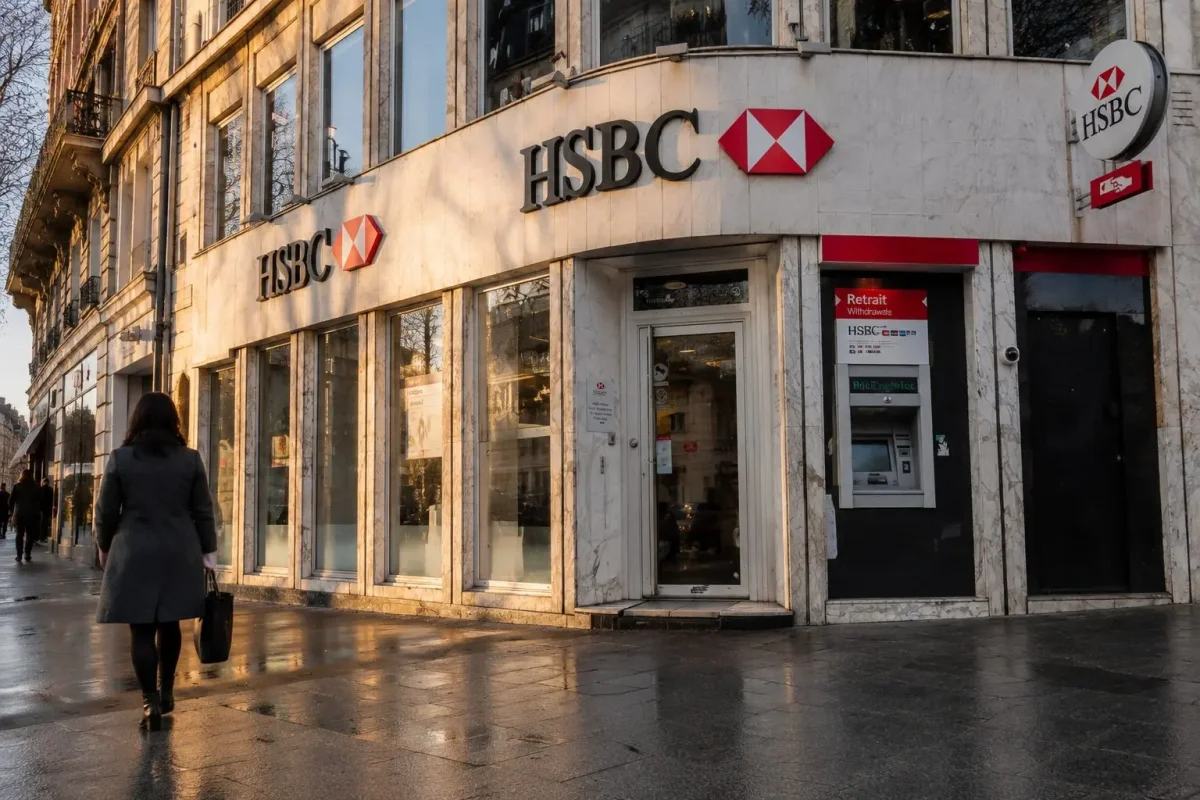
HSBC Holdings shares stabilized in London on Thursday, recovering much of the ground lost earlier in the week after a $400 million fraud-related charge tied to its private credit exposure triggered a sharp selloff. The stock traded near flat at around 1,343 pence, close to Wednesday's close of 1,343.40 pence, which marked a nearly 5% rebound. The initial hit, disclosed on Tuesday, had knocked almost 6% off the bank's market value, shaving gains from a 52% rally over the past year.
The charge stems from HSBC's involvement in financing UK mortgage lender Market Financial Solutions, which collapsed amid fraud allegations. HSBC's exposure came through secondary securitization, meaning the bank was not the original lender but held debt linked to the troubled firm. The loss also involved loans to Atlas SP, a vehicle backed by Apollo Global Management. HSBC did not name the counterparties publicly, but Chief Financial Officer Pam Kaur described the charge as "idiosyncratic" and not indicative of broader portfolio issues.
HSBC's first-quarter pretax profit fell to $9.4 billion, down from $9.5 billion a year earlier and missing the $9.59 billion consensus estimate. Revenue, however, rose 6% to $18.6 billion, supported by wealth-related fees and stronger net interest income. Expected credit losses increased to $1.3 billion, including a $0.3 billion allowance tied to uncertainty from the Middle East conflict and the Hong Kong commercial property market. The bank raised its 2026 banking net interest income target to about $46 billion, up from a prior floor of $45 billion, citing a more favorable interest rate environment.
The Financial Stability Board on Wednesday warned of rising risks from deepening interconnections between banks and the private credit sector, which has grown rapidly outside traditional banking channels. FSB Secretary General John Schindler highlighted "deepening interconnections," while Chair Andrew Bailey described the indirect ties as "extensive." This regulatory scrutiny adds pressure on banks like HSBC to better manage and disclose their indirect exposures.
Competitors are also feeling the pinch. Barclays previously took a £228 million hit tied to Market Financial Solutions. Meanwhile, Standard Chartered reported a 32% jump in wealth income in Q1, outpacing HSBC's wealth revenue growth, according to Citi analysts. KBW analyst Ed Firth called HSBC's results "underwhelming" compared with other British and European banks.
HSBC also raised its 2026 expected credit loss forecast to about 45 basis points of average gross loans, up from 40 basis points, citing ongoing uncertainties. The bank declared a first interim dividend of $0.10 per share. CEO Georges Elhedery touted progress toward a "simple, more agile, growing HSBC," noting all four business units achieved annualized return on tangible equity above 17%, excluding notable items.
The broader question for investors is whether the $400 million charge is a one-off misstep or a sign of deeper, less visible trouble in private credit. HSBC has said it found no similar fraud issues after reviewing its riskiest exposures and is stepping up due diligence. Apollo said it will begin daily pricing on its credit funds by late September to improve transparency. The episode underscores the growing scrutiny of banks' indirect links to private credit markets, which have ballooned in size and complexity.