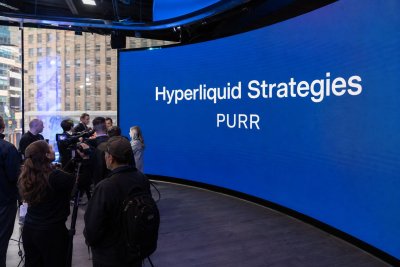
Hyperliquid Strategies (NASDAQ: PURR) experienced a sharp 9.51% decline on Friday, closing at $11.61, as investors reassessed the company's valuation following its latest earnings report. The drop came just one day after the stock had surged 11%, highlighting the volatility inherent in this digital-asset-focused treasury vehicle.
The company's balance sheet is dominated by its holdings of HYPE tokens, a cryptocurrency associated with the Hyperliquid protocol. As of Sunday, Hyperliquid Strategies held 29.28 million HYPE tokens, valued at approximately $2.42 billion based on a token price of $82.60. This figure slightly exceeds the company's basic market capitalization of roughly $2.35 billion, making the stock an unusually direct proxy for the token's performance.
While this comparison is not a direct liquidation analysis—factors such as cash, deferred taxes, liabilities, warrants, and future share issuance all play a role—it underscores the tight correlation between PURR's share price and HYPE's market movements. A $1 change in the token's price alters the gross treasury value by about $29.3 million, meaning a 10% move in HYPE could swing the company's asset base by roughly $242 million, or about 10% of its market cap.
Treasury Growth and Dilution
Hyperliquid Strategies has aggressively expanded its token holdings, more than doubling its treasury from 12.5 million tokens. The company deployed $773.4 million to acquire 16.5 million HYPE tokens at an average price of $46.77. As of August 19, it also retained $132.6 million in cash, according to SEC filings.
This expansion was funded through significant dilution. The company raised $646.6 million via an equity facility at an average share price of $8.70, issuing 76.1 million new shares during the fiscal year. This dilution has weighed on per-share metrics, even as the treasury's gross value has climbed.
Earnings Breakdown
The company reported fiscal net income of $305.5 million, but this figure was heavily reliant on unrealized gains from its HYPE holdings. Unrealized gains contributed $709.9 million, partially offset by a one-time token loss of $169.2 million and a deferred tax expense of $183.5 million. Recurring revenue streams remain modest: staking and validator revenue totaled $9.5 million, while interest income was just $2.7 million. Operating expenses reached $14.0 million, underscoring the company's dependence on token appreciation for profitability.
Management has stated that substantially all of its tokens are staked, and its validator has become the third-largest on the Hyperliquid network. The company also reported zero debt and stockholders' equity of $1.87 billion as of June 30.
Market Context and Risks
Hyperliquid, the protocol itself, held 63% of decentralized perpetuals open interest on August 23, according to company-cited data. This concentration supports fee generation but also ties PURR's fortunes to a single protocol's trading activity and governance decisions.
Analyst coverage remains sparse, making consensus comparisons difficult. The more relevant test for investors is whether token exposure per diluted share will rise after accounting for financing, buybacks, and staking income.
Key risks include HYPE's continuous trading, which can gap significantly before PURR reopens on the stock market. Token price volatility, regulatory changes, custody issues, protocol security, deferred tax liabilities, and further equity issuance could all erode any apparent discount to asset value. Investors should approach PURR with an understanding that its valuation is intrinsically linked to the volatile cryptocurrency market.