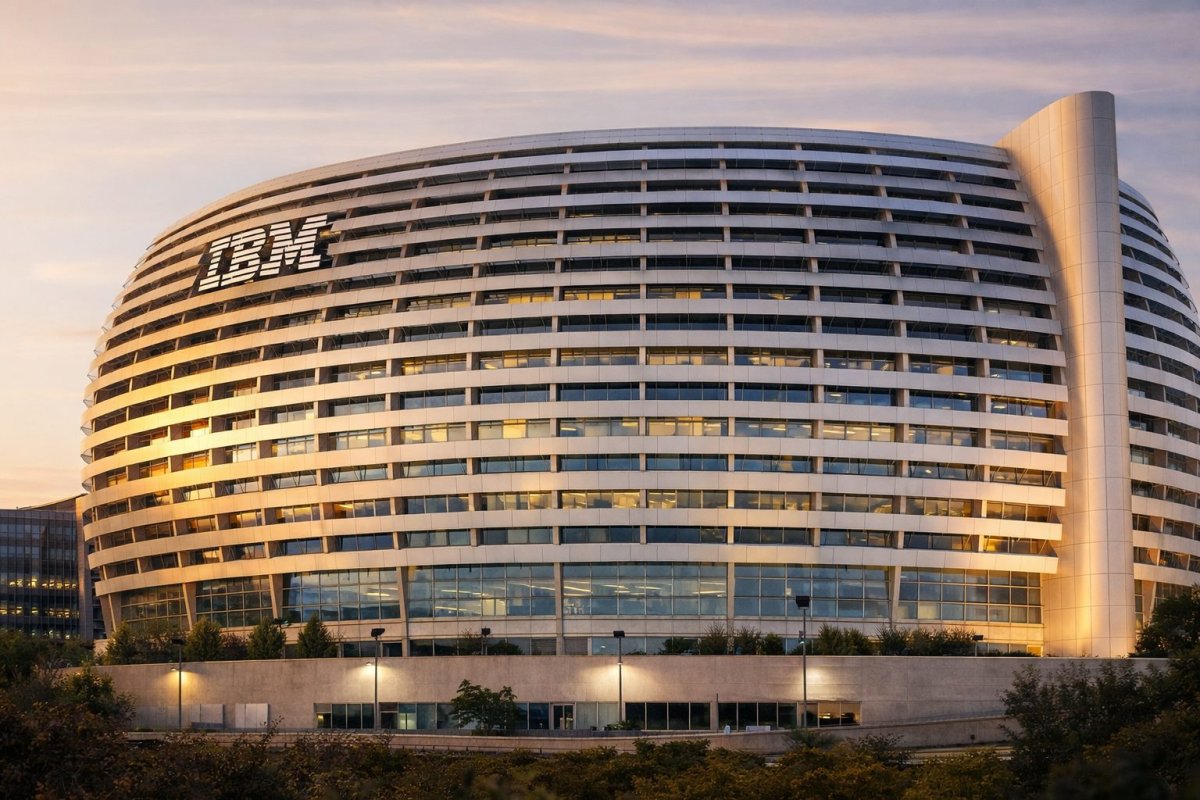
International Business Machines Corp. saw its stock price inch upward by 0.4% at the close of trading on Monday, March 30, 2026. Despite this minor gain, the shares continue to languish approximately 27% below their highest point over the past year, reflecting persistent investor caution following a significant sell-off earlier in the year. The technology and consulting giant has struggled to mount a sustained recovery, even after surpassing earnings expectations in January.
Upcoming Earnings and a Shift in AI Reporting
All eyes are now on IBM's first-quarter financial results, scheduled for release on April 22. The report is anticipated to provide critical insights into whether the company's substantial investments in artificial intelligence are successfully driving growth in its software and infrastructure segments. A key point of concern for the market is IBM's recent decision to cease the separate disclosure of its AI-related revenue, a metric that had offered investors a clear benchmark for tracking demand in this high-growth area. This change takes effect with the upcoming quarterly report.
Recapping a Strong Fourth Quarter
IBM's previous earnings report, issued on January 28, demonstrated robust performance. The company posted revenue of $19.69 billion and adjusted earnings per share of $4.52, both figures exceeding Wall Street's forecasts. Software revenue surged 14% year-over-year, while infrastructure sales jumped 21%. Chief Executive Officer Arvind Krishna highlighted the company's generative AI business, which has now reached an annual run rate exceeding $12.5 billion. Krishna stated that IBM was entering 2026 "with momentum and in a position of strength."
Strategic Moves to Bolster AI Capabilities
Beyond financial metrics, IBM has been actively building out its AI ecosystem through strategic acquisitions and partnerships. The company finalized its massive $11 billion acquisition of data-streaming platform Confluent on March 17. IBM positions this deal as essential for powering AI models and agents with reliable, real-time data across hybrid cloud environments. Analysts like Sanjeev Mohan of SanjMo emphasize that effective AI agents "require live operational signals," not merely historical datasets.
Throughout March, IBM aggressively marketed its AI offerings. On March 23, it introduced new watsonx tools customized for the Masters Tournament. Shortly after, on March 25, the company announced a collaboration with ElevenLabs to integrate advanced speech technology into its watsonx Orchestrate platform, which manages AI agents for complex tasks. Mati Staniszewski, co-founder of ElevenLabs, noted that "Voice is where AI either earns trust or loses it."
Analyst Sentiment and Prevailing Market Risks
Some on Wall Street maintain a positive outlook. Following a meeting with CEO Arvind Krishna as part of its CEO series, Bank of America analyst Wamsi Mohan reaffirmed a Buy rating on IBM stock with a $340 price target on March 10. However, significant risks cloud the investment thesis. In February, IBM experienced its most severe single-day stock decline since the year 2000 after AI rival Anthropic showcased a tool that could dramatically accelerate the modernization of COBOL code on IBM mainframes—a process potentially reduced from years to mere quarters.
Furthermore, IBM disclosed in January that the Confluent acquisition is expected to create roughly $600 million in dilution for fiscal year 2026, primarily due to stock-based compensation and interest expenses. The broader market context also presents challenges. JPMorgan strategists, led by Dubravko Lakos-Bujas, observed in February that markets were pricing in "worst-case AI disruption scenarios" for the software sector. Morgan Stanley's Katy Huberty described the valuation gap as purely "sentiment-driven, not fundamental." Notably, JPMorgan's list of favored rebound candidates included Microsoft and ServiceNow, highlighting the competitive pressure IBM faces from firms perceived as more direct AI beneficiaries.
Guidance and the Path Forward
IBM continues to project constant-currency revenue growth exceeding 5% for the full year 2026, with an additional $1 billion in free cash flow still anticipated. The durability of these forecasts hinges heavily on the details revealed in the April 22 report. Investors will scrutinize whether the company's acquisitions, enhanced data stack, and AI-agent offerings are translating into consistent, repeatable software revenue growth. For now, IBM's stock remains firmly in the market's spotlight as it navigates a pivotal transition.