Indian equity markets reversed course on Thursday, surrendering a significant portion of the previous session's robust gains. The sell-off was primarily driven by a sharp rebound in global crude oil prices and renewed uncertainty surrounding geopolitical tensions in West Asia, casting a shadow over the country's economic outlook.
Benchmarks Under Pressure
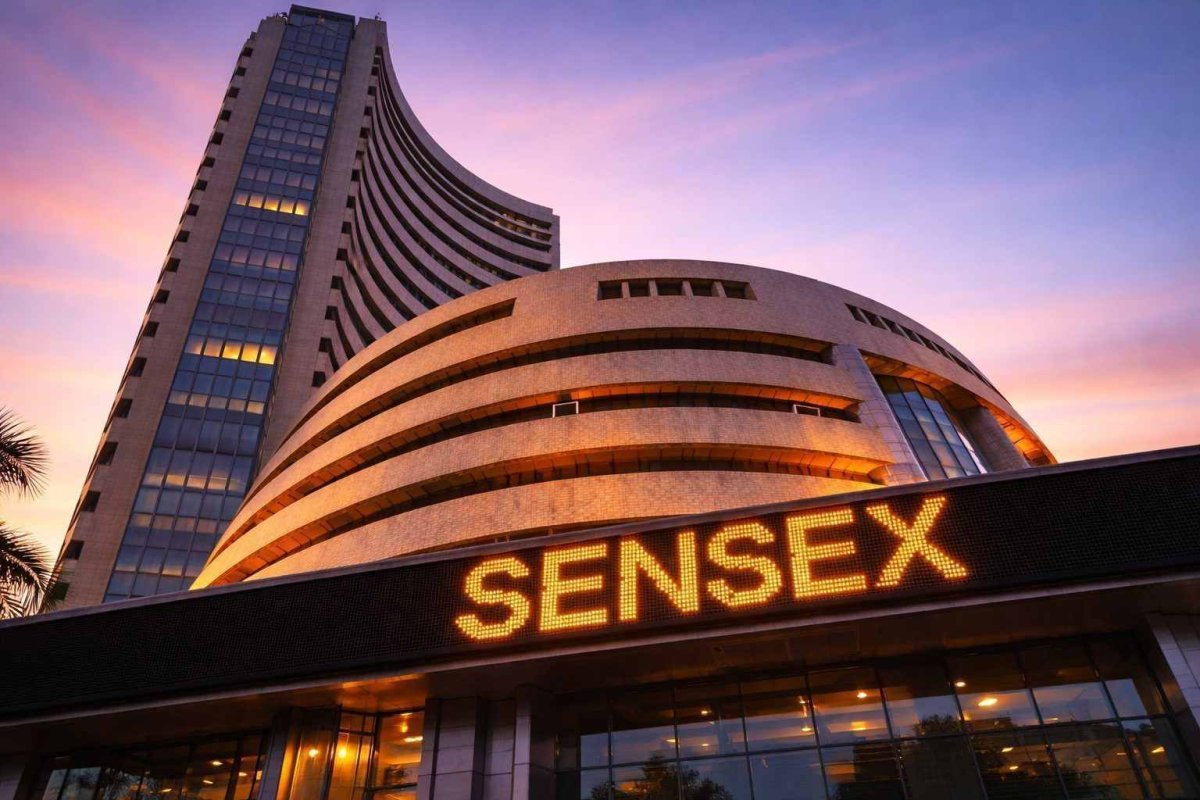
As of 2:40 p.m. IST, the benchmark S&P BSE Sensex had plummeted 1,171.65 points, or 1.51%, to settle at 76,391.25. The broader NSE Nifty 50 index followed suit, declining 269.10 points, or 1.12%, to 23,728.25 by 2:49 p.m. IST. This downturn starkly contrasted with Wednesday's powerful rally, which saw the Nifty surge 3.78% and the Sensex jump 3.95% following a steep drop in Brent crude and a steady interest rate decision from the Reserve Bank of India (RBI).
Oil and Geopolitics Weigh on Sentiment
The primary catalyst for the reversal was a rebound in Brent crude futures, which were trading near $97.28 per barrel on Thursday. This represented a roughly 40% increase from pre-conflict levels. The price surge revived concerns over India's macroeconomic stability, given the nation imports approximately 90% of its oil requirements. Concurrently, fresh doubts emerged regarding the durability of a reported ceasefire between the U.S. and Iran, injecting "fresh uncertainty" into the market, according to Hariprasad K, founder of Livelong Wealth.
The World Bank explicitly highlighted these "significant risks" for India on Thursday, noting the crisis threatens both the country's growth and inflation trajectory. The institution's fiscal 2027 growth forecast for India stands at 6.6%, with projected inflation at 4.9% for the current year. Analysts warned that if Brent sustains above $100 and shipping through the critical Strait of Hormuz remains constrained, India could face a toxic mix of persistent inflation, sluggish growth, and tighter financial conditions.
Sectoral Weakness: Financials and IT Lead Declines
The selling pressure was broad-based but particularly acute in two heavyweight sectors. Financial stocks, which had spearheaded Wednesday's rebound, gave up gains. By afternoon trade, HDFC Bank slipped 2.27%, State Bank of India (SBI) dropped 1.78%, and ICICI Bank fell 2.05%. Indexes tracking both private and public sector banks declined between 0.5% and 1%.
Information Technology stocks also retreated, adding to the market's woes. The sell-off in the sector occurred ahead of Tata Consultancy Services' quarterly earnings report due later Thursday and reflected ongoing jitters about the impact of new artificial intelligence tools on traditional outsourcing models. Broker reports offered little optimism for the quarterly performance of major IT firms like TCS, Infosys, and HCL Technologies, suggesting even a weaker Indian rupee would provide limited support to earnings.
Divergent Analyst Views and Market Internals
Despite the sell-off, some analysts saw value emerging. Bank of America's Amish Shah identified large private lenders as a "compelling buying opportunity," citing "extremely attractive" valuations. He noted HDFC Bank was trading at 1.8 times its estimated FY27 book value and ICICI Bank at 2.3 times. BofA maintained an overweight rating on major private banks, expecting them to outperform, while retaining an underweight stance on the IT sector.
Market internals revealed a mixed picture. The India Volatility Index (VIX) held steady at 20.7 in morning trade, despite a sharp drop the previous day, indicating lingering investor anxiety. However, not all moves were negative. Shares of Honasa Consumer, the parent company of Mamaearth, climbed 4% following a solid quarterly business update.
The broader economic context remains cautious. The RBI, in its latest policy meeting, projected growth of 6.9% by fiscal 2027 with inflation at 4.6%. Sujit Kumar at NaBFID interpreted the central bank's signals as "effectively" marking an end to the rate-easing cycle. The market's focus now shifts squarely to the evolving geopolitical landscape and corporate earnings, with TCS's results poised to set the tone for the IT sector.