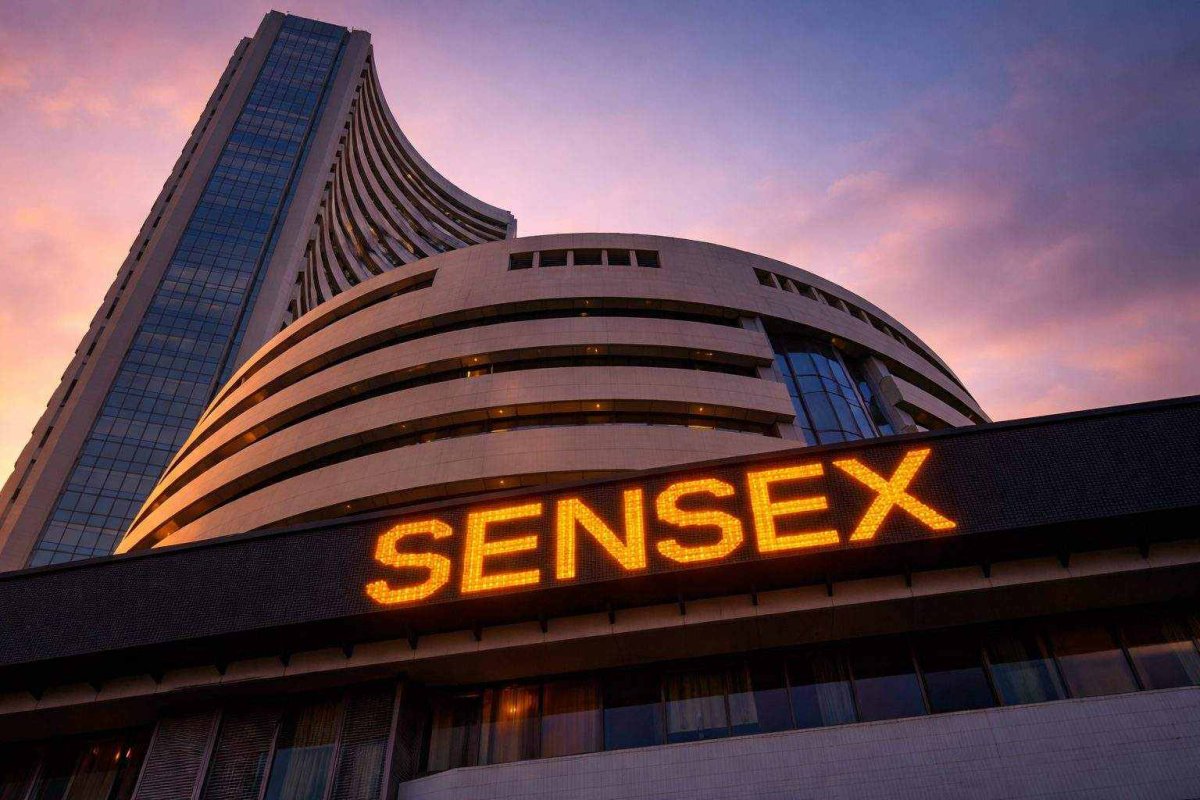
Indian financial markets commenced the 2026-27 fiscal year on a fragile note, with the benchmark Sensex and Nifty 50 indices concluding the previous year with their most substantial losses since the pandemic-impacted period of 2020. The dual pressures of elevated global crude oil prices and a severely weakened domestic currency have created a challenging macroeconomic backdrop, prompting sustained capital flight from foreign investors.
Benchmarks Post Steep Declines
On the final trading day of the fiscal year, Monday, March 30, 2026, the sell-off was pronounced. The S&P BSE Sensex plummeted by 1,635.67 points to settle at 71,947.55. Simultaneously, the NSE Nifty 50 index dropped 488.2 points, closing at 22,331.4. This capped a dismal month of March, where both indices shed over 11% of their value. Intraday, the rapid decline erased approximately ₹5 lakh crore in market capitalization from companies listed on the Bombay Stock Exchange within minutes, with the India VIX volatility index surging above the 28 mark.
Currency and Commodity Pressures Intensify
The Indian rupee mirrored the equity market's distress, breaching a historic low of 95.21 against the U.S. dollar before closing Monday's session at 94.83. Traders noted likely intervention by the Reserve Bank of India to stem the decline. For the full fiscal year 2025-26, the currency depreciated by 11%, marking its most severe annual drop in over a decade. This weakness is intrinsically linked to India's status as the world's third-largest crude oil importer. On Tuesday, Brent crude futures for the May contract, set to expire, traded near $115 per barrel, while the more liquid June contract was around $108, putting the benchmark on track for a record monthly gain.
Analysts emphasize that any sustained spike in oil prices directly fuels domestic inflation, increases fuel subsidies, and widens the trade deficit. This, in turn, pressures the rupee, elevates bond yields, and constrains the central bank's policy options at a critical juncture. "Markets are now pricing in monetary tightening arriving sooner than previously anticipated," noted Abhishek Upadhyay, an economist at ICICI Securities Primary Dealership.
Foreign Capital Exodus and Sectoral Pain
The macroeconomic turmoil has triggered a significant withdrawal of foreign capital. Overseas investors pulled a record $19.69 billion from Indian equities during the last fiscal year. The technology sector, which constitutes the second-largest weighting on the benchmarks, was particularly hard-hit, declining 21.2% for the year. Major IT services firms like Infosys (INFY), Wipro (WIT), and Tata Consultancy Services were among the worst performers on the Nifty, bearing the brunt of global tech sector weakness and relentless foreign selling.
Limited Trading Window and Forward Indicators
Traders face a compressed schedule for portfolio adjustments. With cash markets closed on March 31 for Shri Mahavir Jayanti and April 3 for Good Friday, only two trading sessions remain this week. However, a forward-looking indicator provided a glimmer of stability. The GIFT Nifty futures, which trade during off-hours and act as a proxy for the next Nifty session, gained 82 points (0.36%) as of 5:00 PM IST on Tuesday, suggesting a potentially stronger opening for cash markets on Wednesday.
Analyst Outlook: Oil Remains the Key Variable
The market's immediate trajectory is almost universally tied to the direction of crude prices. Analysts at Religare Broking cited "crude oil price trends" and developments regarding a potential U.S.-Iran ceasefire as primary sentiment drivers. Sugandha Sachdeva of SS WealthStreet cautioned that restoring damaged energy infrastructure would be a lengthy process, implying supply could remain tight even if geopolitical tensions ease.
The stakes for India are high. Vivek Shukla of Emkay Global termed a protracted conflict involving Iran a "catastrophic event" for the Indian economy, given its dependence on imported oil. Bernstein holds a pessimistic view on the rupee, with a base case expecting it to slide to 98 per dollar, and a scenario of the Middle East conflict extending into 2026 potentially driving it toward 110.
Despite the daunting near-term challenges, some perspective is offered by the broader regional performance. Both the Nifty and Sensex underperformed their Asian and emerging-market peers during the fiscal year. Portfolio manager Sat Duhra advised that it remains "too early" for bargain-hunting, citing persistently high valuations relative to the rest of Asia as a key factor keeping foreign investors on the sidelines.
Investors are now awaiting key economic data, including February's industrial production figures and March's HSBC Manufacturing Purchasing Managers' Index (PMI), for fresh clues on the strength of domestic demand. The market's recovery will hinge on a retreat in oil prices, stabilization in the currency, and a reversal in foreign institutional investor flows, in that order of priority.