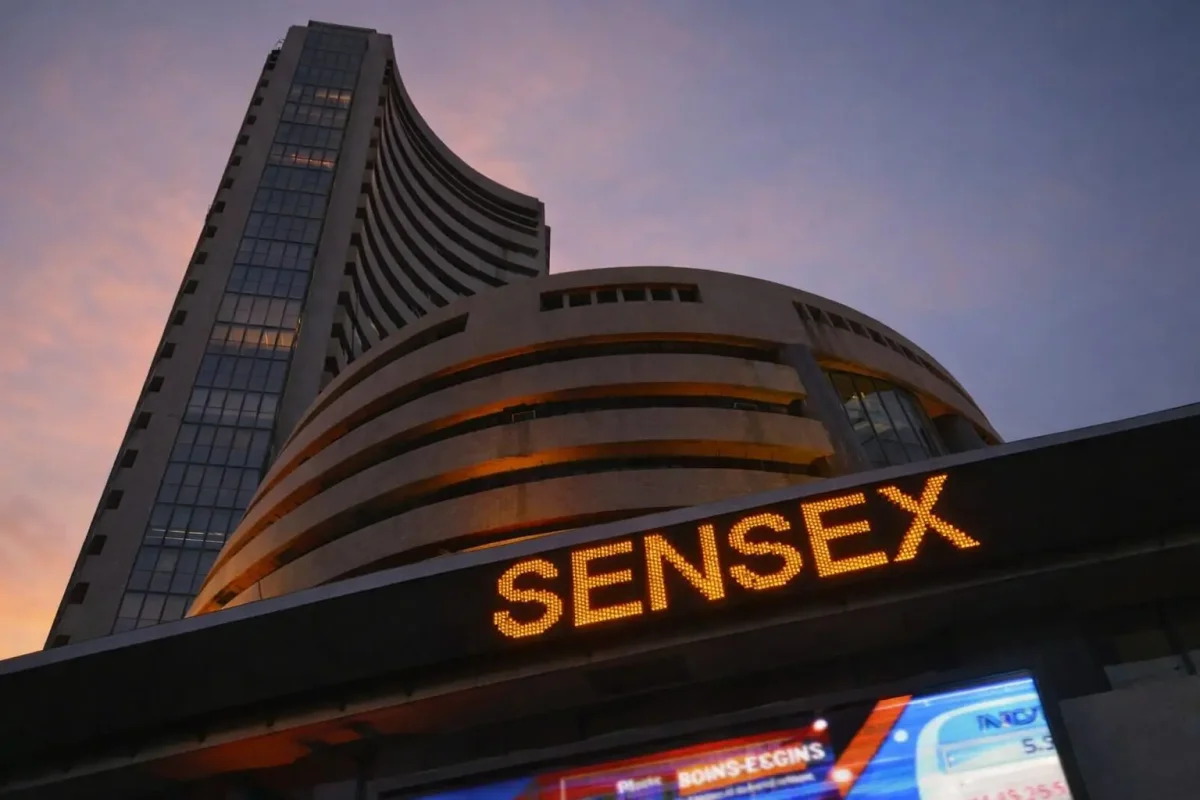
Indian stock markets experienced a significant sell-off on Monday, April 13, 2026, as geopolitical tensions sent crude oil prices soaring, raising fresh concerns about inflation and currency stability. The benchmark S&P BSE Sensex closed at 76,847.57, marking a decline of 702.68 points, or 0.91%. The broader Nifty 50 index settled at 23,842.65, down 207.95 points, or 0.86%. Both indices had fallen nearly 2.1% during the session before paring some losses.
Geopolitical Trigger Sends Oil Soaring
The primary catalyst for the market downturn was the breakdown of diplomatic talks between the United States and Iran over the weekend. This development reignited fears of supply disruptions in the Middle East, propelling Brent crude futures sharply higher. Brent surged close to 8% to reach approximately $102.8 per barrel, breaching the critical $100 threshold. The surge in prompt supplies was even more acute, with North Sea Forties crude for immediate loading fetching near-record prices around $148.87.
This oil price shock delivers a direct blow to India, a major net importer of crude. The rising energy costs stoke inflationary pressures and widen the nation's trade deficit, applying downward pressure on the Indian rupee. The currency weakened by 0.7% to 93.3750 against the US dollar, its most pronounced single-day loss in a fortnight.
Sectoral and Stock-Specific Damage
The market decline was broad-based, with fifteen out of sixteen sectoral indices ending in negative territory. Sectors particularly sensitive to input costs, such as Fast-Moving Consumer Goods (FMCG), automobiles, and energy, each fell around 1%. The mid-cap and small-cap indices shed approximately 0.5%. Market volatility spiked, with the India VIX fear gauge jumping nearly 10% to move above the 20 level.
Oil-linked stocks bore the brunt of the selling. Shares of Reliance Industries dropped 2.6% after the government announced an increase in export duties on diesel and aviation turbine fuel. State-run refiners Hindustan Petroleum Corporation and Bharat Petroleum Corporation each lost over 3%. InterGlobe Aviation, the parent company of IndiGo, also traded lower as investors factored in the impact of higher fuel expenses on airline profitability.
Contrasting Views and Selective Buying
Despite the pervasive sell-off, there were pockets of resilience. Stocks including HDFC Life, Adani Enterprises, ICICI Bank, and NTPC managed to post gains on the Nifty, indicating selective buying interest rather than a wholesale market exit. Market participants are beginning to focus on the upcoming fourth-quarter corporate earnings season, which may shift attention to individual stock performance.
Fund manager Arun Malhotra of CapGrow Capital suggested that last week's strong rally—where benchmarks gained roughly 6%—may have already priced in a significant amount of risk. He noted that while Indian equities might have weathered the worst of the storm, "headline risks" from the ongoing geopolitical situation would likely keep investor sentiment fragile and markets volatile in the near term.
Macroeconomic Implications and Investor Caution
Analysts highlighted the broader economic ramifications. Vinod Nair, head of research at Geojit Investments, stated that oil's return above $100 per barrel revives worries about inflation, currency volatility, and wider macroeconomic challenges. He cautioned that if Middle East tensions persist, the negative impact could extend into the June quarter, affecting corporate margins and economic growth.
The session's losses erased approximately ₹2 lakh crore in market capitalization from BSE-listed firms, according to reports. The downturn follows a period of substantial foreign capital outflow, with overseas investors having pulled more than $6.5 billion from Indian equities and debt instruments in April alone. With Indian financial markets closed on Tuesday for a local holiday, investors remain exposed to further global developments. When trading resumes on Wednesday, the market will test whether buyers view the decline as a buying opportunity or if defensive positioning and further selling will prevail.