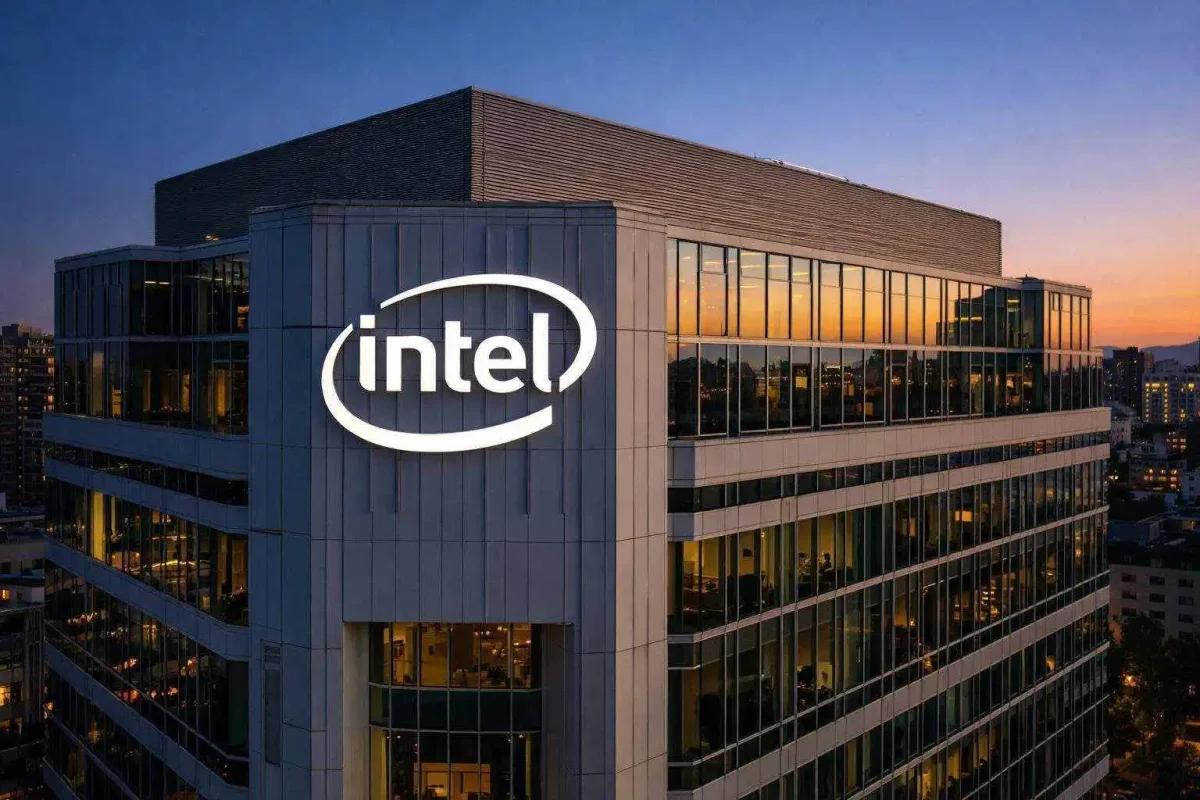
Intel Corporation's stock maintained its upward trajectory on Monday, marking an eighth straight day of gains. The shares advanced by approximately $2.09 to reach $64.47 by late morning trading, extending a rally that has now increased the semiconductor giant's market capitalization by more than $100 billion over this brief period.
Catalysts Fueling the Rally
The sustained momentum is attributed to a confluence of positive developments. Last week, Intel announced an expansion of its collaboration with Google, focusing on both its Xeon server processors and custom infrastructure processing units (IPUs). This partnership underscores a strategic pivot in the industry, where demand is shifting from solely training artificial intelligence models to the compute power required for their widespread deployment and inference.
Further bolstering investor confidence, Intel recently finalized a $14.2 billion agreement to repurchase Apollo Global Management's 49% stake in its Fab 34 manufacturing facility in Ireland. The company also revealed a new partnership with Terafab, an initiative backed by Elon Musk that involves Tesla, SpaceX, and xAI. This deal is seen as a significant validation of Intel's next-generation 18A manufacturing process technology.
Wall Street Adjusts Its View
Analysts are taking note of the shifting narrative. Cody Acree of Benchmark raised his price target on Intel to $76 from $57 on Monday. He cited Google's reinforced commitment as evidence of the enduring relevance of Intel's x86 server architecture in data centers, especially as AI systems increasingly integrate CPUs, GPUs, and custom silicon. Acree also highlighted the Terafab partnership as a key endorsement of Intel's 18A process. His new target implies a potential upside of nearly 20% from recent trading levels.
The bullish sentiment was echoed by other market observers. Thomas Hayes of Great Hill Capital remarked that Intel was "no longer on life support," while Ben Reitzes at Melius Research noted that "the Intel narrative keeps accelerating." These comments reflect a dramatic turnaround for a company that had previously ceded significant ground to rivals like Nvidia in AI accelerators and AMD in the PC market.
Valuation and Challenges Ahead
Despite the enthusiasm, the rapid ascent is raising valuation concerns. The stock has surged 69% year-to-date in 2026, following an 84% gain in 2025. It now trades at roughly 27% above the average analyst price target and at a multiple exceeding 90 times projected earnings for the coming year. According to Bloomberg data, only 10 out of 52 analysts currently rate the stock a buy, with six recommending sell.
Significant hurdles remain. The company's contract manufacturing division, Intel Foundry, reported an operating loss of $10.32 billion in 2025. Management also continues to grapple with production yields for its 18A process that are lagging behind expectations.
Earnings and the Road Forward
All eyes are now on the company's first-quarter financial results, scheduled for release after the market closes on April 23. The current market optimism appears to be banking on improved operational execution in its factories, more stable demand for its server CPUs, and the credibility brought by its high-profile partnerships.
Intel's leadership has been vocal about the broader AI opportunity. CEO Lip-Bu Tan recently stated that "scaling AI requires more than accelerators," a view supported by Google Cloud's chief technologist, Amin Vahdat, who pointed to Intel's Xeon roadmap as a reason for their continued collaboration. This reinforces Intel's core thesis that the full deployment of AI will continue to rely heavily on general-purpose CPUs working in concert with specialized hardware.