Intel Corporation (NASDAQ: INTC) shares declined 1.6% to $84.96 in premarket trading on Wednesday, extending a 5.9% drop from Tuesday's close at $86.30. The stock now trades roughly 15% below its Thursday close, even after last week's earnings surpassed forecasts. This persistent weakness highlights a growing debate among investors about the quality of the company's growth, rather than a shift in earnings estimates.
Revenue Growth Driven by Pricing, Not Volume
Intel's second-quarter results revealed that growth was primarily fueled by higher prices and changes in product mix, rather than robust volume increases. Server average selling prices climbed 48% year-over-year, while shipment volumes grew only 9%. Similarly, client prices rose 27%, despite an 8% decline in unit volume. This pricing leverage has boosted revenue but raises sustainability concerns, as relying on price increases alone may not be sufficient to support the company's updated earnings outlook.
Data Center and AI Revenue Surge
Data Center and AI revenue reached $6.3 billion, up 59% from the prior year, driven by strong demand for Intel's CPU products. Chief Executive Lip-Bu Tan noted that artificial intelligence is fueling "unprecedented demand for compute." However, investors are increasingly skeptical about the payoff from significant AI data-center investments, a sentiment that has weighed on the broader semiconductor sector. The PHLX Semiconductor Index dropped 4.5% on Tuesday and is now about 25% below its record high set on June 22.
Earnings Outlook Improves
Despite the stock's decline, earnings estimates have risen sharply. FactSet's consensus EPS projection for 2026 increased to $1.48 from $1.08 over the past month, a 37% jump. The forecast for 2027 also rose 28% during the same period. At $84.96, Intel's stock trades at roughly 42 times expected 2027 earnings, a multiple that has compressed as the stock fell but still reflects execution risk.
Foundry Business Progress
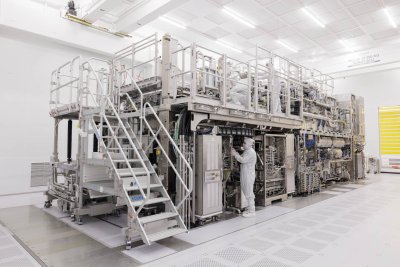
Intel's foundry business posted external revenue of $293 million, representing about 5% of total foundry revenue of $5.765 billion. However, most of the external growth came from Altera's transition to an external customer, constraining indications of wider customer adoption. The foundry operating loss narrowed to $2.1 billion, a 36% margin loss, which remains substantial but shows improvement from previous quarters.
Capital Spending and Market Context
Intel raised its 2026 capital spending outlook to $20 billion, up from $18 billion. Melius Research noted that the higher guidance signals "confidence in cash flow upside and demand visibility." The timing of this increase is challenging, as Asian chip stocks came under pressure on Wednesday. SK hynix posted operating profit that climbed over six times, but the result fell short of analyst forecasts, further weighing on sector sentiment.
Key Risks and Outlook
Intel's third-quarter revenue guidance of $15.8 billion to $16.8 billion, with a midpoint nearly matching Q2's $16.1 billion, suggests limited sequential growth. The company set its adjusted EPS outlook at $0.38. Risks persist in both directions: reduced supply pressures could boost unit volumes but may dampen premium pricing, while ongoing shortages could limit shipments. Foundry losses continue to tie up capital, and investors will be watching for signs of higher unit sales to support the updated earnings outlook.
Investors await major tech company results and the Federal Reserve's rate decision, both due later Wednesday, which will provide further cues on AI investment sentiment and borrowing costs. The key test for Intel remains its ability to demonstrate volume growth alongside pricing power to justify its current valuation.