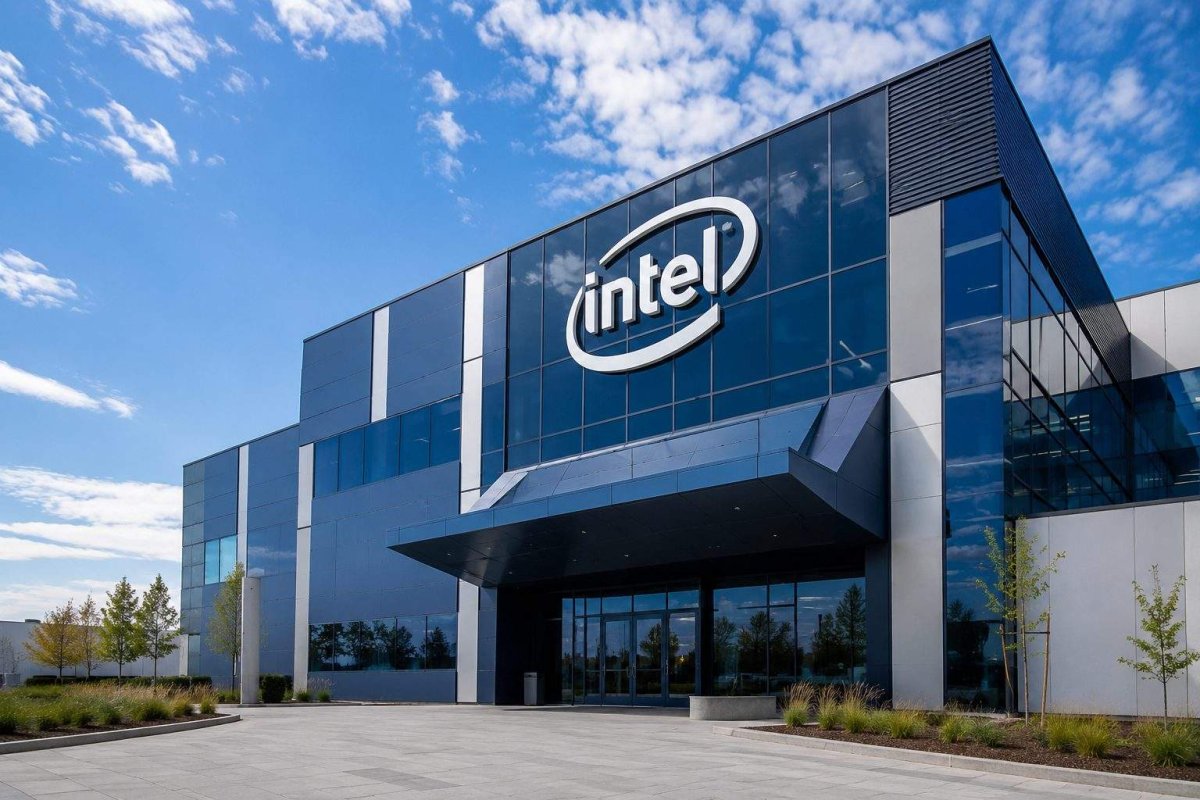
Intel Corporation (NASDAQ:INTC) experienced a sharp decline on Wednesday, with shares falling 7.7% to $128.88 by early afternoon trading. The drop erased approximately $54.7 billion in market capitalization compared to Tuesday's closing price, as the broader semiconductor sector also faced selling pressure.
The decline was part of a wider market move affecting chip stocks. Advanced Micro Devices (NASDAQ:AMD) fell 5.2% to $550.60, while NVIDIA (NASDAQ:NVDA) slipped 1.5% to $197.00. The VanEck Semiconductor ETF (NYSEARCA:SMH) dropped 5.0%, and the iShares Semiconductor ETF (NASDAQ:SOXX) lost 5.6%. In contrast, the SPDR S&P 500 ETF (NYSEARCA:SPY) edged up 0.2%.
Despite the significant pullback, Intel's stock remains highly elevated. The shares are up 249.82% year-to-date in 2026 and trade near their 52-week high of $142.35. According to MarketBeat, the stock is trading at a 37.2% premium to the average analyst price target of $93.93. The consensus rating on Intel is 'Hold,' with a mix of 4 sell, 28 hold, 15 buy, and 2 strong buy ratings.
Intel's implied volatility surged to 89%, near its 12-month high, as options activity picked up ahead of the company's second-quarter earnings report, scheduled for release after the market close on July 23. The company will host a conference call at 2 p.m. PDT that day.
Intel's first-quarter results set a high bar. Revenue came in at $13.6 billion, up 7% year-over-year, with non-GAAP EPS of $0.29. For the second quarter, Intel guides revenue between $13.8 billion and $14.8 billion and non-GAAP EPS of $0.20. Data Center and AI revenue grew 22% to $5.1 billion, while Intel Foundry posted a 16% gain to $5.4 billion before eliminations.
CEO Lip-Bu Tan highlighted inference and packaging as key growth drivers. “The next wave of AI will bring intelligence closer to the end user,” he said in the first-quarter report, adding that this shift is boosting demand for Intel CPUs, wafer supply, and advanced packaging.
However, time remains a significant risk. Taiwan Semiconductor Manufacturing Co (NYSE:TSM) still leads in foundry capacity. “TSMC is the real bottleneck,” said SemiAnalysis President Doug O’Loughlin in a May Reuters interview. Seaport Research’s Jay Goldberg was blunt: “No company in history has ever fallen off the Moore’s law curve and made it back on.” J.P. Morgan’s Harlan Sur noted it will take at least five years to determine if Intel’s foundry bet will become a viable, profitable business.
As uncertainty mounts, traders are buying protection. Gavin McMaster of Investor’s Business Daily reported that Intel’s implied volatility stands at 89%, with the implied-vol percentile at 97% and the IV rank at 90%, both near 12-month highs.