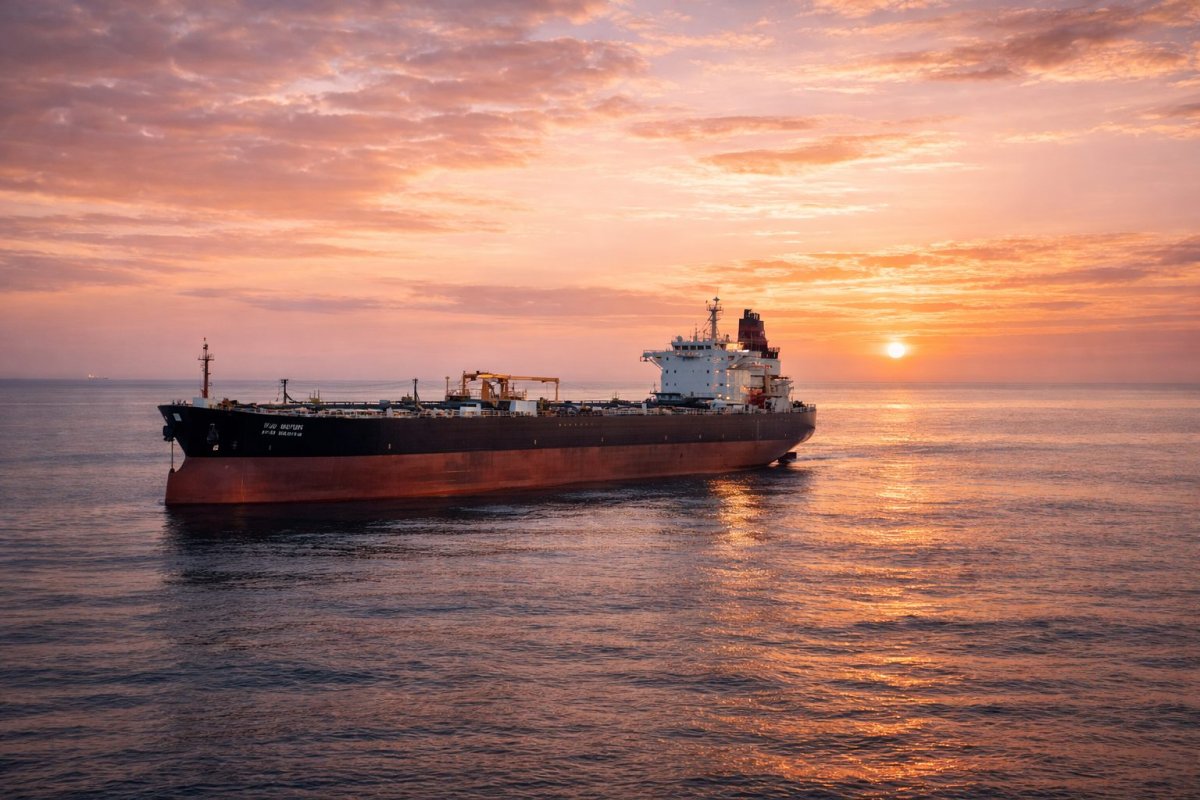
Heightened military tensions in the Persian Gulf have sent shockwaves through global energy markets after Iran's Revolutionary Guard Navy asserted "complete control" over the Strait of Hormuz. The strategic chokepoint, a conduit for roughly 20% of the world's seaborne oil and liquefied natural gas (LNG), has seen a dramatic reduction in vessel traffic as shipping companies assess the risk of missile or drone attacks. The immediate market reaction was a surge in benchmark Brent crude futures, which climbed 4.7% to settle at $81.40 per barrel.
Immediate Market Fallout and Supply Diversions
The warning from Iranian forces prompted an urgent scramble among Gulf energy producers to reroute shipments. State-owned Saudi Aramco has instructed certain customers to collect cargoes from the Red Sea port of Yanbu, bypassing the Strait of Hormuz entirely. This logistical workaround, however, faces capacity constraints and has already caused spot shipping rates from Yanbu to more than double. The disruption is so significant that pricing agency S&P Global Platts has suspended bids and offers for several Middle East crude and LNG assessments typically dependent on Hormuz transit, while exploring alternative freight routes for its benchmarks.
Geopolitical Posturing and Escalation Risks
In response to the Iranian move, former U.S. President Donald Trump stated that the U.S. Navy stands ready to escort commercial tankers through the strait to ensure the "free flow of energy to the world." He also directed the U.S. International Development Finance Corporation to provide political risk insurance and financial guarantees for Gulf maritime trade. Despite these assurances, shipping industry sources express skepticism that naval escorts can effectively mitigate risks while active hostilities continue in the region.
Asia and Emerging Markets in the Crosshairs
Analysts are pinpointing Asia's major fuel importers as the first and most vulnerable casualties of sustained disruption. Economies including Thailand, South Korea, Vietnam, Taiwan, and the Philippines face the dual threat of soaring energy import bills and weakening currencies, which could balloon trade deficits. Investment bank J.P. Morgan warns that oil flows from Iraq and Kuwait could begin shutting down within days if the strait remains blocked, with a potential loss of 3.3 million barrels per day by the eighth day of conflict. Iraqi officials separately indicated the country could be forced to slash output by over 3 million barrels daily if tankers cannot access its ports.
Broader Economic and Policy Implications
The crisis introduces a new "wild card" for global inflation and central bank policy, particularly for the U.S. Federal Reserve. Economists note that the nascent global economic recovery is now at risk. The scale of the potential disruption is vast: U.S. Energy Information Administration data shows approximately 20 million barrels of oil per day transited the strait in 2024, alongside a fifth of global LNG trade, predominantly from Qatar. Consultancy Wood Mackenzie has flagged the risk of oil prices exceeding $100 per barrel if tanker flows are not restored promptly.
Industry Response and Lingering Uncertainty
Shipping data reveals a stark decline in vessel movements. In a rare transit, the Suezmax tanker Pola navigated the strait on Tuesday after switching off its automated identification system (AIS) transponder, later reappearing on tracking systems near Abu Dhabi. Trade sources indicated its destination was Thailand to load Murban crude. For now, the prevailing industry stance is caution. A Reuters analysis indicates numerous tanker operators, oil majors, and trading firms have paused shipments through Hormuz, with one executive noting vessels would "stay put for several days" as risks are evaluated. The ultimate trajectory of oil prices and global supply hinges on the critical question of when—and under what conditions—export flows can be safely re-established.