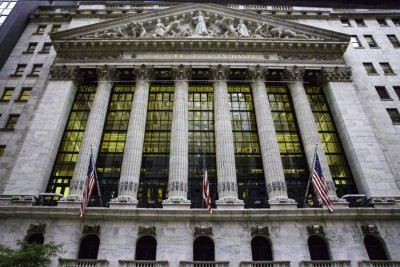
Wall Street treaded water on Monday as a sharp jump in manufacturing input prices reignited inflation concerns, setting a cautious tone ahead of a pivotal week for labor market data. The S&P 500 closed essentially unchanged, caught between strength in mega-cap technology shares and steep declines in travel-related stocks following a surge in crude oil prices.
Market Movers: Tech Offsets Travel Weakness
The benchmark index was held in check by opposing sector forces. Chipmaker NVIDIA (NVDA) advanced 2.8%, while software giant Microsoft (MSFT) gained 1.7%, providing crucial support. This strength was necessary to counter significant pressure from airlines and cruise operators, which sold off aggressively. Delta Air Lines (DAL) and United Airlines (UAL) each fell more than 2.5%, while cruise giants Carnival (CCL) and Norwegian Cruise Line (NCLH) also tumbled. The sell-off was primarily driven by a sharp escalation in oil prices, with Brent crude futures soaring over 7% to settle near $78.64 per barrel following heightened geopolitical tensions in the Middle East.
"At times when there is nervousness, people will go to the leaders in the market," noted Joe Saluzzi, co-head of equity trading at Themis Trading, explaining the flight to quality within the tech sector. The Dow Jones Industrial Average slipped 0.20%, or about 97 points, while the Nasdaq Composite managed a gain of 0.22%.
ISM Data Highlights Persistent Cost Pressures
The day's key economic release, the Institute for Supply Management's (ISM) manufacturing Purchasing Managers' Index (PMI), presented a mixed picture. The headline index for February registered 52.4, down slightly from January's 52.6 but remaining comfortably above the 50 threshold that indicates expansion. However, the report's most alarming component was the Prices Paid Index, which skyrocketed to 70.5 from 59.0 the prior month. This marks the highest reading for input costs since October 2022, underscoring persistent inflationary pressures within the factory sector.
Analysts pointed to ongoing tariff impacts and the fresh uncertainty from rising energy costs as key drivers. "The sharp jump in oil prices is pushing inflation and interest rate expectations back into the spotlight," observed one market strategist, as traders began to reassess the timeline for potential Federal Reserve policy easing.
Oil and Treasuries Reflect Market Anxiety
The energy complex experienced extreme volatility. Brent crude futures surged as high as $82.37 during the session before paring gains, ultimately settling up 7.6%. U.S. West Texas Intermediate (WTI) crude followed a similar path, closing up 5.77% at $70.89. "Markets are acknowledging the seriousness of the conflict, but are also signalling that, for now, this is a geopolitical shock, not a systemic crisis," commented Priyanka Sachdeva, senior analyst at Phillip Nova.
In the fixed-income market, U.S. Treasury yields whipsawed as investors balanced safe-haven demand against fears that rising energy costs could delay the fight against inflation. The yield on the benchmark 10-year note initially dipped to an 11-month low of 3.926% before rebounding to trade near 3.970%.
The Week Ahead: All Eyes on the Labor Market
With the manufacturing survey in the rearview mirror, investor focus now shifts decisively to the health of the U.S. labor market. The data calendar is packed with key releases that will shape expectations for monetary policy. Wednesday will bring the ADP National Employment Report and the ISM Services PMI, followed by weekly jobless claims on Thursday.
The main event, however, is the U.S. government's official employment report for February, scheduled for release at 8:30 a.m. ET on Friday. Economists and traders will scrutinize non-farm payrolls growth, the unemployment rate, and most critically, wage growth metrics for any signs that inflationary pressures are abating or becoming entrenched. A strong jobs print or accelerating wage gains could challenge the prevailing market narrative that the Federal Reserve will be able to pivot to rate cuts later this year.
Beyond this week, the next major inflation checkpoint will be the Consumer Price Index (CPI) report for March, due on March 11. For now, the market remains in a holding pattern, weighing resilient economic data against the Fed's stated commitment to returning inflation to its 2% target. The interplay between rising commodity prices, steady demand for labor, and corporate pricing power will likely dictate market direction in the coming sessions.