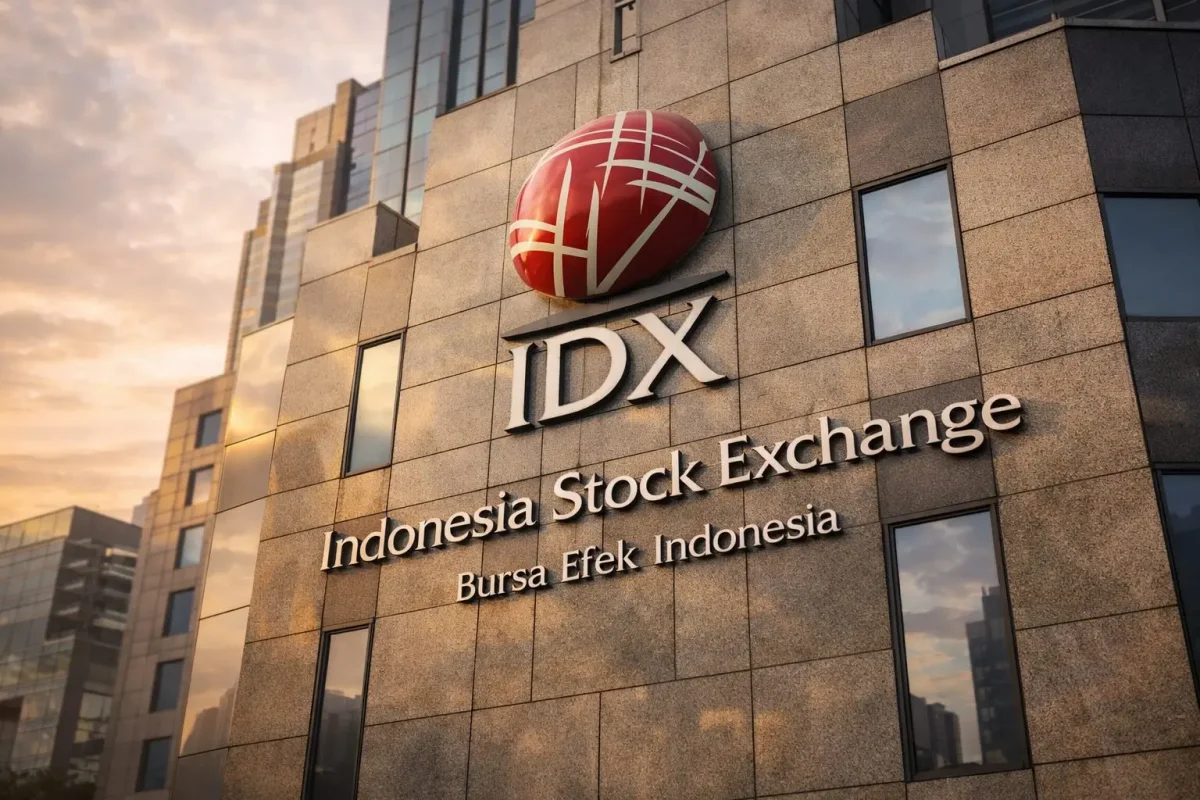
Indonesia's equity market faced intensified selling pressure last week, deepening a prolonged downturn that has positioned it among the worst performers in Asia this year. The Indonesia Stock Exchange (IDX) reported that market capitalization plunged 7.85% over the trading week ending March 6, 2026, shedding 13,627 trillion rupiah (approximately $810 million). This decline compounds a year-to-date loss of 7.5% for the Jakarta Composite Index.
Credit Agencies Sound the Alarm
The immediate catalyst for the sell-off was a decision by Fitch Ratings on March 4 to lower Indonesia's sovereign credit outlook to negative from stable. The agency cited increased policy uncertainty and eroding confidence in government fiscal management. This action follows a similar warning from Moody's Investors Service last month, marking the second negative outlook adjustment for the country's credit profile this year.
MSCI Downgrade Looms Large
Compounding the credit concerns is a stark warning from global index provider MSCI. In January, MSCI paused changes to its Indonesian equity listings and indicated the market risks being demoted from emerging-market to frontier status as early as May 2026. The firm highlighted persistent issues surrounding ownership structures and trading transparency. Reuters reported that the MSCI warning alone triggered an estimated $120 billion loss in market capitalization for the exchange.
Capital flight has been significant. According to IDX data cited by Reuters, foreign investors were net sellers of $415 million in Indonesian equities by March 5. For the full year 2026 through that date, foreign net selling totaled 7.29 trillion rupiah.
Government Response and Fiscal Challenges
Finance Minister Purbaya Yudhi Sadewa has sought to reassure markets, pledging to maintain the state budget deficit below the legal ceiling of 3% of GDP. However, he acknowledged significant challenges, noting that if global oil prices persist in the $90-$92 per barrel range, the deficit could balloon to 3.6% without corresponding spending cuts. He described the government's fiscal maneuvering room as "minimal."
Analysts express skepticism about the government's ability to quickly restore investor confidence. Trinh Nguyen, a senior economist for emerging Asia at Natixis, noted that Minister Purbaya faces a more difficult task than his predecessor, Sri Mulyani Indrawati, in calming markets. Regarding monetary policy, DBS economist Radhika Rao pointed to the weakening rupiah as a major constraint, suggesting Bank Indonesia is unlikely to cut interest rates in the first half of the year, thereby removing a potential support for equities.
Regulatory Push for Reform
In a direct response to MSCI's concerns, Indonesian market regulators are implementing a key reform. The Financial Services Authority (OJK) is enforcing a rule requiring listed companies to maintain a minimum free float of 15% of their shares. The authority estimates that up to 75% of listed firms could meet this threshold within the first year of the rule's implementation. Reuters analysis suggests compliance from low-float companies could unlock over $11 billion in shares for trading.
This rule could significantly impact major market constituents. For instance, Barito Renewables Energy, the exchange's largest company by market capitalization according to Reuters, is among those expected to release a substantial number of shares if the regulation proceeds.
The market's near-term trajectory remains highly uncertain. A combination of a more stable rupiah, clearer policy signals from Jakarta, and accelerated progress on free-float reforms could help stem the outflow of capital. Conversely, elevated oil prices, continued foreign selling, and a potential MSCI downgrade could lead to further turbulence before market confidence is restored. The situation has already prompted a shift in strategy from major institutions; Goldman Sachs moved Indonesian equities to an "underweight" rating in January as scrutiny on the market intensified.