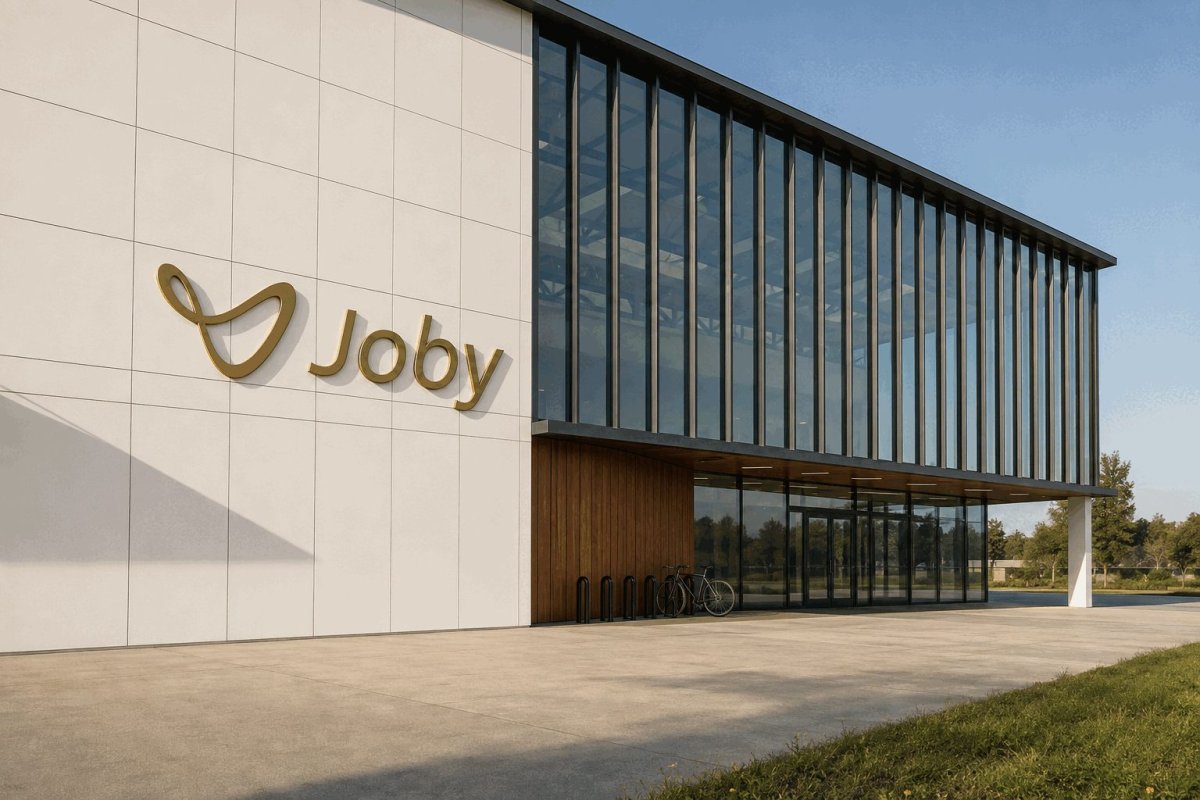
Joby Aviation (NYSE: JOBY) saw its shares decline sharply on Tuesday, closing down 4.43% at $8.42, after the company unveiled a $500 million acquisition of defense contractor Resonant Sciences. The market's reaction underscores growing concerns about the company's cash position as it continues to burn through capital on its core air-taxi certification program.
The all-cash-and-stock deal will see Joby pay $450 million in cash and $50 million in stock for Resonant, a Dayton, Ohio-based firm specializing in advanced electronics, antennas, and radomes. The cash component represents a hefty 19.9% of Joby's cash and short-term investments, which stood at $2.264 billion at the end of June. This significant outlay has investors questioning whether the company is stretching its resources too thin.
Joby's cash burn has been a focal point for analysts. The company spent $202 million in cash during the second quarter of 2026, and it expects to use an additional $385 million to $415 million in the second half. With the Resonant acquisition set to close in the first half of 2027, the company's liquidity will be under even more pressure, especially as it continues to invest in certifying its electric vertical take-off and landing (eVTOL) aircraft.
Resonant brings substantial revenue to the table—over $100 million in trailing twelve-month revenue, up roughly 40% year-over-year. The company also boasts adjusted EBITDA margins in the high teens and employs about 250 staff, over 90% of whom hold security clearances. Joby's management, including CEO JoeBen Bevirt and CFO Rodrigo Brumana, has touted the strategic fit, pointing to strong backlog visibility and a doubling of bookings in the first half of the year compared to the prior year.
However, the acquisition does little to alleviate Joby's immediate funding needs. The company's second-quarter revenue of $38.64 million was largely driven by its Blade subsidiary, which contributed $36.2 million—94% of total revenue. Core air-taxi operations remain a distant prospect, with certification costs mounting and no clear timeline for commercial launch. Joby's operating loss widened to $260.88 million in Q2, up 12% sequentially, while adjusted EBITDA loss also grew.
Analyst sentiment is mixed, with a consensus price target of $11.25 reflecting a wide range of views. H.C. Wainwright's Amit Dayal maintains a Buy with an $18 target, while J.P. Morgan's James Kirby has a Sell with a $7 target. The six analysts covering the stock are evenly split between buy, hold, and sell ratings, highlighting the uncertainty surrounding Joby's path to profitability.
The company has raised its full-year 2026 revenue guidance to between $115 million and $125 million, but that figure still pales in comparison to its cash burn. The acquisition of Resonant is a strategic move to diversify revenue streams and bolster its defense segment, but it also adds execution risk. Regulatory approvals and the integration of Resonant's operations will be key watchpoints.
For investors, the immediate concern is whether Joby can manage its cash runway effectively. The $450 million payment, combined with ongoing operational losses, raises the specter of future dilution or debt issuance. The company's stock, which has a 52-week range of $6.63 to $19.98, remains volatile as it navigates the challenging path to certification and commercialization.
In the broader context, Joby's move into defense is a bid to create a more sustainable business model while its core air-taxi vision matures. But with cash concerns front and center, the market is clearly skeptical. The next few quarters will be critical for Joby to demonstrate that Resonant's backlog can translate into meaningful cash flow, and that its own cash reserves are sufficient to see it through the certification process.