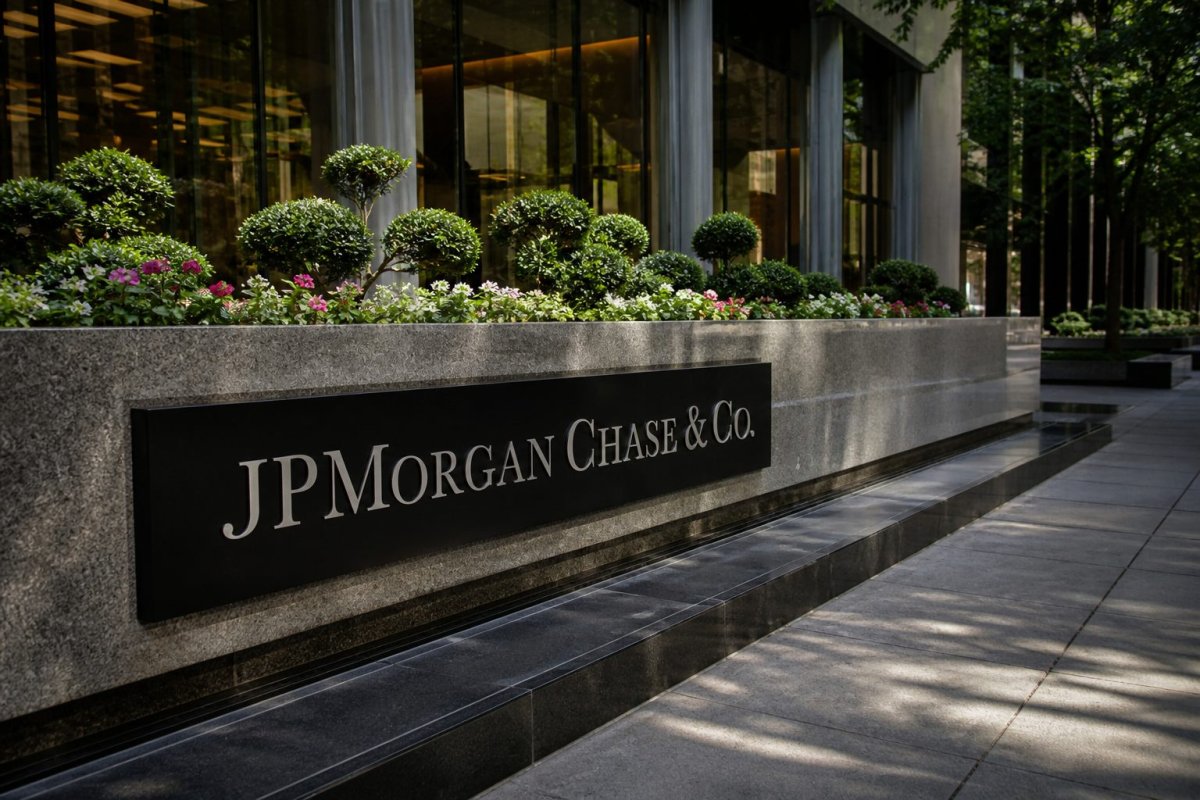
JPMorgan Chase & Co. (JPM) filed its first-quarter Form 10-Q with the SEC on Friday, revealing a $31.4 billion credit-loss allowance that investors are closely monitoring. The filing, accepted at 4:18 p.m. on May 1, covers results through March 31 and provides a detailed look at the bank's financial health amid rising costs and potential credit risks.
Key Financial Highlights
JPMorgan reported first-quarter net income of $16.5 billion, a 13% increase from the prior year, with diluted earnings per share reaching $5.94. Net revenue climbed 10% to $49.8 billion, driven by a 9% rise in net interest income to $25.4 billion, fueled by higher markets-linked interest income, increased deposit levels, and higher revolving card balances, partially offset by lower interest rates. Noninterest expenses jumped 14% to $26.9 billion, reflecting the bank's ongoing investments and inflationary pressures.
Credit Quality and Reserves
The $31.4 billion credit-loss allowance underscores JPMorgan's caution amid an uncertain economic outlook. Credit loss provisions fell to $2.5 billion from $3.3 billion a year ago, while net charge-offs totaled $2.3 billion. Consumer provisions stood at $2.1 billion, with card services accounting for the bulk. However, nonperforming assets rose 10% to $10.0 billion, and the bank forecasts card net charge-offs of approximately 3.4% for the full year. The bank also flagged that planned changes to U.S. Basel III rules and the systemic-bank surcharge could lift required common equity tier 1 capital by about 4% versus 2028 requirements.
Segment Performance and Capital Position
Consumer & Community Banking delivered a 32% return on equity, while investment banking fees surged 28% year-over-year and markets revenue climbed 20%. Asset & Wealth Management reported $4.8 trillion in assets under management, a 16% gain. JPMorgan's CET1 capital stood at $291 billion, with standardized and advanced CET1 ratios of 14.3% and 14.1%, respectively. The bank maintained a strong liquidity position of nearly $1.5 trillion in high-quality liquid assets and unencumbered marketable securities.
Share Repurchases and Market Reaction
During the first quarter, JPMorgan repurchased 27.5 million common shares for $8.33 billion, leaving $25.10 billion in buyback capacity under its $50 billion program. Shares closed Friday at $312.47, down $0.75 from the prior close, giving the bank a market capitalization of approximately $864.8 billion. The filing came after U.S. markets had closed for the week.
CEO Commentary and Analyst Views
CEO Jamie Dimon noted in the April earnings statement that the U.S. economy remains "resilient," supported by strong consumers and businesses, but flagged "significant" risks including geopolitical tensions, energy price swings, trade uncertainties, large fiscal deficits, and high asset valuations. RBC Capital Markets analyst Gerard Cassidy attributed the earnings beat to robust net interest income, noninterest income, and a smaller credit-loss provision. CFO Jeremy Barnum told analysts that consumer and small business health held up despite higher gas prices and market volatility.
Broader Market Context
JPMorgan's strong markets revenue mirrored Goldman Sachs' performance, while Wells Fargo also reported higher first-quarter profit. As the largest U.S. bank, JPMorgan's results offer a key snapshot of consumer spending, borrowing trends, and business activity. The bank's ability to sustain capital returns will depend on managing cost pressures, trading activity, and credit losses going forward.