Keel Infrastructure Corp. experienced a sharp decline in its stock price on Tuesday, following the closure of a $458 million convertible debt offering that the company intends to use for financing its artificial intelligence-focused data center projects. The move, while providing capital for expansion, revived investor concerns about potential share dilution in the future.
Shares of the New York-based digital infrastructure firm, which trades on the Nasdaq under the ticker KEEL, fell 4.24% to close at $5.42. During the trading session, the stock fluctuated between $5.17 and $6.36 before settling lower. In after-hours trading, the stock edged down further to $5.32, according to data from Google Finance. Trading volume was notably heavy, with 96.5 million shares changing hands, more than double the average daily volume, indicating heightened investor attention and anxiety.
The company is in the process of transitioning its legacy Bitcoin mining power assets into data centers designed for high-performance computing (HPC), particularly the type used for AI workloads. This strategic pivot has generally been well-received by investors earlier this year. However, the completion of the debt sale on Tuesday has cast a shadow over the company's financial outlook, raising questions about how much additional capital the company may need to raise in the future.
Keel Infrastructure announced the closing of $458 million in 1.250% convertible senior notes due in 2032. This amount includes a $58 million purchase option that was fully exercised by initial purchasers. Convertible senior notes are debt instruments that can be converted into equity at a later date and rank above subordinated debt in the company's capital structure. After accounting for expenses and the cost of hedging activities, the company expects net proceeds of approximately $445.4 million from the offering.
The notes are initially convertible at approximately $7.41 per share, representing a 25% premium over Keel's closing price of $5.93 on Nasdaq on June 4. To mitigate potential dilution if the notes are converted, the company has entered into capped call transactions, which effectively cap the conversion price at an initial $11.86 per share, providing a hedge against excessive dilution.
Keel Infrastructure stated that its current liquidity is expected to cover its projects at Panther Creek, Sharon, and Moses Lake through leasing arrangements. The company indicated that any remaining proceeds from the debt sale could be used for deposits on long-lead equipment, letters of credit, or to expand and accelerate data center projects. This financing extends the company's runway, but the market remains focused on execution risks.
The broader market also experienced a downturn on Tuesday, with the Nasdaq Composite losing about 1% and the S&P 500 slipping 0.3%, as U.S. AI-related stocks saw mixed performance. However, Keel's shares sold off more sharply than the broader AI trade, suggesting that investors were specifically reacting to the company's financing news rather than just the general market pullback.
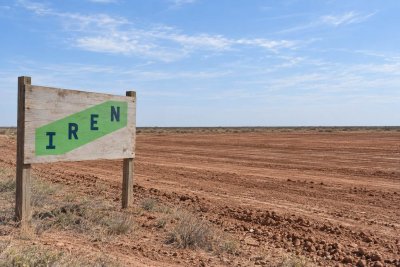
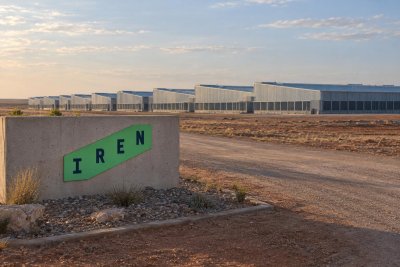
Keel is not alone in pursuing power assets for the AI boom. IREN, another company that previously mined Bitcoin and is now focusing on AI infrastructure, recently secured a $3.65 billion GPU financing deal tied to its Microsoft AI-cloud contract. IREN also announced plans for an 800-megawatt data center campus in South Australia. Analysts at Bernstein, led by Gautam Chhugani, have highlighted that access to power is the primary constraint for building AI cloud infrastructure. The firm maintains outperform ratings on IREN, Riot Platforms, CleanSpark, and Core Scientific.
Despite the financing, significant execution risks remain. Keel has acknowledged that its transition from Bitcoin mining to HPC infrastructure may not succeed. The company has identified potential pitfalls, including cost overruns, dependence on reliable power supply, supply chain disruptions, customer defaults, future funding requirements, and the possibility of further dilution. Nic Puckrin, co-founder of Coin Bureau, cautioned against assuming that every Bitcoin miner pivoting to AI will automatically be successful. For now, the stock's key challenge is whether Keel can secure leases and demonstrate operational progress before investors view the new debt as additional pressure on the company's financial health.