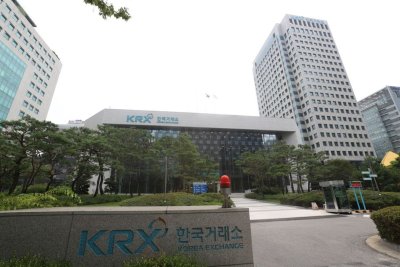
South Korea's benchmark KOSPI index suffered its largest single-day decline in more than three months on Tuesday, plummeting 9.99% to close at 8,203.84. The sharp selloff, which erased 910.71 points, triggered a market-wide trading halt in the afternoon as investors rushed to exit positions in chipmakers following a historic AI-driven rally and regulatory warnings.
The decline came just a day after the KOSPI breached the 9,100 mark for the first time, fueled by gains in Samsung Electronics and SK hynix. According to Reuters, these two companies now account for over half of the index's total market capitalization.
Regulatory Concerns and Leveraged ETFs
The selloff has drawn attention to the shift from a chip earnings-driven rally to a leveraged retail trade. South Korea's financial regulator acknowledged this week that it had acted too hastily in approving leveraged single-stock exchange-traded funds (ETFs) tied to chip stocks. These funds are designed to amplify daily moves in individual shares.
Lee Chan-jin, head of the Financial Supervisory Service, stated on Monday that the approvals for these leveraged chip funds were "prepared hastily." The regulator is now examining stabilization measures after such products pushed borrowed equity investment to 60 trillion won by the end of May, according to Reuters.
Market-Wide Circuit Breaker Triggered
The Korea Exchange halted trading at approximately 2:33 p.m. local time after the KOSPI dropped more than 8% from its previous close, as reported by Yonhap. This marks the fourth time in 2024 that the exchange has triggered a market-wide circuit breaker, and the 10th occurrence since records began.
The selloff was broad-based, with chip stocks leading the decline. Samsung Electronics lost 12.31% to 310,000 won, while SK hynix fell 12.47% to 2.55 million won. Other major stocks also suffered: Hyundai Motor dropped 12.05%, and LG Energy Solution closed 6.1% lower.
Foreign and Institutional Selling, Retail Buying
Foreign investors were net sellers of 4.13 trillion won, and institutional investors offloaded 4.55 trillion won, according to Yonhap. In contrast, retail investors stepped in as net buyers, purchasing a net 8.58 trillion won. Total trade volume reached 483.7 million shares, with turnover at 59.9 trillion won. Decliners outnumbered advancers 856 to 46.
CLSA chief equity strategist Alexander Redman told Reuters, "Volatility has blown out." He noted that the magnitude of the move was difficult to explain without strong retail involvement, adding that "retailers are in the driving seat."
Won Weakness and MSCI Exclusion
The South Korean won also came under pressure. Finance Minister Koo Yun-cheol remarked at a cabinet meeting that the currency trading in the mid-1,500s per dollar was "excessive" given the country's fundamentals. He attributed some of the pressure to overseas investors taking profits in Korean stocks.
Adding to the negative sentiment, news emerged that South Korea would be excluded from MSCI's developed-markets index at the next review. Reuters reported that MSCI still views Korea as missing core requirements, such as fully accessible offshore currency markets.
Global Market Spillover
The losses spread beyond Seoul. Japan's Nikkei 225 fell 3.6%, Hong Kong's Hang Seng dropped 2.1%, and the Nasdaq Composite declined 1.3% on Monday as Big Tech stocks softened, according to AP. Neil Newman of Astris Advisory Japan noted that the market's strength had "cooled off a bit."
Despite Tuesday's plunge, the KOSPI remains up 94.67% for the year, according to Reuters. Investors are now weighing whether this drop represents a temporary pause in strong AI trades or signals forced selling from leverage, foreign outflows, and a weaker won.