Shares of Mangoceuticals (NASDAQ: MGRX) experienced a dramatic surge on Friday morning, climbing as much as 318.9% to an intraday high of $1.23 before settling at $0.8029, a 173.5% increase from the previous close of $0.2936. The spike followed the announcement of a reverse merger with Nuclea Energy, a private nuclear reactor developer, which will pivot the company's focus from telehealth to next-generation nuclear technology.
The trading volume was extraordinary, with over 350.5 million shares changing hands by 10:43 a.m. EDT. Based on early calculations, the company has approximately 18.2 million shares outstanding, implying a turnover of roughly 19.3 times the entire share count. This level of trading activity underscores the intense market interest in the nuclear sector, which has been buoyed by recent AI-driven energy demand forecasts.
Deal Structure and Ownership
According to the merger agreement, Nuclea shareholders will receive approximately 96% of the fully diluted equity, while current Mango investors will retain just 4% prior to the issuance of PIPE shares. The exchange ratio is set at 24x, meaning Nuclea shareholders will receive 24 shares of Mango common stock for each share of Nuclea. Any rights exceeding 19.99% will be deferred pending shareholder and Nasdaq approval, a standard safeguard to avoid triggering exchange rules.
The closing of the transaction is contingent on securing a minimum of $15 million in PIPE financing. This capital injection is critical, as Mango's cash reserves stood at just $174,562 as of March 31, 2026. The PIPE amount represents approximately 86 times the company's current cash on hand, highlighting the deal's dependence on external funding to sustain operations post-merger.
Valuation and Market Context
Using Friday's market capitalization of $13.2 million and dividing by the 4% ownership stake yields a mechanical pro-forma valuation of approximately $331 million for the combined entity. However, this figure is purely arithmetical and does not reflect a revealed transaction value, as it omits PIPE dilution and assumes Friday's share price holds through closing.
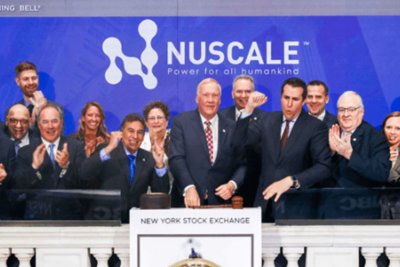
The nuclear sector has attracted significant investor attention, with established players commanding substantial market caps. Oklo Inc. (NYSE: OKLO) currently trades at a market value of $6.69 billion, NuScale Power Corp. (NYSE: SMR) at approximately $2.70 billion, and Nano Nuclear Energy Inc. (NASDAQ: NNE) at around $824 million. The mechanical estimate for Mango's combined entity would be just 0.04 times Oklo's valuation, illustrating the scale disparity.
Nuclea's Morpheus Reactor
Nuclea's flagship project, the Morpheus reactor, remains in the conceptual design phase. The company anticipates output ranging between 3.5 and 50 megawatts-electric and has outlined an 18-month development plan. Chief Executive Josef Freundorfer stated that a public listing should provide "capital access and visibility," a sentiment echoed by many private nuclear startups seeking to fund capital-intensive projects.
However, the filing lacks audited financials for Nuclea, leaving investors without conventional reference points for revenue, cash flow, or backlog. The 8-K disclosed no valuation for Nuclea, and the Morpheus reactor is still subject to nuclear licensing approval, adding significant regulatory risk.
Legacy Business Performance
Mango's legacy telehealth operations have been struggling. First-quarter revenue declined 37.9% year-over-year to $67,864, while gross profit fell 53.3% to $29,001. The net loss narrowed by 29.7% to $3.40 million, though stock compensation expenses rose 57.6% to $1.65 million. These unaudited results highlight the financial challenges that necessitated the strategic pivot.
Management and Risks
Following the closing, Josef Freundorfer will assume the role of Chief Executive, with Sagar Sanghera slated to become Executive Chairman. Current CEO Jacob Cohen will transition to President in a consulting capacity. The deal is subject to shareholder approval, Nasdaq consent, and regulatory clearances, with Mango also seeking an additional bid-price grace period ahead of August 3.
Investors should be aware of multiple risks: Morpheus is still a concept, nuclear licensing is uncertain, and the PIPE financing could lead to significant dilution. The market's enthusiasm may be premature, but the nuclear narrative continues to attract speculative capital. As trading volumes suggest, traders are betting on the nuclear strategy over the legacy health division's sales performance.