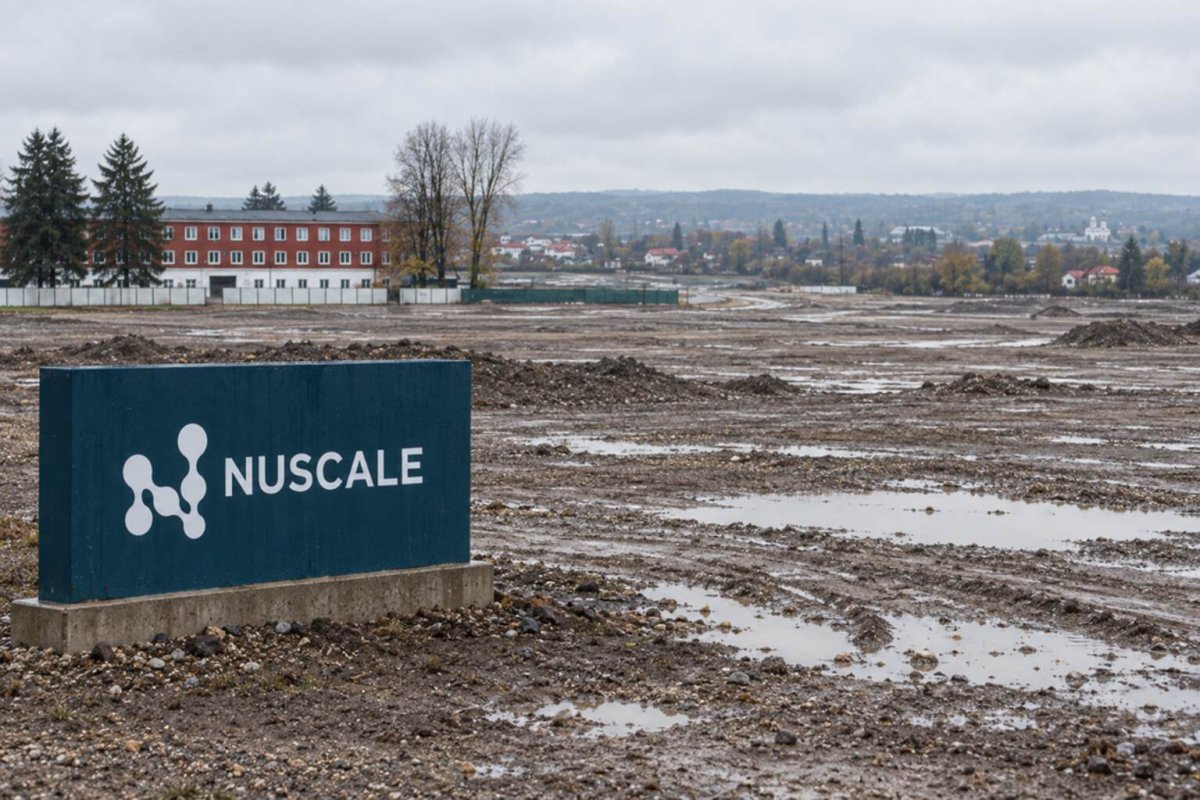
Romania's state-owned nuclear utility, Nuclearelectrica, has released a government audit that raises questions about the corporate structure, state-aid procedures, and timeline of the proposed 462-megawatt small modular reactor (SMR) project at Doicesti, which is being developed in partnership with NuScale Power (NYSE: SMR). The audit, however, does not challenge the safety or design of NuScale's reactor technology, focusing instead on governance and procedural aspects.
Market Reaction and Context
The disclosure comes at a delicate time for NuScale, whose shares closed Friday at $8.61, down 15.7%, following a sell rating from UBS that amplified concerns about valuation and commercialization. While the Romanian audit is not the direct cause of that decline, it adds another layer of uncertainty to one of NuScale's most advanced international projects. Investors are now weighing whether the project can navigate additional legal and financing hurdles before NuScale secures its next major contract.
Key Findings of the Audit
On September 11, Nuclearelectrica shareholders voted overwhelmingly (93.0% in favor) to make public the 69-page report from the Prime Minister's Control Body. The audit reveals that the second phase of front-end engineering and design (FEED) was completed 20 months later than the schedule set in 2022. It also notes that correspondence with Romania's Competition Council indicated a requirement to notify the European Commission about the joint venture formed for the project, but that notification had not been made. The report recommends that the Energy Ministry assess whether the arrangement complies with market conditions and European and national state-intervention rules, to mitigate the risk of future invalidation.
The most critical findings target RoPower Nuclear, the 50-50 joint venture between Nuclearelectrica and Nova Power & Gas. Auditors claim the equal-share partnership lacked a documented comparative assessment of other potential private partners, and that the rights and risks were not symmetrical. They also advised Nuclearelectrica to review costs rebilled to RoPower and consider seeking cancellation of the rebilling agreement.
It is important to note that these are governance and transaction-structure findings, not a nuclear-safety verdict. While the audit questioned the selection of Doicesti, which ranked second in an earlier site study, it also acknowledged that an International Atomic Energy Agency (IAEA) review found the site suitable from a nuclear-safety perspective.
Nuclearelectrica's Response
Nuclearelectrica has pushed back against the audit's core criticisms. In its July response to preliminary findings, the utility argued that the schedule was an estimate rather than a binding deadline, and that a 20-month delay is not significant for a first-of-a-kind nuclear project requiring specialized licensing and international financing. It also highlighted successive IAEA reviews, including a 2024 follow-up mission that confirmed site-selection recommendations had been addressed. On the partnership structure, Nuclearelectrica cited a private-investor analysis suggesting a commercial investor could have chosen a similar arrangement, and said consultations with the Competition Council had taken place.
This disagreement is significant because the audit creates additional work for ministries, shareholders, and the project company, but it is not a cancellation order. In February, Romania approved the final investment decision for a plant using six 77-megawatt NuScale modules. However, Nuclearelectrica later noted that some conditions for the next phase could not yet be met and that it wanted further technology and economic comparisons before committing more capital.
Investor Implications and Next Steps
NuScale's own June-quarter filing underscores the project's importance, describing RoPower as its only international customer. NuScale completed its subcontracted work on the second FEED phase in late 2025, but does not expect RoPower to enter a pre-engineering, procurement, and construction (pre-EPC) contract until financing for that phase is secured. NuScale said it would resume work after that agreement is signed.
For investors, the key milestones to watch are: a formal resolution of the European notification issue; the Energy Ministry's review of the 50-50 joint venture; RoPower's financing package; and a signed pre-EPC contract. Progress on all four would bolster NuScale's case that its approved design can move from studies to a bankable European project. Further delays would reinforce market concerns that commercial deployment remains distant despite real regulatory milestones.
The strongest counterargument is that the audit targets Romanian governance decisions rather than NuScale's technology, and that the government can rectify documentation or notification problems without changing the reactor supplier. That is plausible. But after Friday's share decline, the burden of proof has shifted from endorsements to funded contracts. Doicesti now has to demonstrate both.