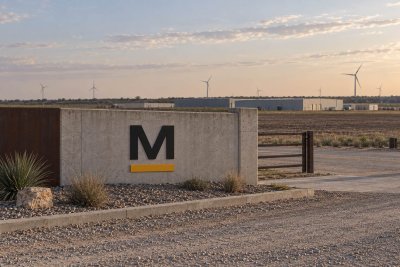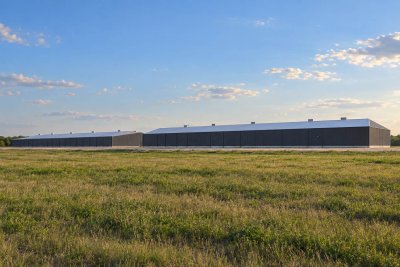
MARA Holdings (NASDAQ:MARA) saw its stock decline approximately 3.1% to $11.79 on Wednesday afternoon, moving below the $12.02 closing price recorded just before the company's July 9 announcement regarding its Texas site. This decline occurred even as Bitcoin gained 0.7% to around $65,070. The shares relinquished the brief premium tied to the Texas project, which has the potential to bring 2 gigawatts of capacity but will not reach full power until 2028.
On July 9, MARA shares closed at $13.22, up 10%, which boosted equity value by about $458 million based on the company's most recent share count of 381.3 million. That single-day gain represented roughly 76% of the Texas deal's maximum milestone payout of $600 million. By Wednesday afternoon, shares had fallen 10.9% from that close.
The Texas economics are a key reason for investor caution. MARA's filings indicate it could pay as much as $600 million—$300,000 per megawatt—if the 2,000 megawatt project achieves land, regulatory, power, and tenant milestones. The project company currently owns one piece of land, has agreements to buy more, and holds utility rights for 2,000 megawatts. Notably, the filing does not mention construction costs, and power does not generate revenue until a tenant is secured.
A second deal, the Long Ridge acquisition, adds to the overall capital required. Combined, the Texas maximum and the Long Ridge deal amount to as much as $2.1 billion on paper—roughly 47% of MARA's $4.47 billion market cap. However, the Long Ridge figure includes assumed debt, and the Texas deal is milestone-based. One gigawatt equals 1,000 megawatts.
Long Ridge brings immediate cash flow, while Texas provides exposure to potential future growth in electricity demand. Long Ridge is valued at roughly 10.4 times its $144 million annualized adjusted EBITDA, a cash-earnings proxy before debt and noncash costs. MARA noted that this amount merely annualizes Long Ridge's expected second-half 2025 run-rate and is not a projection.
By early afternoon, MARA diverged from two other miners that are being priced for AI and data-center links. Around 1 p.m. EDT, IREN (NASDAQ:IREN) was up 1.3% to $39.09, and TeraWulf (NASDAQ:WULF) was off 0.3% to $19.35. Bitcoin added 0.7% to $65,070. MARA dropped about 3.8 percentage points more than bitcoin and underperformed other crypto miners. The selloff appears to be a valuation move rather than a reaction to new disclosures, as the company's investor site still shows July 9 as the last current report.
CEO Fred Thiel is positioning both deals as plays on scarcity. "Power is the scarce input in AI," Thiel said during the Long Ridge announcement. On the Texas site, he noted that "sites with access to reliable, scalable power will become increasingly valuable." HIF USA chief Renato Pereira confirmed that "construction on the switchyard to connect the site to the grid" has started. However, without a signed customer contract, these moves do not seal the deal.
Balance-sheet numbers underscore Bitcoin's role for MARA. At Wednesday's bitcoin price, the company's March 31 stash of 35,303 coins would be worth about $2.30 billion, making up 51% of its current market cap. That is for illustration only, not a current count. MARA sold 20,880 bitcoin in Q1 and said it could buy or sell more based on market or funding needs.
The trade can flip quickly. A tenant lease, quicker approvals, or a stronger bitcoin could bring back the deal premium. Conversely, delays, more expensive construction, additional borrowing, or more stock issuance could push the discount further out. MARA also agreed that HIF retains a minority stake once a tenant lease is signed, meaning MARA gets a smaller share of future project profits.
Key tests ahead include closing Long Ridge in the second half, advancing Texas land and grid steps, and signing a tenant deal. None are binding yet and none bring in cash for now. Investors appear unwilling to pay up for both bitcoin and promised future power. A real shift likely requires a contract, not just another boast about capacity.