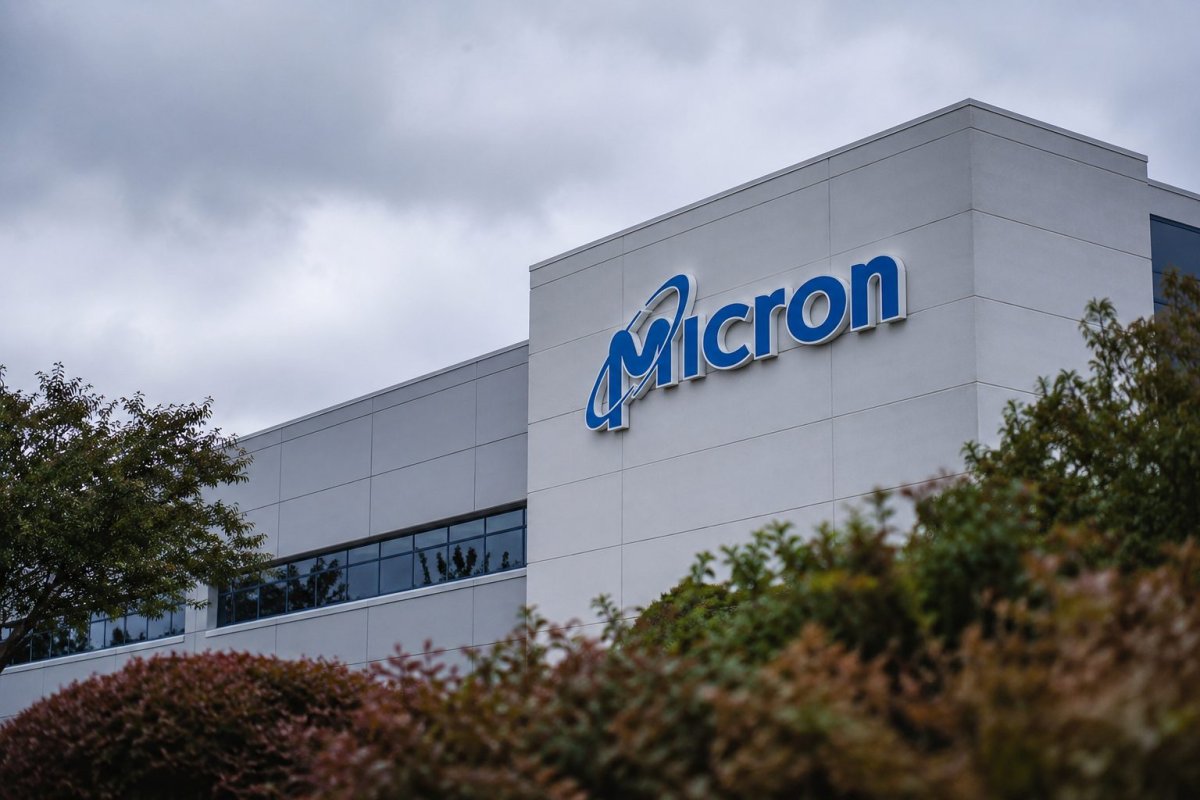
Shares of Micron Technology (NASDAQ:MU) tumbled 9.8% in Wednesday trading, settling at $1,041.12, even as the company announced a long-term supply agreement with General Motors (NYSE:GM). The decline erased roughly $130 billion from Micron's market capitalization—nearly 1.9 times GM's entire market value—and dragged down the broader semiconductor sector.
The GM deal, which secures Micron's LPDRAM, NOR flash, and UFS NAND for future GM vehicles, was framed by both companies as a strategic alignment. Micron CEO Sanjay Mehrotra said the company is "proud to expand our strategic relationship with General Motors," while GM's Mary Barra emphasized the need for a "resilient and closely aligned supply chain." The agreement is tied to Micron's U.S. manufacturing expansion, including a $2 billion upgrade at its Manassas, Virginia fab, which began production earlier this year.
Despite the headline, investors focused on the broader memory market dynamics. KeyBanc analyst John Vinh noted that June DRAM contract prices rose about 3% month-over-month and NAND flash gained 2.4%, but memory stocks still sold off. "Meaningful capacity is not expected until 2027," Vinh wrote, maintaining his Overweight rating and $1,600 price target on Micron. UBS's Timothy Arcuri also kept a Buy with a $1,625 target, citing long-term deals and minimum pricing as key margin supports.
Micron's fiscal third-quarter results, reported last week, showed record revenue of $41.46 billion, up from $23.86 billion in the prior quarter and $9.30 billion a year earlier. Gross margin hit 84.6%. For the fourth quarter, the company guided revenue to approximately $50 billion and gross margin around 86%. CEO Mehrotra described the numbers as demonstrating the "strategic value of memory in the AI era."
The GM deal highlights the auto segment's potential. Auto and embedded memory made up just 11.2% of Micron's fiscal Q3 sales, but that segment's operating margin of 75% is close to the core data center margin of 83%. If more automakers commit to long-term memory purchases, the segment could become a meaningful growth driver. Micron has not disclosed the dollar value of the GM agreement.
Micron's cloud memory business generated $13.77 billion in revenue (33.2% of total), with a 78% operating margin. Core data center contributed $11.52 billion (27.8%), with an 83% margin. Mobile and client also brought in $11.52 billion, with an 86% margin. The automotive and embedded segment posted $4.63 billion, growing 71.1% sequentially.
The selloff extended to other memory and storage stocks. Western Digital (NASDAQ:WDC) slid 6.8%, and Seagate Technology (NASDAQ:STX) lost 5.2%. The VanEck Semiconductor ETF (NASDAQ:SMH) dropped 5.0%, and the iShares Semiconductor ETF (NASDAQ:SOXX) fell 6.0%. NVIDIA (NASDAQ:NVDA) eased just 0.6%, while Advanced Micro Devices (NASDAQ:AMD) dropped 5.4%.
Micron ended its fiscal third quarter with $30.2 billion in cash, marketable investments, and restricted cash. The company declared a quarterly dividend of $0.15 per share, payable July 21 to shareholders of record on July 6.
The sharp decline underscores the market's skepticism about memory stocks, even as pricing trends improve. With DRAM prices up about 70% since December, according to S&P Global Mobility, and AI data-center demand tightening supply, the sector faces a delicate balancing act between growth and valuation.