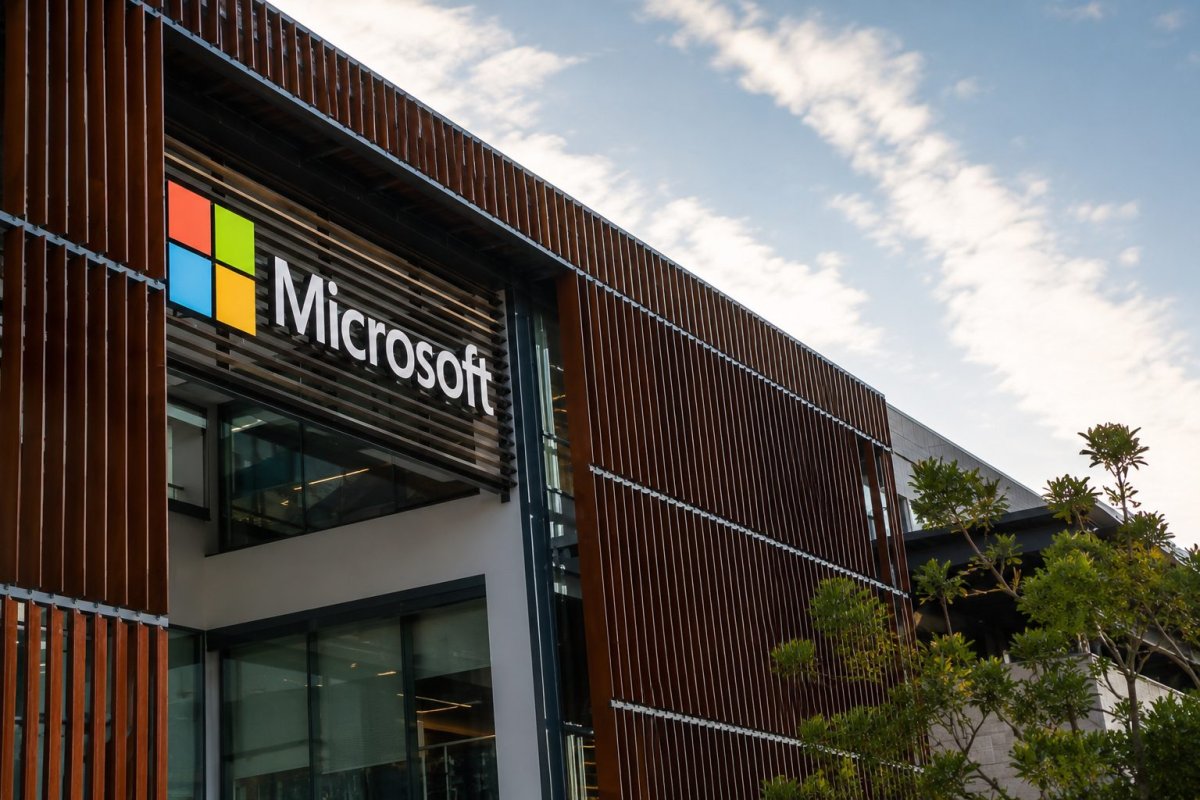
Microsoft Corporation (NASDAQ:MSFT) shares have experienced a significant decline of 24% through June 24, marking the company's worst first-half performance since 2000. The tech giant's stock traded at $365.46 ahead of Thursday's U.S. opening, down 2.3% from its previous close, as investors grapple with the substantial capital required to build out its artificial intelligence infrastructure.
The company's AI business has reached an annualized revenue run rate exceeding $37 billion, representing a 123% increase year-over-year, according to CEO Satya Nadella. However, the financial commitments tied to this growth are staggering. Microsoft's planned capital expenditures for calendar 2026 stand at approximately $190 billion, which is about 5.1 times the current AI revenue run rate. Additionally, the company's most recent quarterly filing revealed $196.6 billion in future lease obligations, primarily for data centers, that had not commenced by March 31. Combined, these commitments total $386.6 billion, or 10.4 times the AI run rate.
Despite the heavy spending, Microsoft continues to post strong financial results. Fiscal third-quarter revenue rose 18% to $82.9 billion, while net income increased 23% to $31.8 billion. Azure and other cloud services saw a 40% revenue surge, and Microsoft Cloud revenue reached $54.5 billion, up 29%. The company also reported a commercial remaining performance obligation of $627 billion, though only about 25%—or $156.8 billion—is expected to be recognized within the next year.
Investor concerns are compounded by regulatory pressures in Europe. EU antitrust officials have indicated that Microsoft Azure and Amazon Web Services (NASDAQ:AMZN) may qualify as gatekeepers under the Digital Markets Act, which would impose new rules on self-preferencing, interoperability, and data portability. Microsoft has countered that Google Cloud and Alphabet's (NASDAQ:GOOGL) Gemini should also face similar regulations, warning that excluding them could tilt the market unfairly.
Despite the headwinds, the stock is trading at 20.2 times forward earnings, its lowest multiple since late 2016, according to Koyfin data via Stocktwits. Of 56 analysts covering the stock, 53 rate it as a Buy or better. Seeking Alpha contributor Andres Veurink issued a Strong Buy rating on June 24, noting shares are 20% to 25% below five-year valuation averages. Vandita Jadeja of 24/7 Wall St. projects a 33.24% upside to $489.45 over the next 12 months, though she cautions that the company's $37 billion AI run rate and $30.88 billion quarterly capex are significant considerations.
Meanwhile, the broader AI investment cycle remains robust. Micron Technology (NASDAQ:MU) and Qualcomm (NASDAQ:QCOM) delivered upbeat forecasts, with Micron reporting $22 billion in chip commitments from customers and Qualcomm targeting $15 billion in data center revenue by 2029. Daniela Hathorn, senior market analyst at Capital.com, noted that Micron's results demonstrate the AI investment cycle remains firmly intact. This dynamic highlights a growing divergence between AI infrastructure suppliers, who are seeing immediate orders, and buyers like Microsoft, who are bearing the upfront costs.
For Microsoft shareholders, the key question remains: when will these massive investments begin to pay off? The company's Azure and cloud growth, combined with its AI revenue trajectory, suggest long-term potential, but the near-term burden of spending, leases, and regulatory uncertainty keeps the stock under pressure.